Alien Invasion Involving Advanced AI Could Trigger A Global Financial Collapse, Geopolitical Crisis, And Widespread Riots
Harvard astrophysicist warns that an alien invasion driven by advanced AI could trigger global financial collapse, political turmoil and street unrest.
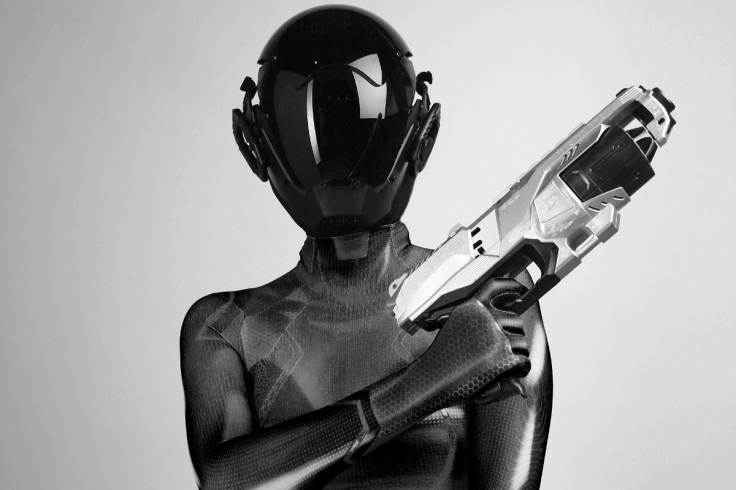
An alien invasion involving advanced artificial intelligence could unleash a global financial meltdown, geopolitical turmoil and rioting on the streets, a leading astrophysicist has warned in a fresh intervention from the United States.
Concern over what first contact with extraterrestrial life might do to human society has moved in recent years from the fringes of science fiction into the more sober territory of risk planning. Governments are declassifying long-secret UFO files, central banks are being lobbied to think the unthinkable, and some scientists now argue that the real danger is not little green men but cold, unblinking alien AI arriving in our skies before we are remotely ready.

Alien Invasion, AI And A Shaken World Order
The latest alarm comes from Professor Avi Loeb, the Harvard astrophysicist known for his work on interstellar objects and the search for extraterrestrial technology. In a new blog post, he argues that an alien invasion in the form of a visiting technological device could smash investor confidence and plunge global markets into chaos.
Loeb suggests that simply realising 'we are visited by the products of a sibling in the cosmic family of technological civilisations' would be enough to rattle stock exchanges and boardrooms worldwide. The presence of a vastly more advanced technology, he believes, would inject a deep uncertainty into assumptions that underpin modern finance, from defence valuations to energy forecasts.
Harvard astrophysicist Avi Loeb says many alleged UFO sightings from old space missions and sky surveys may actually be cosmic rays hitting camera sensors. 👀
— 3I/ATLAS updates (@Defence12543) May 20, 2026
He argues scientific research is about separating signal from noise — not blindly accepting viral claims.
But he also… pic.twitter.com/wzhZb9eJ2q
He warns that an irresponsible military response by any government to an unidentified craft could have 'a devastating effect on all of us.' In his telling, the danger is not only what an alien probe might do, but how fragile human institutions might react when the sky suddenly stops behaving as expected.
Loeb expects, if anything turns up, that it is more likely to be a machine than a biological being of the friendly E.T. variety. He describes the probable scenario as an encounter with a device guided by artificial intelligence, dispatched across space long after its creators built it. Any such alien AI, he argues, would likely outstrip human capabilities, not because alien 'brains' are inherently superior but because they may have enjoyed more than a century's head start in science and technology since discovering quantum mechanics.
'Once we meet their amazing vehicles, we would be shocked to learn about their advanced science and technology,' he writes, suggesting that our first view of an alien craft could instantly reorder everything from military doctrine to industrial strategy.
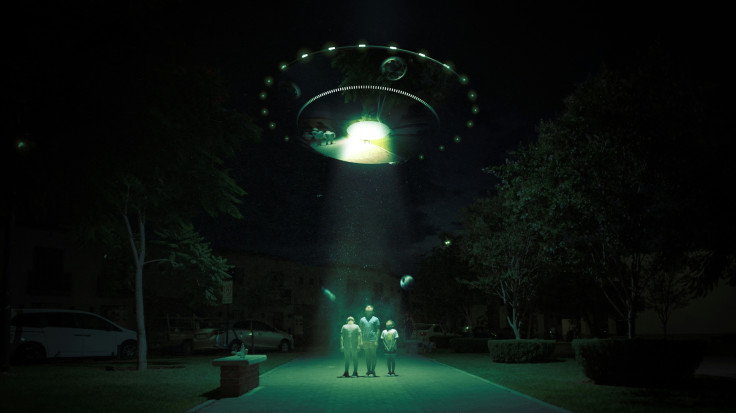
From Bank Runs To Riots: The Human Cost Of Alien Invasion Panic
The Harvard Professor is not alone in treating an alien invasion scenario as a real-world stress test for human systems. Earlier this year, financial expert Helen McCaw wrote to Bank of England governor Andrew Bailey, urging the central bank to prepare a contingency plan in case the existence of aliens is ever proved beyond doubt.
Her warning was blunt. 'If banks start failing, the payment system will collapse, and you'll have rioting... it's madness not to consider it and plan,' she told him. McCaw's argument is that a sudden shift in what humanity believes about its place in the universe could trigger a run on banks, a seizure in credit markets and a breakdown in basic economic functions long before any alien visitor did anything at all.
Loeb goes further, suggesting that an alien invasion in the form of a visiting artefact would ricochet far beyond markets and into the core of human identity. He writes that the discovery of 'cosmic neighbours' would upend religious beliefs by implying that 'God is not a parent of a single child.' Secular people, meanwhile, might find themselves humbled by the spectacle of a civilisation whose technology reached Earth 'before we reached their point of origin.'
He is candid about the psychological shock. Humanity, accustomed to imagining itself at the top of the ladder, could find out it is a latecomer in a universe already populated with more accomplished 'siblings.' The mix of awe, envy and fear that follows is hard to plot on a central bank spreadsheet.
Loeb nevertheless holds out the possibility that an alien invasion need not be purely catastrophic. He has previously argued that advanced visitors 'could teach us things that we can imitate, that we can aspire to, will give us a meaning to our cosmic existence.' In his latest post, though, he tempers that hope with a darker comparison, saying we must first 'observe our dating partner' and make sure it is 'not a serial killer.'
The backdrop to all this is a slow but undeniable shift in how officialdom talks about UFOs, now more frequently rebadged as UAPs. The first batch of secret US government files on flying saucers was released to the public earlier this month, giving fresh ammunition to campaigners who argue that governments must be more open about unexplained sightings and better prepared for what Loeb delicately calls 'cosmic neighbours.'
There is, it must be stressed, no confirmed evidence yet of an alien invasion underway, nor of alien AI devices orbiting Earth. All of the scenarios outlined by Loeb and McCaw sit firmly in the realm of contingency and speculative risk.
For now, their warnings are less about little green men and more about revealing just how brittle our financial and political systems might be if the universe turned out to be a little more crowded than we thought.
© Copyright IBTimes 2026. All rights reserved.
- Recommended For You