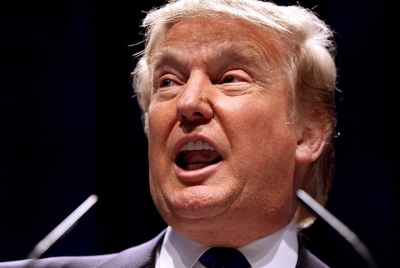
'Overweight' Donald Trump 'Needs Ozempic' As Third Medical Exam Raises Eyebrows, Doctor Claims
Speculation grows over Trump's health as experts discuss weight and medication options.

Donald Trump's latest White House health check has revived scrutiny over his weight, aspirin use and whether a GLP-1 drug such as Ozempic ought to be part of the picture, after one Stanford doctor said the president appears overweight and is in a group where such medication is now commonly prescribed.
The news came after Trump returned to Walter Reed National Military Medical Center on 26 May for what the White House described as a routine annual medical and dental assessment, even though he had already had a yearly checkup in April 2025 and another publicised visit in October. The timing has fed the usual chatter around the 79-year-old president's health, especially as he approaches his 80th birthday next month and remains the oldest person ever elected to the office.
Dr. Reiner on Trump’s exam today: “If they repeat scans from the last year, that means they’re surveilling something — and that’s never been disclosed to us.” Almost 80, multiple Walter Reed visits, swollen legs. What are they hiding? pic.twitter.com/PWGlInZlG5
— Lesley Abravanel 🪩 (@lesleyabravanel) May 26, 2026
Donald Trump And The Ozempic Question
The comments that set this off came from Dr Byron Lee, a Stanford cardiovascular medicine professor, who told NPR that Trump's age and weight place him in a category where doctors often consider GLP-1 medicines such as Ozempic. He said older adults can do very well if they remain active, but also cautioned that the risks of heart attacks and strokes rise with age.
A doctor is sounding the alarms about President Donald Trump’s health, suggesting he seems overweight and should likely be prescribed weight-loss drugs, such as Ozempic. https://t.co/kBJq70aW2l pic.twitter.com/vTU5iPhPtV
— Irish Star US (@IrishStarUS) May 26, 2026
Lee said Trump is 'a little overweight' and suggested that weight is one of the obvious variables that can push heart disease risk higher. It was not a diagnosis, and Lee was careful enough to note he did not have the president's full medical history.
Still, in an era when Ozempic has become shorthand for the modern medical response to weight concerns, the remark landed with the sort of force that health speculation tends to gather around a president.
Donald Trump's Check-up Trail
The White House has framed the Walter Reed visit as preventative care, not a response to any fresh emergency. But the calendar is doing some awkward work of its own, because this was already Trump's fourth publicised medical visit since returning to office, and the repeated use of the phrase 'routine annual' has invited more questions than reassurance.
President Trump a preventive medical and dental checkup yesterday.
— STAT (@statnews) May 27, 2026
It’s the fourth publicly disclosed exam he’s had since returning to office last year, and like the last four, he reported the same results: https://t.co/ZawYU6GkfF
An annual physical usually does not arrive with so much repetition, especially not when it is followed by fresh commentary about weight, circulation and the steady public fascination with what a president eats, how much he exercises and whether he is quietly being managed more aggressively than the public is told. Trump, for his part, recently said, 'I feel literally the same,' adding, 'It's not because I eat the best foods.'
Donald Trump, Aspirin And Bruising
Lee also raised an eyebrow at Trump's reported aspirin use. According to White House physician Sean Barbabella, the president takes around 325 milligrams of aspirin a day for 'cardiac prevention.' That is not unheard of, but it is also not the kind of detail that usually escapes notice when a president's hands are visibly bruised and the internet is doing what it always does.
Barbabella has said the bruising is linked to aspirin and handshaking, while Trump has previously suggested the same thing himself. Lee noted that aspirin is not routinely recommended in the same way it once was unless a patient has specific risk factors for stroke or heart disease, and added that it can contribute to bruising. In other words, even the small details are now being read like clues in a case file.
What The White House Says
The White House, naturally, insists there is nothing to see here. Spokesperson Davis Ingle said Trump is 'the sharpest and most accessible President in American history' and remains 'in excellent health.'
PERFECT BILL OF HEALTH! 🇺🇸 pic.twitter.com/nxyEpQF0Qe
— The White House (@WhiteHouse) May 26, 2026
Still, Trump's own medical history has become a running topic because the public sees enough to wonder and not enough to settle the matter. Tests by the White House medical unit previously identified chronic venous insufficiency, a condition that can cause blood to pool in the veins of the legs, and the recent check-up has only sharpened interest in how the administration is presenting his health.
There is no confirmed evidence that Donald Trump has been prescribed Ozempic or any other GLP-1 medication, nor is there any indication that he is currently taking such a drug. What does exist instead is a familiar Washington dynamic, combining medical interpretation, political framing, and recurring scrutiny over whether public accounts of a leader's health reflect verified fact or simply repeated reassurance.
© Copyright IBTimes 2026. All rights reserved.
- Recommended For You