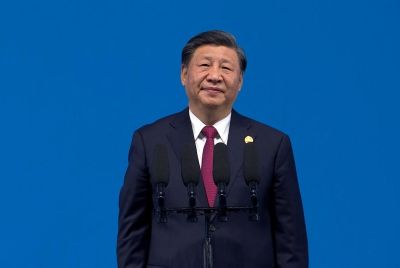
Launch to Whom? North Korea Threatens Automatic Nuclear Strike If Kim Jong Un Dies
North Korea's constitution orders automatic nuclear strike if Kim is killed or incapacitated, raising global security fears

North Korea has reportedly adopted a new nuclear policy mandating an automatic nuclear strike if leader Kim Jong Un is assassinated or incapacitated in a foreign attack. The update ensures that the country will take action immediately if anything happens to its Supreme Leader.
The revision has prompted concern among international security analysts and intensified scrutiny of North Korea's nuclear posture.
Kim Jong Un's Terrifying New 'Dead Man's Switch' Could Trigger Instant Nuclear War
According to South Korea's National Intelligence Service (NIS), the constitutional revision was approved during the first session of North Korea's 15th Supreme People's Assembly held in Pyongyang on 22 March. Details of the changes were later shared with senior South Korean officials.
Under the revised law, Kim Jong Un remains the central authority over North Korea's nuclear arsenal. However, the updated provisions now formally require an immediate retaliatory nuclear strike if the country's nuclear command-and-control system comes under threat.
'If the command-and-control system over the state's nuclear forces is placed in danger by hostile forces' attacks... a nuclear strike shall be launched automatically and immediately,' the revised Article 3 reportedly states.
What Experts Say About North Korea's New Policy
The move is being widely described as a 'nuclear dead man's switch' policy designed to guarantee retaliation even if North Korea's leadership is eliminated. Professor Andrei Lankov of Kookmin University, who has argued that Iran's experience likely served as a 'wake-up call' for the Kim regime, said North Korea had drawn direct lessons from the US-Israeli operations.
'North Korea saw the remarkable efficiency of the US-Israeli decapitation attacks, which immediately eliminated the greater part of the Iranian leadership, and they must now be terrified,' he said.
Unlike Iran, however, North Korea remains one of the world's most isolated and tightly controlled countries, making covert intelligence operations significantly more difficult. Foreign visitors are heavily monitored, internet access is extremely restricted, and surveillance systems throughout the country are tightly controlled by the state.
Who Will North Korea Attack?
The report does not specify a particular country that would be attacked under the new policy. Instead, the policy states that a nuclear strike would be launched automatically if the country's nuclear command system or leadership is attacked by 'hostile forces.'
In practice, analysts believe the policy is mainly aimed at deterring the United States and South Korea, which North Korea has long accused of planning 'decapitation strikes' targeting its leadership during a conflict. Japan could also be considered part of the broader regional threat framework because of its military alliance with the US.
Despite mounting international concern, North Korea has shown no indication that it plans to slow its nuclear expansion. Instead, the latest constitutional revision appears to further cement nuclear weapons as the core foundation of Kim Jong Un's national security strategy.
© Copyright IBTimes 2026. All rights reserved.
- Recommended For You