

Trump Suffers Midterm Blow as 70% of Young Women Vote Democrat in House Races, New Data Shows
Tufts University's CIRCLE cautions that the estimate is based on preliminary data and measures House votes, not presidential preferences or turnout among all eligible young people
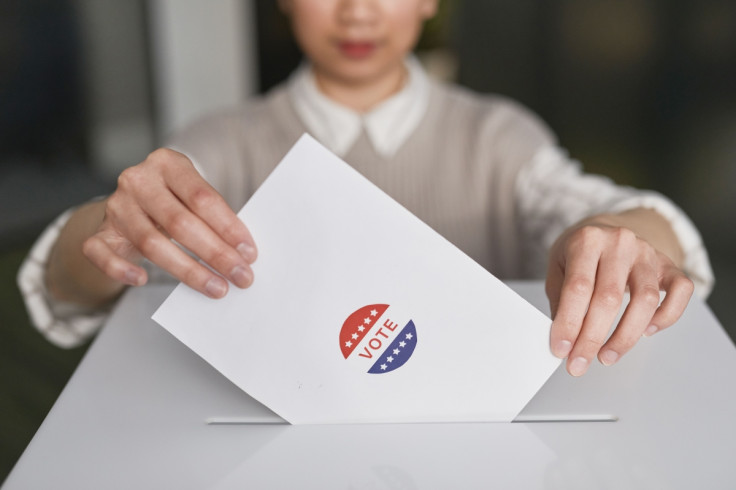
Young women aged 18 to 29 gave Democratic candidates for the US House 70 per cent of their votes in the 2026 midterms, according to preliminary research by Tufts University's Center for Information and Research on Civic Learning and Engagement (CIRCLE).
It also found that 59 per cent of young men backed Democratic House candidates, highlighting a gender gap. Democrats won control of both chambers of Congress, according to Associated Press race calls, dealing President Donald Trump's party a setback.
The 70 per cent figure is not a conventional exit-poll result. CIRCLE analysed preliminary data from the NORC Civic Health & Elections Project and warned that estimates could shift. The figures concern House votes, not presidential preferences or every contest on the ballot.
Across voters aged 18 to 29, 66 per cent supported Democratic House candidates and 31 per cent backed Republicans, a 35-point advantage. CIRCLE said young voters accounted for 11 per cent of all votes cast, compared with 12 per cent in the 2022 midterms. This is their share of the overall vote, not the proportion of eligible young people who turned out.
Young Women Voters Show a Distinctive Voting Pattern
More than 80 per cent of young Black and Asian American and Pacific Islander women supported Democratic House candidates, CIRCLE reported. Among young people who identified as 'gay, lesbian, bisexual or something else', support for Democrats reached 86 per cent.
CIRCLE also cited 2024 AP VoteCast data showing that 56 per cent of young men supported Donald Trump in that year's presidential election. That figure measures a different contest from the 2026 House vote and is not a direct comparison.
The 2026 Fox News Voter Poll, conducted by SSRS, found that 59 per cent of women supported Democratic House candidates, compared with 40 per cent who backed Republicans. It recorded a 93 per cent to 6 per cent split among Black women in favour of Democrats. The results cover women across age groups, not young women alone.
What the Midterm Figures Can and Cannot Explain
The Associated Press called Democratic control of the Senate at 11:36 p.m. Eastern time on 3 November and the House at 1:24 a.m. on 4 November. These are AP race calls, not final state certifications. They establish which party is expected to control Congress, but do not explain individual voting decisions.
Separate CIRCLE research found that 52 per cent of young voters named the economy and jobs among their top three national issues, while 42 per cent cited healthcare. Those findings concern young voters overall, not young women specifically. They do not establish why individual women chose Democratic candidates.
Maria Antonieta Alcalde Castro took office as director-general of the International Planned Parenthood Federation (IPPF) on 1 March 2026. In comments published by The Independent, she called the results 'a glimmer of hope'. She urged Congress to protect remaining funding and demand accountability.
CIRCLE said its analysis used preliminary NORC data that could be updated. The 70 per cent figure is an estimate of young women's support for Democratic House candidates. It is not a final count of every ballot.
© Copyright IBTimes 2026. All rights reserved.