3I/ATLAS Mystery Deepens: SETI Scientist Gets Millions of Signals — But No Aliens, Unfortunately
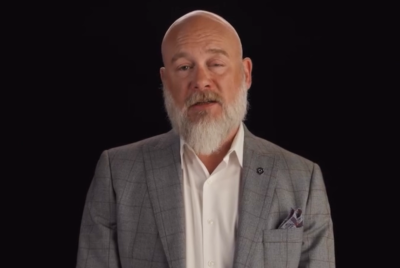
SETI scientist confirms: The 3I/ATLAS 'alien ship' is just a comet

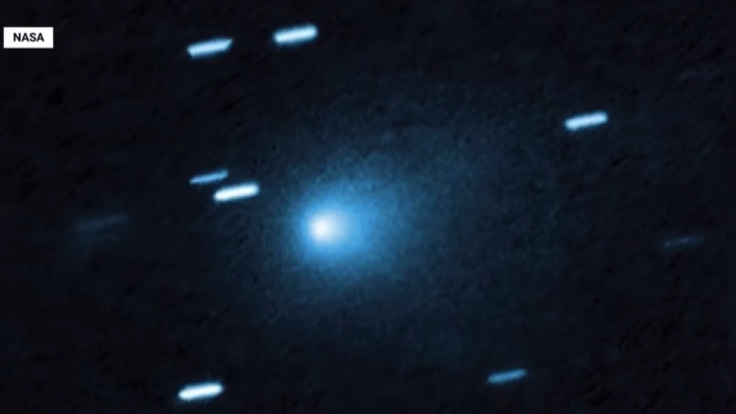
The interstellar object designated 3I/ATLAS is hurtling out of our solar system right now, an unremarkable fact that should close the book on its two-year journey across the cosmos. Yet, for a significant pocket of observers, the narrative remains stubbornly sensational: that this visitor from beyond the stars is not merely a comet, but a piece of alien technology — a genuine extraterrestrial spaceship.
The idea that we may have missed a close encounter of the third kind has been aggressively championed by figures like Harvard professor Avi Loeb, who continues to push the speculative edge of astrophysics, even long after major space agencies like NASA formally classified the object as a common-or-garden comet. It is a classic battle between hope and hard evidence, a storyline ripped straight from the best sci-fi, but one that frustrates the working scientists patiently sifting through the cosmic dust.
'It's acting just like a piece of rock and ice would', states Leslie Looney, professor of astronomy and director of the Laboratory for Astronomical Imaging at the University of Illinois Urbana-Champaign. Comets are, after all, essentially giant, dirty snowballs whose signature tails — sometimes millions of miles long — are created by solar wind as they approach the sun.
The only truly amazing aspect of 3I/ATLAS is its origin. As an interstellar comet, it comes from a solar system far beyond our own, offering us a literal snapshot of another stellar neighbourhood. 'We are seeing material from another solar system come swinging through our solar system', Looney notes. 'That by itself is amazing'.
The Cosmic Reality: Why 3I/ATLAS Is a Comet, Not an Alien Craft
Despite the collective yearning for proof of life beyond Earth, the scientific community holds fast to the principle popularised by the late astronomer Carl Sagan: 'Extraordinary claims require extraordinary evidence'. Looney echoes this sentiment, stressing the fundamental truth of the scientific method. 'That is still true and should always be true in any science endeavour. You have to make sure you have the data', he explains.
Looney, like many in the field, is not opposed to the existence of extraterrestrial intelligent life — far from it. 'I think aliens are out there', he says, pointing out the sheer scale of the cosmos. 'Our galaxy is huge — 100 to 400 billion other stars. That's a lot of possibilities out there for life'. The debate is not if life exists, but how one goes about confirming it, and that's where organisations like the SETI Institute step in, meticulously hunting for what they term 'technosignatures'.

Beyond the Buzz: The Real Scientific Hunt for ET Life After 3I/ATLAS
Based in Silicon Valley, the non-profit SETI Institute is vital for providing backing to researchers who are looking for intelligent life in a rigorous, data-driven way. One such expert is Sofia Sheikh, a technosignature research scientist who works with the Allen Telescope Array, a vast installation composed of 42 dish antennas designed to listen for signals in the dark expanse of space.
Sheikh's work is focused on radio signals that might indicate the presence of technology beyond Earth. While radio waves are generated by countless natural phenomena, technological signals have a distinct hallmark that makes them stand out. 'Human technological signals often are really concentrated in their width', Sheikh explains, referring to the types of signals called narrowband. 'If we were ever to see that and prove that it's coming from beyond Earth, then that would be a really good sign that technology is making that signal and not the natural universe'.
The biggest challenge, surprisingly, is not the vastness of space but the noise of our own planet. To listen for aliens, Sheikh must first filter out 'all of the chaos and cacophony that is human technology on the Earth', as she puts it. The daily grind is less Star Trek and more data processing: 'I get millions of technological signals in a night, and I have not found millions of aliens, unfortunately', Sheikh confirms. 'What I've found is millions of instances of human technology'.
The pursuit of SETI is, at its heart, a profoundly human endeavour. 'It's a question. Are we alone in the universe? Is there life out there? It's sort of a higher pursuit in a way that it makes people excited and inspired and inspires creativity', Sheikh says.
Astrobiology, a related field that studies hypothetical life beyond Earth, also provides critical, grounding work for future human exploration. Jack Pallotto, a U of I undergrad and president of the Astrobiology Club, points out that the field is essential for practical applications, like figuring out how to safely allow people to live in space for extended periods of time, whether on the International Space Station or in a future colony on Mars.
This scientific rigour is a far cry from the sensationalism surrounding objects like 3I/ATLAS. As science communicator Hank Green noted in a video discussing the alien speculation, the mindset of 'I want to believe', the famous tagline from The X-Files, must be countered by 'I want to know.' Looney wholeheartedly agrees with this cautious approach. 'I don't know, so I want to know', he says. 'I want to know more than I want to believe'.
This measured approach is why the research is only now beginning to pick up pace. Thanks to vast improvements in computing power and telescope technology over the last five years, researchers can examine far more frequencies and larger areas of the sky simultaneously.
While critics might ask why scientists haven't found anything despite searching since the 1960s, Sheikh offers a vital perspective on the monumental task ahead. 'In reality, the space we have to search is so vast that even though these searches have been going on since the '60s, we have barely scratched the surface of the amount of searching that's yet to be done'.
The search for intelligent life is not a quick fix or a viral social media sighting; it is a long, methodical, and profoundly important human mission that unites disciplines from astrophysics to anthropology. While objects like 3I/ATLAS may satisfy our immediate yearning for drama, it is the patient, science-backed approach of researchers like Sheikh and Looney that will actually deliver the cosmic answer. The next time a strange object crosses the sky, remember the difference between wanting to believe and wanting to know.
© Copyright IBTimes 2026. All rights reserved.
- MOST POPULAR IN Trending