Here's Why Harvard Scientist Avi Loeb Claims 40% Chance 3I/ATLAS Is Alien Technology
The mysterious interstellar comet 3I/ATLAS: Is it a natural object or extraterrestrial technology? Dive into the debate.
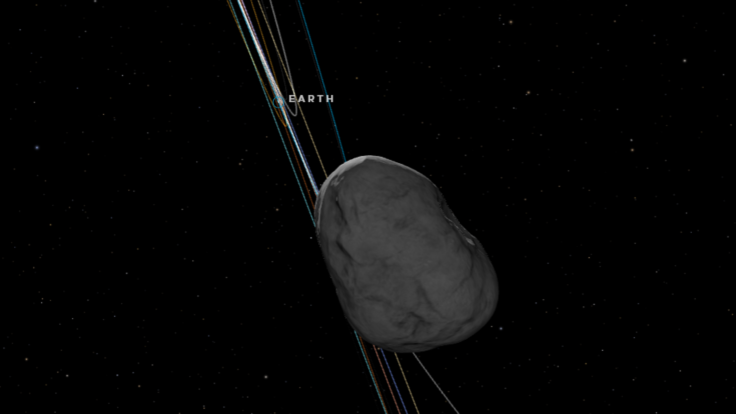
Imagine a piece of rock and ice, forged in the violent crucible of a star system millions of years ago, finally arriving on your doorstep. Since July 2025, that is exactly the profound reality the global scientific community has been grappling with: the arrival of a new, unexpected visitor from outside our Solar System, the interstellar comet 3I/ATLAS.
Confirmed as only the third object of its kind to pass through our cosmic neighbourhood, its mere existence is a precious scientific opportunity. Yet, it has quickly become the focal point of intense controversy, reigniting the explosive debate about the possibility of extraterrestrial technology.
Peculiar anomalies observed on the comet simply refuse to fit neatly into established cometary models, fuelling a high-stakes scientific discussion that is rapidly gaining traction in academic circles and across social media.
The object was detected by the ATLAS telescope system in Chile, moving at an astonishing 58 km/s in relation to the Sun. This excessive velocity is crucial evidence of its birth in a distant star system, offering an unprecedented chance to analyse materials formed in an alien planetary environment.
3I/ATLAS reached its closest approach to the Sun, or perihelion, on 29 October 2025, at a distance of 1.36 astronomical units—approximately 203 million kilometres.
Its hyperbolic orbit confirms this is a one-time visit; possessing sufficient kinetic energy to completely escape the Sun's gravity, it will continue its voyage back to the silent, interstellar vacuum, never to return.
The Chemical Clues: What 3I/ATLAS Is Hiding
The race to analyse the visitor's composition has been fast and fruitful. Detailed observations by the James Webb Space Telescope provided the first invaluable glimpses into the comet's makeup. Spectral analysis revealed an abundance of carbon dioxide, alongside the presence of water ice and carbon monoxide.
This combination differs subtly from the standard mix found in comets native to our Solar System, such as those originating in the Oort Cloud, pointing to a formation environment in a potentially older star system and subject to different radiation levels.
Crucially, the object displays clear cometary activity, including a coma—the cloud of gas and dust surrounding the nucleus—which measures about 3 arcseconds. More importantly, the object's speed showed non-gravitational accelerations, typically attributed to the ejection of gases from the icy core.
Further analysis found that the core releases cyanide and nickel vapour, elements also commonly seen in solar comets. However, the question of acceleration remains the most explosive element of the narrative.
The Case For A Technological Object
The most sensational argument stems from a July 2025 analysis led by Professor Avi Loeb, a renowned astronomer from Harvard University. Professor Loeb and his team argued that a specific set of eight anomalous features—including peculiarly behaving gas jets and an orbital alignment considered highly unlikely for a purely natural object—could be better explained if 3I/ATLAS were, in fact, a technological artefact.
Key among these features is a measured density that suggests the comet is structurally hollow, far less dense than a typical rubble pile. This lower density would grant it significantly more leverage against solar radiation pressure. Furthermore, its orbital alignment places it nearly perfectly in the plane of the Milky Way galaxy, an orientation considered statistically improbable for a randomly ejected object.
This bold hypothesis, which Loeb estimates to have a 40% probability based on complex probabilistic calculations, is driven primarily by accelerations that do not seem to be fully justified by the sublimation of ice—the usual cometary phenomenon.
For 3I/ATLAS, the non-gravitational force acts strongly, but the lack of an accompanying large gaseous coma implies the source of acceleration is not simply volatile sublimation, but potentially solar radiation pressure acting on a structure with an extremely large surface area to mass ratio—a characteristic that might fit a light sail or thin shell.
This line of reasoning echoes the fierce debate generated by the first interstellar visitor, 1I/ʻOumuamua, in 2017, which also presented anomalous acceleration. The controversy has led Professor Loeb to accept a thousand-dollar bet against sceptical scientists, predicting that data collected by 2030 will definitively confirm or rule out his controversial theory.
The Global Race And The Official Position
International space agencies and observatories have mobilised swiftly. The Very Large Telescope (VLT) in Chile was among the first to confirm its cometary nature, successfully capturing cyanide gas emissions in August 2025. Furthermore, several NASA missions, such as Psyche and Lucy, were temporarily redirected in September 2025 to record images, providing invaluable data about the comet's ion tail and hydrogen coma.
This intensive monitoring quickly yielded results: high-resolution images indicate the occurrence of cryovolcano eruptions on the surface of the comet's nucleus, which directly explains the sudden increases in brightness observed before its closest approach.
While the public debate reflects an enduring fascination with the cosmos and the question of extraterrestrial life, the official position of agencies such as NASA, issued in November 2025, is clear: 3I/ATLAS is a natural comet, and there is no evidence to suggest an artificial origin or any type of threat.
As 3I/ATLAS accelerates back toward the cosmic dark, it leaves behind an unprecedented set of data—and a raging scientific debate that pits conventional cometary models against the provocative possibility of an alien artefact.
© Copyright IBTimes 2026. All rights reserved.
- MOST POPULAR IN Trending