

Austrian Mountain Tragedy: Woman Identified After Chilling Webcam Shows Boyfriend Allegedly Leaving Her to Freeze
Webcam footage fuels charges after climber allegedly left partner to freeze
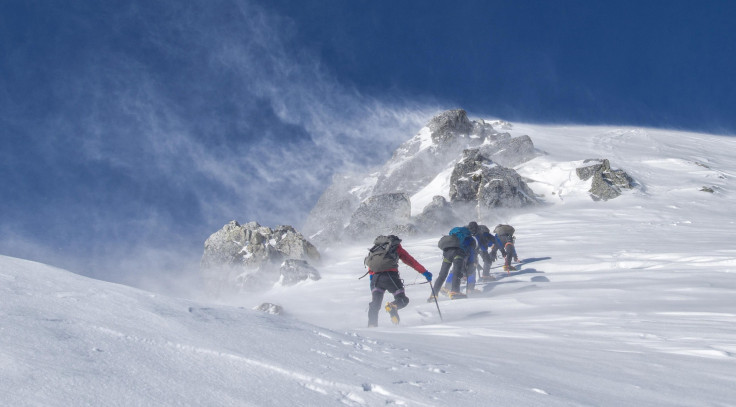
Authorities in Austria have identified Kerstin Gurtner as the woman who froze to death near the summit of Grossglockner after her boyfriend allegedly abandoned her during a winter ascent. The case has intensified after prosecutors confirmed that the fatal climb was recorded on publicly available webcam footage, which appears to show the couple's lights on the mountain before only one light begins moving back down.
Gurtner, 33, died less than 150 feet from the top of Grossglockner, Austria's highest peak. She had begun the ascent with her partner, Thomas Plamberger, 39, who is now charged with grossly negligent manslaughter. According to the NY Post report identifying the victim, Gurtner described herself as a passionate lover of cold-weather climbs, yet she lacked experience in high-altitude winter routes of this scale.
Hours of Distress Captured on Camera
The climb took place on 18 January, beginning along the Studlgrat route. A webcam positioned on the mountain recorded the pair's headlamps during their ascent. Prosecutors say the couple became stuck roughly 50 metres below the summit by 8:50pm. The temperature dropped rapidly, reaching extreme sub-zero conditions while winds intensified.
Rescuers attempted to reach the couple around 10:50pm, although investigators revealed that Plamberger had switched off his phone. The People.com account of the timeline notes that Gurtner, already hypothermic and disoriented, received no protective measures from him despite the conditions. Prosecutors said he failed to shelter her from the wind or wrap her in emergency blankets.
The Moment He Walked Away
By 2:00am, the webcam shows Plamberger descending alone while Gurtner's headlamp eventually fades as its battery dies. He reportedly made brief contact with mountain rescue services around 3:30am before again switching off his phone.
Authorities found Gurtner's body at 10:00am the following morning. Prosecutors argue that her inexperience, coupled with Plamberger's advanced mountaineering background, placed responsibility for her safety squarely on him.
Prosecutors Highlight a Pattern of Decisions
Investigators have outlined several critical decisions that may strengthen the case. These include:
- Starting the climb two hours later than planned.
- Bringing insufficient emergency equipment.
- Failing to send distress signals even when a police helicopter flew close to their location.
The Innsbruck public prosecutor's office described Plamberger as the de facto guide of the tour due to his experience. Their statement, shared in both Austrian and international outlets, stresses that Gurtner never should have been left alone on a winter ascent at that altitude.
A Trial That Has Captured International Attention
Plamberger's trial is set for February, with potential penalties of up to three years in prison. Public interest has grown rapidly, largely because the climb was visible on livestreamed footage that many climbers monitor for weather and route conditions. The video has now become one of the central pieces of evidence.
The case has sparked renewed debate about responsibility in pair ascents, decision-making in extreme environments and the ethics of continuing climbs with inexperienced partners. For Gurtner's family and the broader mountaineering community, the tragedy has also become a powerful caution about the dangers of high-altitude winter routes and the importance of shared responsibility.
As prosecutors continue preparing for trial, the webcam images remain a stark record of the final hours before Gurtner's death. They now serve not only as evidence, but as a reminder of how quickly conditions can turn deadly in the Alps, even for those familiar with the mountains.
© Copyright IBTimes 2026. All rights reserved.