

The Gap Between Fibre and Satellite: How Avealto Plans to Connect the Three Billion People Neither Can Reach
Avealto introduces a sustainable, cost-effective solution to connect remote regions, challenging traditional satellite and fibre networks.
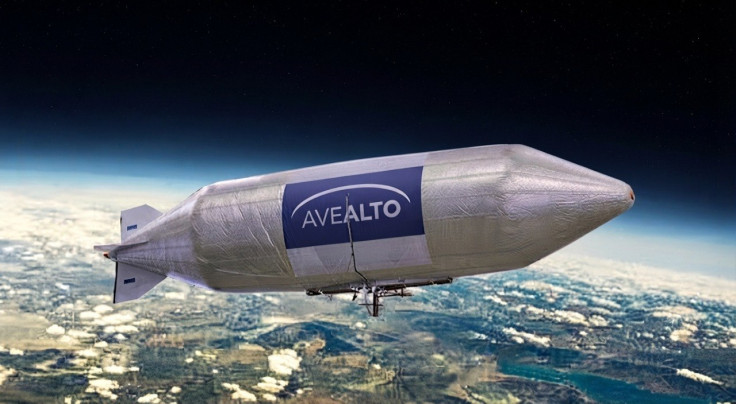
There are two ways to get broadband to a population today, and both have a hole in the middle. Fibre and terrestrial mobile networks are cheap per user, but only where population density makes the capital cost work, which rules out most of the developing world's rural and remote regions. Satellite reaches anywhere, but at a wholesale cost that puts it out of reach for the telecom operators who'd need to resell it affordably.
It also comes with a structural risk of its own. The same company selling wholesale capacity can decide, unilaterally, to compete with its own customers at retail. Starlink did exactly that this month, raising prices by up to 44 per cent for rural customers with no alternative, and confirming a US retail mobile push that puts it in direct competition with the carriers who'd been buying its wholesale capacity.
The Gap Between Fibre and Satellite
Avealto's case is that the gap between those two options, roughly three billion people, was never really a technology problem. It was a design problem. Its answer is a high-altitude platform station, a solar-powered aircraft that holds station at 20 kilometres, above weather and commercial air traffic, for months at a time.
Each covers 45,000 square kilometres, an area larger than Wales, and supplies a telecom operator's own network directly, at around 80 per cent below the wholesale cost of satellite capacity. Because the model is wholesale-only, there's no retail arm to eventually fund by competing with the customer. The structural conflict that just played out with Starlink simply doesn't exist in Avealto's design.
A Reusable Alternative
The technology underneath it is deliberately unglamorous. Avealto's aircraft are built on established aviation engineering rather than the experimental physics of a satellite constellation. They land, get serviced, and fly again, rather than deorbiting and burning up at the end of their life the way a satellite does. That reusability is also the environmental case.
There are no rocket launches to replace hardware every few years, and no re-entry debris. Avealto has built its manufacturing base in Britain specifically because of that engineering pedigree. A new factory site at Lydd Airport in Kent is expected to create 40 to 50 highly skilled engineering jobs, with an export-led focus from day one.
Three Milestones, One Raise
To get there, Avealto has opened a $50 million (£37 million) funding round, its first major capital raise since the company's founding. The round opened this month and is structured to close within the next 12 to 18 months. That's the same window in which the company expects to hit three milestones together.
The Kent factory should reach full production, a full-scale prototype should complete its public demonstration in Wales this September, and its first commercial network should convert from advanced talks into signed agreements with telecom operators in South East Asia. A memorandum of understanding with Indonesian partners, signed in 2023, and progressing discussions with Malaysian operators put that region, where the fibre-satellite gap is most acute, first in line.
How The Funding Will Be Used
The funding is earmarked across those same three fronts. It will complete the manufacturing build-out at Lydd Airport, finance the aircraft and ground infrastructure behind September's demonstration, and provide the working capital needed to deliver Avealto's first commercial contracts once they're signed.
'This is patient infrastructure capital, not a bet on a single quarter,' says Walt Anderson, Avealto's CEO. 'It has to fund three things that all land together for this to work. A factory that's actually building aircraft. A demonstration that proves it in the air. A first customer network that proves it commercially. Miss any one of those and the rest doesn't matter.'
An Experienced Founder
Anderson has raised and built businesses at this scale before. He built and sold two telecoms companies for close to $1 billion (£740 million) each, Esprit Telecom and Telco Communications Group, and went on to found MirCorp, the first venture to commercially lease a space station. His view on the timing of this raise is blunt.
'The three billion people who need this were always going to get connected by someone,' he says. 'The question was always whether the capital would back the infrastructure that does it without recreating the exact dependency problem satellite has just shown it has. That's what this round is for.'
© Copyright IBTimes 2026. All rights reserved.