

What Is InterPositive? Everything About Ben Affleck's $587M AI Sale to Netflix
Netflix confirms it paid $587 million for Ben Affleck's InterPositive AI firm, a deal reshaping production workflows, labour rules, and creator access.
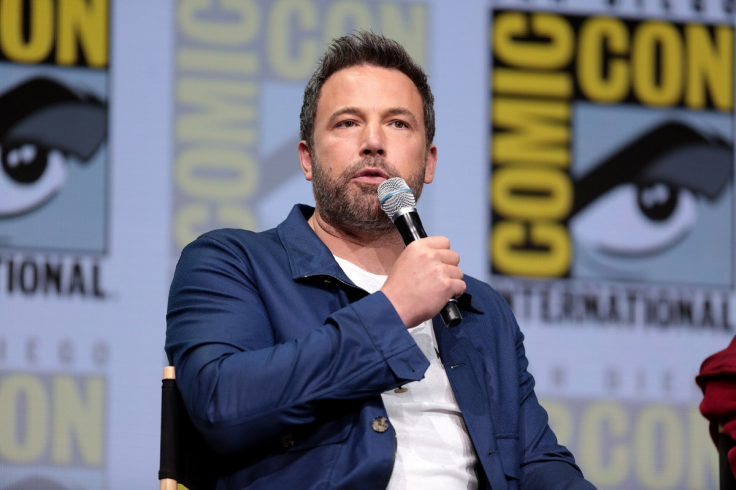
Netflix has confirmed it paid $587 million (£435.71 million) in cash for InterPositive, the AI filmmaking company co-founded by Ben Affleck, a figure disclosed in a recent SEC filing after the March acquisition was first announced without financial terms.
The deal marks one of the streaming giant's largest technology purchases and signals a major shift in how production-focused AI is being valued as core studio infrastructure rather than a niche experiment.
To recall, Netflix initially revealed the InterPositive acquisition in March 2026, saying the startup's team would join the company and Affleck would serve as a senior advisor, but it declined to disclose the price at the time.
Early reports suggested the deal could reach up to $600 million (£445.36 million), and those estimates were confirmed when Netflix's second-quarter Form 10-Q filing with the Securities and Exchange Commission stated the company completed a March acquisition for approximately $587 million (£435.71 million) in cash.
Inside the InterPositive Netflix AI Deal and Its Financial Weight
The scale of the purchase becomes striking when placed against Netflix's quarterly results. In the same SEC filing, Netflix reported around $12.56 billion (£9.32 billion) in second-quarter revenue, $4.19 billion (£3.11 billion) in operating income, and just over $1 billion (£740 million) spent on technology and development during the quarter.
By that measure, the $587 million (£435.71 million) price tag represents roughly 4.7 per cent of quarterly revenue, 14 per cent of operating income, and 58 per cent of a single quarter's tech spend, numbers that underscore how aggressively the streamer valued the technology.
InterPositive, founded by Affleck in 2022, was built around a specific premise: AI tools trained on a production's own footage to assist with post-production challenges rather than generating scenes from text prompts.
Affleck has said the company's models focus on visual logic, editorial consistency, lighting, lens behaviour, and fixing problems like missing shots or incorrect backgrounds. Netflix's chief content officer, Bella Bajaria, described the tools as expanding creative freedom rather than replacing writers, directors, actors, or crew.
As part of the agreement, InterPositive's team of 16 engineers, researchers, and creatives joined Netflix, with Affleck moving into a senior advisory role. The company also said InterPositive's proprietary AI would work alongside Netflix's in-house tech unit Eyeline and third-party partners, while being trained solely on dailies from specific productions to protect creative intent.
Labour Rules, Ownership Questions, and What This Means for Creators
For creators, the appeal of the InterPositive model is the prospect of solving expensive post-production problems without reshoots or large VFX budgets. A director dealing with a continuity error or an unusable background could, in theory, fix it in post; an independent filmmaker might stretch a limited budget further without sacrificing visual ambition.
Netflix has already integrated generative AI workflows into roughly 300 titles in 2026, mostly in post-production, citing enhanced crowds, historical battle sequences, and large world-building shots as examples.
Yet access remains the open question. While Affleck has expressed interest in eventually giving the broader creative community access to the technology, Netflix has not outlined a release date, licensing model, subscription price, or process for independent filmmakers to use the tools. Until that changes, the immediate advantage is likely to accrue to Netflix's own productions rather than creators outside its ecosystem.

Labour agreements also shape how these tools can be deployed. Under SAG-AFTRA's 2026 television and theatrical contract, producers must bargain with the union before using synthetic performers, and the agreement favours human performances while requiring a synthetic to add significant additional value.
The Directors Guild of America's 2026 deal established director control over AI-generated footage, and the Writers Guild of America's rules state AI cannot be treated as a writer, companies cannot require writers to use AI, and any AI-generated material provided to writers must be disclosed.
Copyright adds another layer of complexity. The US Copyright Office has indicated that generative AI output can receive protection only when a human author contributes sufficient expressive elements through original material, creative arrangement, or meaningful modification, prompts alone are not enough.
Creators developing AI film projects will need to document their human contributions and negotiate ownership of footage, project data, trained models, voices, likenesses, edits, and future uses.
Nothing is confirmed yet about when or how InterPositive's tools might be licensed externally, so everything should be taken with a grain of salt. IBTimes UK cannot independently verify these claims, so take everything lightly.
What is clear is that Netflix's $587 million bet reflects a conviction that the real value of filmmaking AI lies not in machines that invent movies from nothing, but in controlled production systems that understand existing footage, solve expensive problems, and narrow the gap between ambition and execution.
Whether that benefits creators beyond Netflix's walls will depend on access, ownership, consent, credit, and compensation, and those conversations are only just beginning.
© Copyright IBTimes 2026. All rights reserved.