Richer Than 3.8 Billion People Combined: The Terrifying Reality of Elon Musk's Brief Run as a Trillionaire
After SpaceX's historic IPO pushed his fortune past $1 trillion, Elon Musk's brief tenure at the top highlights a growing tension between individual wealth and global economic stability.
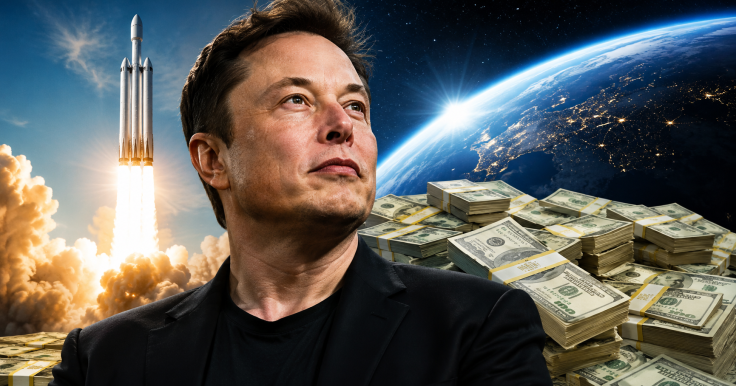
Elon Musk made history this month, becoming the world's first person to surpass a net worth of $1 trillion. His fortune surged on 12 June 2026, when SpaceX launched its record-breaking initial public offering. The event briefly solidified his position in a financial class of one, creating a gap between him and the rest of the world that few can comprehend.
Yet, as quickly as the milestone arrived, market reality intervened. A broad tech sell-off in the days following the IPO saw shares in both Tesla and SpaceX retreat. By late June, the numbers adjusted, and Musk's net worth slipped below the trillion-dollar threshold to approximately $957 billion. While he remains the wealthiest individual by a vast margin, the episode serves as a case study in how modern wealth is built on paper, subject to the whims of the market.
The news came after Oxfam warned that Musk's rise to that level would put him ahead of the combined wealth of the poorest 46 per cent of humanity, around 3.8 billion people. The charity's analysis, published days before the IPO, was designed to do more than count zeros; it was meant to show how grotesque the gap has become.
Musk Trillionaire Shock
SpaceX's market debut on 12 June lifted Musk's fortune to around $1.1 trillion, making him the first person ever to cross the threshold. The company's shares surged on listing, fuelled by investor excitement over rockets, satellites, AI and the usual Musk-era promise that the next frontier is always just one more valuation away.
That moment did not last. Musk's net worth then slipped below $1 trillion after SpaceX and Tesla shares fell in a broader tech sell-off, with Bloomberg's Billionaires Index putting him at about $957 billion. Forbes at roughly $970.2 billion, which is close enough to show the basic point, the market giveth, the market taketh away.
Even so, the speed of the rise was the real story. SpaceX's listing was the largest IPO in history, and Musk's paper wealth briefly soared on the back of a stock frenzy that turned fast into caution. That kind of volatility is not unusual in markets, but when a single man's fortune can move by hundreds of billions, the scale is almost absurd.
The Terrifying Reality Of Musk's Trillionaire Moment
Oxfam's central claim was blunt. It said Musk, once he reached trillionaire status, would be wealthier than the poorest 46 per cent of the world's population combined, equivalent to about 3.8 billion people. The group also said his wealth had grown by more than $550 billion in a year, which it framed as more than $1 million a minute.
Nabil Ahmed, Oxfam's senior economic justice policy lead, put the argument in political terms rather than financial ones. He said, 'A trillion dollars in the hands of one man is incompatible not only with an affordable economy, but also with a healthy democracy.' He added, 'Economic inequality begets political inequality, and ordinary people bear the brunt while billionaires continue to write the rules for their own benefit.'

That is the part critics keep returning to because Musk is not just wealthy; he is powerful in ways that spill over into business, politics and public debate. He has influence over electric vehicles, space launches, satellite networks, artificial intelligence and social media. One man, several industries, and a balance sheet so large it starts to look like a system failure rather than a personal success story.
Why The Number Matters
The trillionaire label matters partly because it is symbolic, and symbols travel fast. It is also useful shorthand for a deeper argument about what happens when wealth compounds faster than institutions can regulate it. Billionaires are increasingly using money to shape politics, media and public life, which is why Musk's case has become a lightning rod rather than just a stock-market curiosity.
To be clear, Musk did not suddenly become poor when his net worth slipped below the trillion-dollar line. He remains the world's richest person by a huge margin, with the bulk of his fortune tied to shares rather than cash. If SpaceX or Tesla rebounds, he could cross the line again, which is exactly why the episode feels less like a finish than a warning.
And that warning is not subtle. When one person can nearly match the combined wealth of billions, the old language of success starts sounding a bit thin. The question is no longer whether Musk can become a trillionaire. It is what kind of world lets that possibility feel normal.
Musk did not suddenly become poor when his net worth fell. He remains the most powerful financial actor in the modern era. His brief run as a trillionaire is likely only the beginning of a conversation about how we regulate, view, and value the extreme concentration of resources in the 21st century.
© Copyright IBTimes 2026. All rights reserved.
- Recommended For You