SpaceX Targets a Valuation Higher Than Meta and Berkshire Combined—While Making Less Revenue Than Macy's
From Starlink dominance to a $28.5 trillion AI bet: Is Elon Musk's latest venture the backbone of a new global infrastructure or Wall Street's most expensive leap of faith?
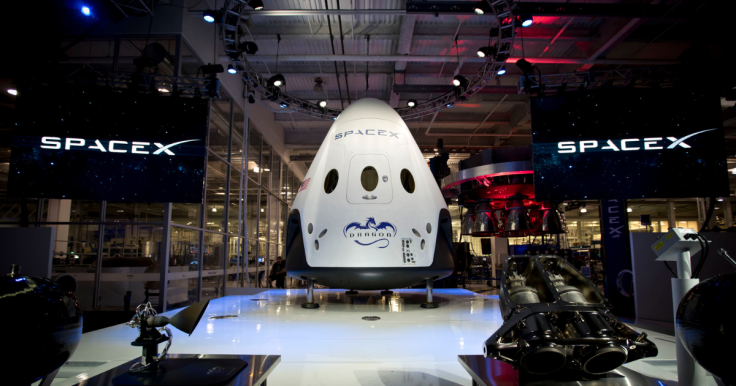
SpaceX is urging New York investors to value the aerospace giant at more than $1.7 trillion, a figure eclipsing the combined market capitalisation of Meta and Berkshire Hathaway, despite currently generating less annual revenue than the US retail chain Macy's.
The company's latest S-1 filing, which posits a staggering $28.5 trillion 'SpaceX economy impact' based largely on future AI dominance, has triggered a fierce debate on Wall Street.
While the firm's Starlink division continues to demonstrate strong growth, the massive capital burn of its artificial intelligence arm remains a significant point of contention. As trading of SPCX stock fluctuates, analysts remain divided on whether this bet on orbital data centres represents the next frontier of global infrastructure or an overhyped gamble.
The company told the US Securities and Exchange Commission that this is the pool of money it is ultimately competing for. The main keyword in that bold promise is growth.
How SpaceX Builds Its $28.5 Trillion SpaceX Economy Impact
SpaceX's S-1 filing breaks the $28.5 trillion total addressable market into three slices. Only $370 billion is tied to 'space-enabled solutions', the rockets and satellites that have defined the company's first two decades.
A further $1.6 trillion is linked to connectivity through Starlink. The remaining $26.5 trillion, more than 90% of the total, is pinned on AI.
The AI portion is where the ambition really runs wild. According to the prospectus, that segment includes an estimated $2.4 trillion for AI infrastructure, $760 billion for consumer subscriptions, $600 billion for digital advertising and a vast $22.7 trillion for enterprise applications.
That last figure alone is roughly 30 times the size of today's entire enterprise software market. Nothing in the filing explains, in concrete operational terms, how SpaceX bridges that gap, beyond leaning heavily on the acquisition of Musk's AI company and on the promise of orbital data centres.
The company says it plans to start deploying AI compute satellites from 2028, transforming orbit into the next frontier for data centres, powered by solar arrays in sun-synchronous orbit.
At the moment, independent estimates put the global AI infrastructure market at about $101 billion in 2026, potentially doubling to $202 billion by 2031.
SpaceX is effectively asking investors to accept that the market will grow not by multiples, but by orders of magnitude, and that it will capture a large chunk of that expansion.
The Real Numbers Behind The SpaceX Economy Impact
The news came after the prospectus made clear how modest today's numbers look against that trillion-dollar horizon.
The connectivity unit, led by Starlink, booked $11.39 billion in revenue in 2025 and is currently SpaceX's only profitable business line. The core space segment, which includes launch, lost $619 million on an operating basis in the same year, while the AI division posted a $2.5 billion operating loss.
Starlink itself is a very different story. By February 2026, it had passed 10 million active users, adding 1 million subscribers in just 53 days, a growth rate most telecoms would kill for.
As of early 2026, Starlink accounted for roughly 69% of the company's revenue, operated in 160 countries and territories and had around 9,600 satellites in low Earth orbit. Its EBITDA margin reached 63% in 2025, among the fattest margins anywhere in global telecoms.
The problem is that this cash machine is being used to feed an AI operation that is burning money at a staggering pace. In the first quarter of 2026 alone, SpaceX's AI unit spent $7.72 billion and generated a $2.47 billion operating loss.
The prospectus explicitly warns about the company's history of net losses and states that it may not achieve profitability in the future. Overall, SpaceX recorded a net loss of $4.28 billion in the first three months of 2026, following a $4.94 billion loss in all of 2025.
Since its creation, the company has racked up a cumulative deficit of about $41.3 billion.
Wall Street's Take On The SpaceX Economy Impact
SpaceX joined Nasdaq in June under the symbol SPCX with a target valuation of $1.75 trillion, the largest initial public offering on record. Shares opened at $150 and closed their first session at $161, a 19% jump. Within days, the stock surged to an all-time intraday high of $225.64 on 16 June before retreating to $147.11 by 23 June, wiping out hundreds of billions in paper value in under two weeks.
Some analysts are openly sceptical. One major research house initiated coverage with a fair value of $780 billion, barely half the IPO target, citing doubts about the AI assumptions while acknowledging SpaceX's dominance in launch and satellite broadband.
In the future, a trillion times a trillion dollars will be spent on making antimatter to travel to other star systems
— Elon Musk (@elonmusk) June 19, 2026
Others have argued that the company's equity is significantly overvalued and that investors are likely to see better entry points once early hype fades.
Governance has also raised eyebrows. Musk serves simultaneously as chief executive, chief technology officer and chair of the board, with roughly 85% of total voting power. That effectively makes him impossible to remove without his own consent, a concentration of control that institutional investors usually treat as a red flag.
On top of that, SpaceX is carrying $20 billion in AI infrastructure debt via a bridge loan that matures 15 months after the IPO, a sizeable refinancing risk in a market that can turn on a dime.
The company is also running an unusually complex lock-up schedule for staff, allowing some insiders to sell up to 20% of their restricted shares after first-quarter earnings, with further tranches unlocking at 70, 90, 105, 120, and 135 days post-IPO, and another large slice unlocked after the second earnings report.
How The SpaceX Economy Impact Reaches Beyond Wall Street
The argument for taking SpaceX's impact on the economy seriously does not rest solely on its share price. The company already controls a large share of the orbital infrastructure that underpins global communications.
As of June 2026, Starlink accounts for around three-quarters of all active manoeuvrable satellites in Earth orbit. Governments, defence contractors, farmers, shipping firms, airlines, you name it, are increasingly dependent on that network.
The acquisition of Musk's AI venture has only deepened that reach. SpaceX now owns one of the largest AI training clusters on the planet, the Grok AI models, a chatbot, an image generator and the social platform X, formerly Twitter.
SpaceX in IPO filing: "We believe we have identified the largest actionable total addressable market in human history. We estimate that our quantifiable TAM is $28.5 trillion, consisting of $370 billion in Space from space-enabled solutions; $1.6 trillion in Connectivity across… https://t.co/CBTpfJECik pic.twitter.com/yh54mKFlQE
— Sawyer Merritt (@SawyerMerritt) May 20, 2026
The prospectus notes that its global TAM estimate deliberately excludes China and Russia. In other words, the $28.5 trillion figure rests on a world already shaped by geopolitical fracture, and on the assumption that SpaceX and its customers operate largely outside those markets.
Independent research on past mega-IPOs suggests that gravity usually wins. A Truist Wealth study of 30 major US offerings found all of them trading below their debut price after one year, with an average drawdown of 55%. Some fell 90%.
For investors, then, the economic impact of SpaceX is a double-edged sword. If even a fraction of the AI and orbital data centre vision materialises, the company could reshape who controls computing infrastructure and space-based communications.
If it does not, the fallout from a business of this size, with this much critical infrastructure under its control and this level of leverage, will extend far beyond a few disappointed shareholders.
Space Exploration Technologies, trading under the ticker SPCX, has always sold itself as more than a rocket firm. Founded in 2002 by Elon Musk, it dominates commercial launch, runs the Starlink broadband constellation and now controls a rapidly expanding artificial intelligence arm after acquiring Musk's AI start-up earlier this year.
The prospectus argues that these three pillars, space, connectivity and AI, can eventually turn SpaceX into the backbone of a new kind of global infrastructure.
© Copyright IBTimes 2026. All rights reserved.
- Recommended For You