

Starship Flight 13 Will Carry Starlink Satellites for the First Time in Test That Shapes Your Internet
Five failed engines and a botched flip grounded Starship for 52 days before this attempt
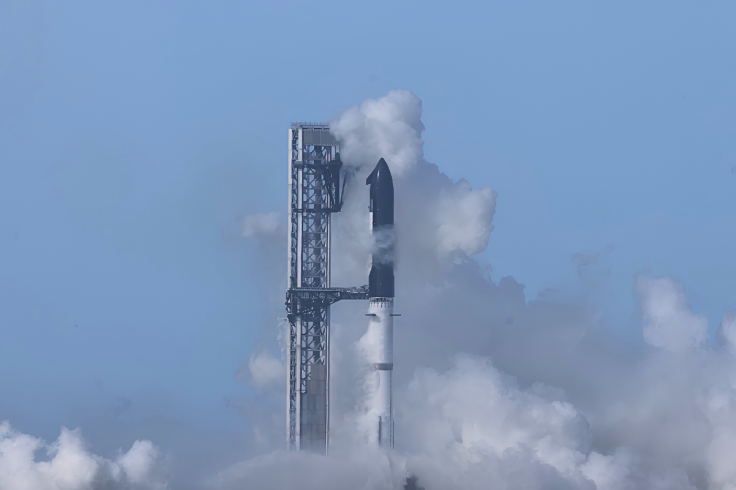
SpaceX will attempt to launch its Starship rocket as early as Thursday, 23 July, from its Texas Starbase, carrying 20 next-generation Starlink V3 satellites for the first time in a crucial test deployment that paves the way for faster internet for millions of US households.
The 90-minute window opens at 5:45 p.m. Central Time, the company said in a statement on Sunday. The attempt follows a last-second abort on 16 July, when Starship's computers stopped the countdown moments before liftoff over engine trouble. Reuters reported the scrub wiped about $100 billion (£74 billion) off the company's market value.
A Launch Date That Changed Three Times in Three Days
The road back has been anything but smooth. On Friday, SpaceX said it would try again on 20 July. By Sunday, the target had moved to Thursday, 23 July. Hours later, chief executive Elon Musk caused brief confusion on X by posting that the launch would happen on Friday, though he quickly replied to correct his typo, clarifying: 'I mean Thursday.'
Musk said after the 16 July abort that two Raptor engines would be removed and replaced. SpaceX has since confirmed several modifications to Starship's propulsion system to address the engine issue seen on the previous attempt.
What Went Wrong on Flight 12
The deeper fixes trace back to May. During Flight 12, slight differences in engine startup on the ship threw the booster's separation flip off by roughly 90 degrees, according to SpaceX. Five of the Super Heavy booster's 33 engines then failed to re-light, cutting the boostback burn short.
The mishap triggered a Federal Aviation Administration (FAA) investigation that grounded the programme for 52 days. The regulator closed its probe earlier this month after accepting SpaceX's corrective actions, which include a reworked engine startup sequence and hardware changes to improve re-light reliability.
Why Rural Internet Users Have a Stake in Thursday
The 20 satellites won't stay in space. They will extend solar arrays and antennas, attempt to link with the wider Starlink constellation through high-capacity lasers and a ground station in South Africa, then burn up in the atmosphere on the ship's suborbital path. Six carry cameras aimed at Starship's heat shield tiles.
The bigger story is scale. SpaceX says the V3 satellites 'aim to greatly expand the network's capacity and user speeds', but they are too large to fit inside the Falcon 9 rocket. Only Starship can carry them, up to 60 per flight. In its prospectus, SpaceX said it plans to put the first Starlink satellites into orbit on Starship by year's end, followed by routine launches.
Millions of households, many in rural areas beyond the reach of fibre broadband, now rely on Starlink for daily connectivity. Each delay to Starship pushes back the arrival of faster and cheaper satellite service for the customers SpaceX is chasing hardest.
Tomas Novosad, a broadband analyst and founder of Home Internet Plans, says satellite internet is increasingly filling a gap that traditional broadband networks have struggled to close in rural areas.
"Fibre remains the gold standard for home internet where it's available, but extending fibre infrastructure to sparsely populated areas can be difficult to justify economically. That's where services like Starlink have changed the equation. For many rural households, the comparison is no longer between satellite and fibre. It's between satellite and much slower fixed wireless or legacy connections."
Novosad adds that greater Starlink capacity could make that gap even more significant as demand for faster home internet continues to grow.
What Thursday's Flight Must Prove
The booster's main objective is a clean launch, ascent, stage separation, boostback burn, and landing burn at an offshore point in the Gulf. The ship must deploy the satellites, re-light a single Raptor engine in space, and complete a controlled splashdown in the Indian Ocean.
This is the 13th Starship test since 2023 and only the second flight of the V3 vehicles. If Thursday goes to plan, the timeline for faster internet holds. If it slips again, so does the wait for everyone counting on it.
© Copyright IBTimes 2026. All rights reserved.