Elon Musk's 14 Children Could Inherit £37 Billion Each... But The World's First Trillionaire Says To Not Count On It
When a trillion collides with blood ties, Elon Musk is betting on merit over legacy.

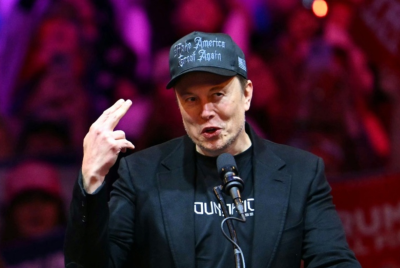
Elon Musk has said he will not automatically leave his trillion‑dollar fortune to his 14 children, telling a Wall Street Journal event in New York this week that handing wealth and control of his companies to his heirs would be 'a mistake.' The comments from Elon Musk, who has just become the world's first trillionaire on paper after SpaceX's blockbuster stock market debut on Friday, cut directly against the more familiar billionaire script of dynastic inheritance.
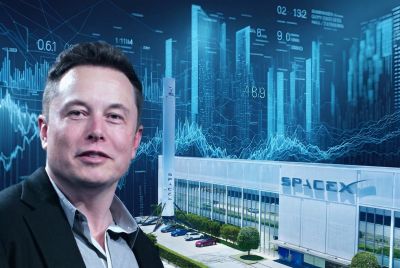
The extraordinary numbers arrived after SpaceX began trading publicly, putting the rocket and satellite company's value at $1.77 trillion and catapulting Musk's personal net worth to unprecedented levels. He was already the world's richest man; the listing created a new category of ultra‑wealth that few countries, let alone individuals, can match on their balance sheets. Into that heady mix, Musk has now dropped a clear signal that his children should not count on the windfall.
Speaking to the Wall Street Journal's CEO Council, the 54‑year‑old said he rejects the idea that his offspring should automatically receive shares in his businesses. 'I am definitely not of the school of automatically giving my kids some shares of the companies, even if they have no interest or inclination or ability to manage the company,' he said. 'I think that's a mistake.' It is not a legal declaration and nothing is filed, but as mission statements go, it is unusually blunt.
BREAKING: Elon Musk has become the world's first trillionaire.
— Fox News (@FoxNews) June 12, 2026
After SpaceX raised a record $75 billion in its IPO, Musk’s net worth shot up to top $1.1 trillion when the stock began trading Friday, putting him in an economic class of his own.
Combined with his holdings in… pic.twitter.com/QwGBjkOTFc
Elon Musk, SpaceX And The Trillion-Dollar Question
Musk has deliberately styled himself as an engineer‑founder rather than a conventional corporate mogul, even as his companies have grown into industrial giants. Tesla reshaped the car market, while SpaceX, now valued at $1.77 trillion, dominates the commercial rocket business and is a critical contractor for Nasa and the US government.
Those businesses depend heavily on Musk's personal brand and appetite for risk, which is precisely why succession makes investors nervous. He told the Journal event that he had already identified people he believes are capable of running his companies if anything were to happen to him, according to Business Insider. He did not name them, and no formal succession plan has been made public.
Here lies the tension. On one hand, Musk often presents himself as a ruthless rationalist who prioritises competence over sentiment. On the other, his private life is sprawling, messy and, at times, openly hostile. It is widely reported that he has 14 children with four women, a modern dynasty in raw numbers if not in unity.
He had six children with his first wife, the author Justine Wilson, including one son who died in infancy. He later had three children with the musician Grimes. Four more children are with tech executive Shivon Zilis, and he shares one child with conservative influencer Ashley St Clair. This is not the tidy nuclear family that inheritance lawyers draw on whiteboards.
The child most publicly estranged from him, Vivian Jenna Wilson, changed her name and legally transitioned in 2022. In a court filing, she said both her gender identity and her wish to sever ties with her father drove the decision. 'I no longer live with or wish to be related to my biological father in any way, shape or form,' she wrote, according to the Associated Press. Whatever Musk thinks about passing on shares, it is hard to imagine Vivian queueing up for a board seat.
Musk's Trillion And What His Children May Never See
The scale of the sums involved is almost abstract. If, in a purely theoretical scenario, Elon Musk died suddenly and his wealth were divided evenly, each of his 14 children could receive around $50 billion. That back‑of‑the‑envelope figure, based on his current net worth, is not a formal valuation of his estate and would be complicated in reality by taxes, fluctuating asset prices and corporate control structures. Still, it gives a sense of what he is refusing to promise.
Musk has spent the past decade recasting himself as a prominent far‑right voice online, especially on his X platform, where he insists he is defending 'free speech.' That political turn has deepened the divide between Musk and parts of his own family and raised questions about who, within that constellation of children and former partners, would even want to inherit both the money and the baggage.
🚨 BREAKING: ELON MUSK LAUNCHES SpaceX on the Nasdaq, HISTORIC DAY
— Eric Daugherty (@EricLDaugh) June 12, 2026
He just made history, largest IPO ever!
World's first trillionaire! 🔥 pic.twitter.com/QETFHD80kP
None of this means Musk's children will receive nothing. There is no public will, no trust documents on the record, and no detailed estate plan has been disclosed. What he has offered instead is a philosophical position about merit, interest and capability. Whether that hard line softens in private conversations with lawyers and advisers is unknown, and nothing is confirmed yet, so everything should be taken with a grain of salt.
The unanswered question is what becomes of an unprecedented private fortune if it does not glide effortlessly to the next generation. Philanthropy, foundations, long‑term corporate trusts or some hybrid could all be in play. Until Musk stops talking in generalities and starts signing documents, his trillion remains a live experiment in power, in family, and in how much one man really means it when he says no.
© Copyright IBTimes 2026. All rights reserved.
- Recommended For You