Iran Calls Trump's Cease-Fire Post a Pack of Lies as Tehran Stays Determined to Win War
Tehran's swift rejection of US peace claims underscores a deepening standoff over maritime control in the Middle East.

Here is the updated article, incorporating four SEO-optimised subheadings of exactly seven words each. The text maintains the required UK editorial standards, with multiple paragraphs distributed naturally under every subhead.
Senior Iranian officials have outright rejected claims by Donald Trump that Tehran requested a cease-fire, issuing coordinated statements on Wednesday that reaffirm the country's commitment to the ongoing conflict.
The swift denials follow a social media post from the US president asserting that an unnamed Iranian leader had pleaded for a peace agreement. The diplomatic friction highlights a widening gap between Washington's public messaging and Tehran's legislative manoeuvres to assert permanent authority over crucial maritime trade routes, while regional mediators struggle to bring both sides to the table.
Iran Rejects Trump Cease-Fire, Determined To Win
Seyyed Mehdi Tabatabaei, a spokesperson for the office of Iranian President Masoud Pezeshkian, dismissed the US president's assertions. Writing on the social media platform X, Tabatabaei stated that Iran's position on defending itself against 'the forces of evil' and the conditions for concluding the conflict remain completely unaltered.
'The stance of the Islamic Republic of Iran regarding the defense of the homeland against the onslaught of the forces of evil and the conditions for ending the imposed war has undergone no change, and there is no regard whatsoever for the de`lusions and lies of the criminal aggressors,' Tabatabaei wrote.
He further noted that the nation stands resolute to defend its borders, adding that national unity serves as the primary mechanism for their eventual victory.
Esmail Baghaei, a spokesperson for the Iranian Foreign Ministry, supported the presidential office's denial. According to state media, Baghaei characterised Trump's announcement as 'false and baseless'.
Trump Claims Unverified Cease-Fire On Truth Social
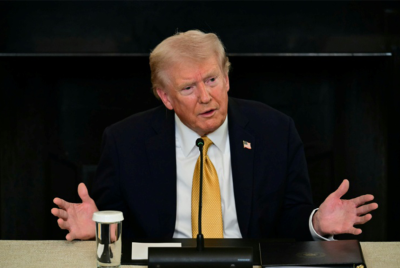
The rejections stem from a post by Trump on Truth Social, in which he claimed that 'Iran's New Regime President' had approached the United States to halt hostilities. Trump described this unspecified leader as 'much less Radicalized and far more intelligent than his predecessors'.
Trump did not name the official he was purportedly communicating with. Previous reports indicate that Iranian parliamentary speaker Mohammad Ghalibaf is currently leading discussions with regional mediators. However, Ghalibaf has historically mocked the US president over earlier, unsubstantiated claims that a peace deal was advancing.
Trump Demands Open Strait Of Hormuz Access
In his online statement, Trump explicitly conditioned any potential peace agreement on the operational status of the Strait of Hormuz. The president threatened severe military consequences if the waterway is not immediately reopened to global shipping.
'We will consider when Hormuz Strait is open, free, and clear,' Trump posted. 'Until then, we are blasting Iran into oblivion or, as they say, back to the Stone Ages!!!'
The US president's cease-fire announcement was issued on Wednesday morning, directly preceding the opening of the New York Stock Exchange and the Nasdaq. Over recent weeks, Trump has established a distinct pattern of making significant announcements regarding military progress in the Middle East shortly before US financial markets begin trading.
Iran Secures Strait Of Hormuz Amid War
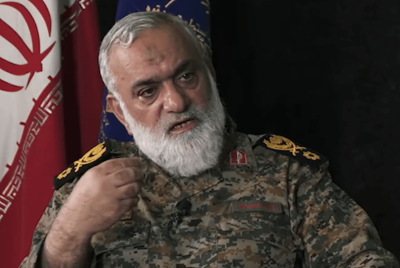
Despite the threats originating from Washington, the Islamic Revolutionary Guard Corps (IRGC) issued a defiant statement confirming its intention to maintain full control over the Strait of Hormuz. The military branch made clear that external demands would not alter their maritime strategy.
'This strait will not be opened to the enemies of this nation through the ridiculous spectacle by the president of the United States,' the IRGC declared.
The military's operational stance is now heavily reinforced by recent moves within the Iranian legislature. Parliament recently passed legislation designed to grant the Islamic republic permanent control over the strait. The new law includes provisions to levy massive tolls on commercial shipping, potentially charging vessels as much as $2 million to navigate the key trade route.
While international mediators continue working to establish direct negotiations between Washington and Tehran, Iran's leadership maintains stringent preconditions for peace. Officials have repeatedly stipulated that the war will not conclude until the Iranian government receives formal financial reparations from both the US and Israel.
© Copyright IBTimes 2026. All rights reserved.
- Recommended For You