Karoline Leavitt Faces Intense Scrutiny After Suggesting Foreign Leaders 'Were Killed' Over US Negotiation Disputes
White House Press Secretary Sparks Controversy with Remarks on Iranian Leaders' Deaths
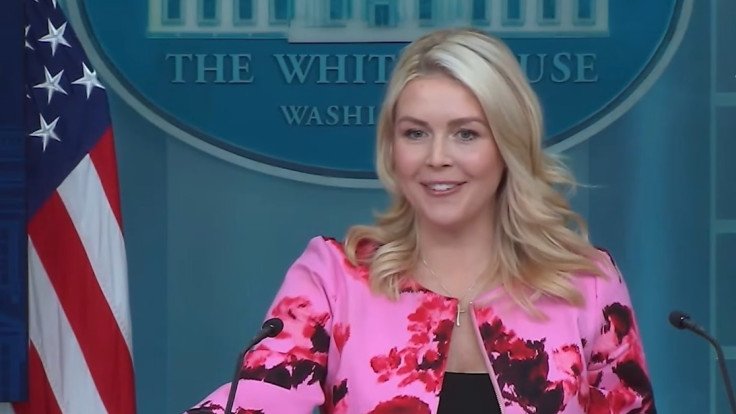
White House press secretary Karoline Leavitt drew immediate scrutiny on 30 March after openly declaring that Iranian leaders who 'strung' the United States 'along in negotiations' had paid for it with their lives.
The remarks came during an afternoon briefing at the James S. Brady Press Briefing Room, amid day 31 of Operation Epic Fury, the joint US-Israeli military campaign against Iran that began on 28 February 2026. Leavitt was fielding questions about whether the Trump administration was negotiating with a legitimate Iranian leadership after Supreme Leader Ali Khamenei was killed in the opening wave of strikes, along with dozens of other senior officials.
Her answer reframed the killings not as a casualty of war but as a consequence of failed diplomacy; a characterisation that journalists and critics took immediate exception to.
Leavitt's 'No Longer on Planet Earth' Remarks, Explained
The exchange was prompted by Politico reporter Dasha Burns, who pressed Leavitt on how the president could be confident he was dealing with legitimate representatives of the Iranian government, given the fractured state of its leadership following the strikes. Secretary of State Marco Rubio had acknowledged earlier in the day that it was not clear who held actual authority inside Iran.
Leavitt replied that verification was 'part of the ongoing process' and that anything communicated privately would be tested. She then pivoted to a pointed comparison between the current Iranian interlocutors and those who came before them.
'When the president says more reasonable, again, these folks are appearing more reasonable behind the scenes privately in these conversations, than perhaps some of the previous leaders, who are now no longer on planet Earth because they lied to the United States,' she said.
She then made her most direct statement on the matter. 'They strung us along in negotiations, and that was unacceptable to the president, which is why many of the previous leaders were killed.' Leavitt repeated a version of the claim moments later, saying the previous regime's leaders 'faced the consequences of the United States military.' The White House published video of the briefing without a full text transcript at time of publication.
The Leaders Leavitt Was Referring To
Leavitt did not name specific individuals, but the context was unambiguous. Operation Epic Fury killed Supreme Leader Ali Khamenei along with dozens of senior Iranian officials in its opening 12 hours on 28 February, including IRGC commander Mohammad Pakpour, Defence Minister Aziz Nasirzadeh, and senior Khamenei adviser Ali Shamkhani. The Israeli Defence Forces confirmed those deaths in official statements.

The administration had framed those killings publicly as a military necessity, not as an outcome of negotiating pressure. Leavitt's comments on 30 March blurred that line by linking the deaths directly to what she described as Iran's bad-faith conduct in earlier diplomatic talks; talks that predated the launch of Epic Fury.
Ali Larijani, a pragmatic senior official considered instrumental in advancing the 2015 Joint Comprehensive Plan of Action, was separately killed on 17 March, having initially emerged as a de facto interim leader after Khamenei's death.
Iran Denies Talks; Ghalibaf Named as Point of Contact
The briefing came one day after Trump publicly named Iranian parliamentary speaker Mohammad Bagher Ghalibaf as the Iranian figure he had been speaking with in what he described as productive peace talks, details of which he had previously shared only on Truth Social. Iran's government denied that any such talks had taken place. Ghalibaf himself, in a post on X, warned that any ground invasion would be met with a 'relentless' and 'decisive' response.
The contradiction between Trump's account and Iran's denial was the backdrop against which Burns asked her question. The administration has not produced records or transcripts of the alleged conversations, and Rubio's own admission that there were 'fractures' and 'dissent within the leadership' deepened uncertainty about who, if anyone, could bind Iran to a negotiated agreement.
Leavitt acknowledged the uncertainty but insisted the process was working as intended. 'If there's ever a chance for a deal, again, the president is open to listening, but it does not deter him from focusing on the military objectives that he set out 30 days ago,' she told the room.
The IMF warned the same day that the Iran war had created a 'global shock' to the world economy, with recovery prospects dimming for countries still emerging from earlier crises.
The Diplomatic Framing That Critics Found Most Troubling
What made Leavitt's remarks stand out, even in the context of an administration that has been unusually direct about the use of lethal force, was the explicit causal link she drew between Iran's negotiating posture and the deaths of its leaders. Most administrations, when publicly discussing the killing of foreign officials, cite military or national security justifications. Leavitt cited diplomatic grievance.
She repeated the framing a second time, describing the killed leaders as having 'faced the consequences of the United States military' for lying and stalling. The PBS NewsHour's coverage of the briefing noted that Leavitt also declined, during the same briefing, to comment on reports that US-made landmines had been spotted in Iran, saying only: 'I don't have any comment on that report today.'
Leavitt opened the briefing by noting that her team had said a prayer before entering the room, given the Easter period. She said American service members 'appreciate the prayers and support from the commander in chief.' The administration is simultaneously pursuing what it describes as a diplomatic track with Iran while conducting what CNN's Day 31 live coverage described as the 'most intense' day of strikes yet, a duality Leavitt defended by calling diplomacy Trump's 'number one option and priority.'
With six American service members already killed in Iranian drone strikes, an IMF warning of global economic shock, and a White House press secretary publicly tying the deaths of foreign leaders to failed negotiations, the question of where Operation Epic Fury ends, and on whose terms, has no clear answer.
© Copyright IBTimes 2026. All rights reserved.
- MOST POPULAR IN World