Thucydides Trap Explained: How an Ancient Greek Theory Is Shaping Modern US-China Ties
This Greek theory suggests that when a rising power like China challenges a dominant giant like the US, war becomes nearly inevitable


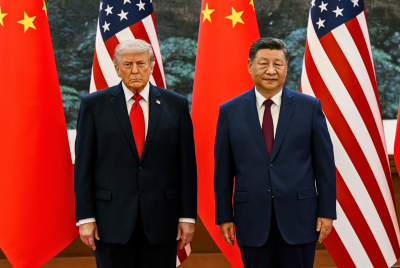
As Donald Trump and Xi Jinping convene in Beijing, a ghost from ancient Greece looms over their high-stakes negotiations.
This historic concept, used by the Chinese leader to frame modern tensions, suggests that a catastrophic clash between a rising power and an established giant might be unavoidable. Understanding this theory is now essential to grasping whether the world's two largest economies are on a collision course for war.
An Ancient Theory Enters Modern Diplomacy
While Xi Jinping and Donald Trump held talks in Beijing this Thursday, an ancient Greek theory took an unlikely lead in the strategic debate between the two global giants: the 'Thucydides Trap.'
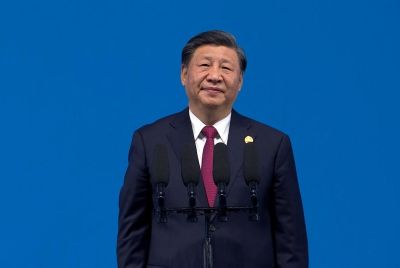
In his initial comments, Xi questioned, 'Whether China and the United States can transcend the so-called Thucydides Trap and create a new normalisation of relations between major powers; whether we can join hands to address global challenges and inject greater stability into the world; whether we can advance the well-being of the peoples of our two countries and the future destiny of humanity, and jointly create a better future for bilateral relations.'
Xi Jinping is putting on a clinic:
— Power to the People ☭🕊 (@ProudSocialist) May 14, 2026
“The whole world is watching our meeting. The International situation is turbulent. The world is at a new crossroads: Can China and the US overcome the Thucydides Trap and create a new paradigm to meet global challenges together.”
The… pic.twitter.com/GyU0I10TV0
As the two-way talks began, Xi presented the path of China-US ties as a critical dilemma for the modern world. This phrase points to a profound worry in today's political landscape—whether the increasing friction between Washington and Beijing can remain within the bounds of competition or is destined to collapse into open war.
On the surface, the expression feels like something from a classroom, yet it is actually driving the real-world friction over trade battles, microchip bans, naval stand-offs in the Indo-Pacific, and the cutthroat scramble to lead in technology.
The Greek Origins of a Global Warning
Harvard scholar Graham Allison brought the 'Thucydides Trap' into the mainstream, taking inspiration from the work of Thucydides, a historian from ancient Greece. Nearly 2,500 years ago, Thucydides examined the Peloponnesian War fought between Athens and Sparta, deciding that the growth of Athens and the panic it caused in Sparta made a military clash unavoidable.
Allison eventually applied this logic to the modern world. He argued that whenever an emerging nation begins to unseat a leading global power, deep-seated pressures build up that push both sides toward a clash—even if nobody actually wants to fight.
He turned to this perspective to study the shifting dynamics between Washington and Beijing as their roles on the world stage change.
How China Is Challenging the Established Order
Over the past thirty years, China's swift growth has completely reshaped the world's hierarchy. Whether it is in factories and global trade or high-end tech like AI, warships, and computer chips, Beijing is steadily moving into spaces that Washington has controlled for decades. What started as a race for market share has now grown into a deep-seated battle for global influence.
These frictions are now playing out through trade taxes, tech bans, online security, and the status of Taiwan, alongside a scramble for supply chains and naval dominance in the Western Pacific. The bond has frayed further during Trump's time in office, as Washington ramps up hardware curbs and takes a harder line on trade with Beijing. Experts suggest this broadening standoff is a textbook example of the deep-rooted rivalry defined by the 'Thucydides Trap.'
Xi's Vision for Escaping the Historical Pattern
Xi has turned to this expression repeatedly throughout the last ten years, even during his 2024 talks with former US President Joe Biden. His point has always been the same: a fight between China and the US is not a foregone conclusion, so long as both sides figure out how to get along through what Beijing describes as 'mutual respect' and 'win-win cooperation.'
“We should be partners, not rivals," says Chinese President Xi Jinping to US President Donald Trump at a summit in Beijing.
— Bloomberg (@business) May 14, 2026
In his opening remarks, Trump touted his “fantastic relationship” with Xi, and said US business leaders were in the city to "pay respects" to Xi and China… pic.twitter.com/ui1DmGfXfK
Positioning China as a Global Peer
By bringing this up to Trump's face, Xi seemed to push the current friction past simple arguments over taxes or trade gaps. Beijing now sees the competition as a massive trial to see if a new power and an old one can break the historical cycle of war. Using this term also helps China claim its spot as an equal to the US, rather than just another follower on the world stage.
© Copyright IBTimes 2026. All rights reserved.
- Recommended For You