

Proposed Detention Plan Would Reportedly Pack Eight Migrant Kids Into a Room Sharing Only One Toilet
Federal officials are quietly planning massive emergency facilities to house up to 3,000 unaccompanied children amid intensifying second-term immigration enforcement
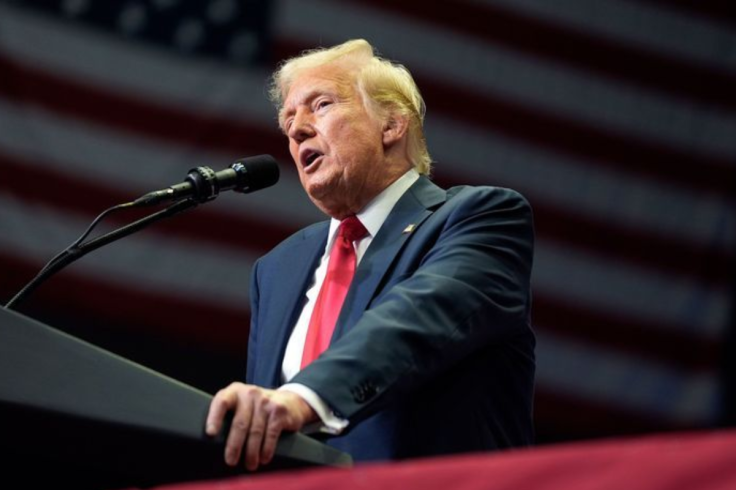
Donald Trump's administration is quietly seeking contractors to build a vast new network of detention campuses that could hold up to 3,000 unaccompanied migrant children in a single 'emergency influx facility' in the United States, according to available documents.
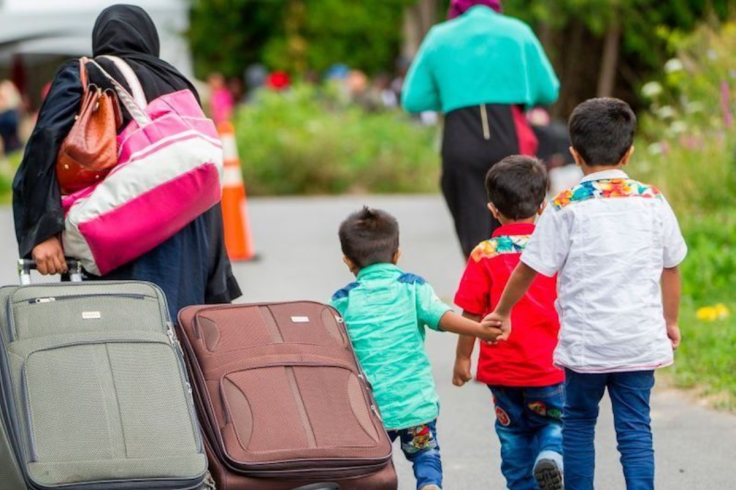
These children are minors who crossed the US‑Mexico border without a parent or legal guardian and are now held in more than 150 government‑funded shelters.
Federal health officials claimed the rapid site mobilisation blueprint addresses growing capacity pressures as second-term border policies intensify.
The unfolding developments coincide with widespread administrative disruption surrounding legal representation grants for thousands of minors in federal custody.
It is the latest escalation in a system critics say is veering away from child protection and edging towards industrial‑scale warehousing.
Donald Trump's New Child Detention Blueprint
The outline given to prospective contractors on Tuesday is stark. Each facility must be able to confine eight children per room, with those eight sharing a single toilet, shower and sink. Recreation space does not have to be outdoors. An eight‑foot perimeter fence is mandatory.
Officials from the Administration for Children and Families, the Health Department arm that oversees unaccompanied minors, told companies they want 'rapid site mobilisation' and a 'phased ramp‑up' that would allow at least 400 children to be detained within 30 days of a contract being signed. Task orders could then scale up to requests for 1,000 additional beds at a time.
One official's explanation was blunt. 'This gives us speed,' they told the call. 'We're looking to see whatever you got.' The agency has not confirmed where the complexes would be built but said it aims to award contracts by the end of the year, signalling a desire to move quickly once a provider is chosen.
The physical specifications are couched in the language of logistics, not childhood. Each site must sit within 30 miles of a hospital and within 30 miles of paediatric care, dentists, behavioural health providers and diagnostic services.
Ideally, it should also be within 60 miles of an airport. Quarantine space is built into the design: at least 40 beds in a 400‑bed site, 100 in a 1,000‑bed operation, and 300 quarantine beds in a full 3,000‑child facility.
Even the playground is negotiable. The government's usual requirement of one acre of recreation area per 100 children can be 'a combination of indoor and outdoor', and 'does not need to be a single continuous plot,' officials said.
Donald Trump Policy Shift Collides With Children's Rights
The push for mega‑facilities lands as Trump's second‑term immigration machine intensifies. According to ProPublica, immigration judges have been issuing more than 10,000 removal and voluntary departure orders for immigrant minors every month, far outstripping the pace during his first stint in the White House.
That legal pressure is not theoretical. Last year, as Immigration and Customs Enforcement brushed off warnings from lawyers and advocates about a broader child‑deportation drive, attorneys scrambled to block what they believed were imminent flights.
In one case, lawyers for Guatemalan teenagers in US custody stopped a middle‑of‑the‑night operation after filing a series of sworn statements describing the children's fear of being abruptly sent back.
Those attorneys later accused the Trump administration of trying to push some youngsters into 'self‑deportation' through 'misinformation, coercion, threats and fear.' The allegations remain contested, but they sit uneasily beside the new plan to gather thousands of children in fenced compounds that can be expanded at short notice.
Federal Law Explicit About Children's Rights
Legally, unaccompanied minors fall under the care of the Office of Refugee Resettlement, part of the same Administration for Children and Families now drawing up the new blueprint. Federal law is explicit about their rights.
The Trafficking Victims Protection Reauthorisation Act requires the government to 'ensure, to the greatest extent practicable' that all such children receive legal counsel, and that they are protected from mistreatment, exploitation and trafficking.
On paper, that duty is clear. In practice, it is fraying. Roughly 20,000 immigrant children abruptly lost government‑backed legal representation when a long‑standing contract with the Acacia Centre for Justice ended last month. There was no immediate alternative in place.
The scramble to replace Acacia has been messy and politically charged. The Texas‑based Burke Law Group, which has no evident track record representing unaccompanied children, was suddenly in line for up to $150 million, according to a Health and Human Services notice.
After a backlash, the firm pulled out, later insisting it had only ever considered 'a small portion' of the sum and saying: 'We have decided not to apply for a grant or a contract and we withdrew from consideration.'
Uncertain Future for Detained Minors
Several Democratic senators are pressing Health Secretary Robert F Kennedy Jr to explain how Burke ended up on the shortlist at all. Their questions have only grown louder after the administration awarded a no‑bid contract worth at least $158 million to Our Rescue, an anti‑trafficking organisation whose founder resigned amid allegations of sexual abuse, forced labour and trafficking.
Federal filings suggest Our Rescue could ultimately receive more than $244 million. The group's chief executive, Derek Benner, defended the award in a statement, saying:
'Our Rescue is steadfast on our mission to help vulnerable children across the US and around the world. These are among the most vulnerable children in the world, and they deserve nothing less than the full weight of our experience. We welcome this responsibility and are working on their behalf.'
Nothing in the sprawling new detention proposal has yet been finalised, and contracts may still shift. Until locations are announced and oversight structures clarified, much of what that life will look like for the children inside those rooms of eight remains uncertain.
© Copyright IBTimes 2026. All rights reserved.