NY Teachers Decry Tone-Deaf Placement of Sex Doll Company's Humanoid Robot in Native American Majority School
Teachers, state education officials, and the Seneca Nation condemn a $57,590 AI pilot programme featuring 'Sally', a robot built by a firm tied to adult toy manufacturers.
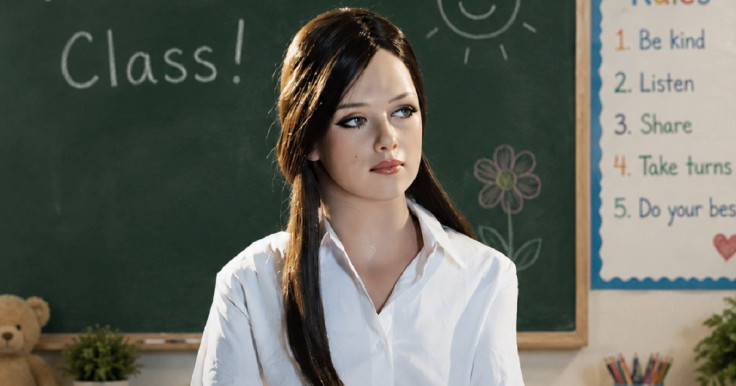
A plan to introduce a humanoid robot into a New York high school has triggered fierce opposition from teachers and Native American community members, who argue the programme raises serious ethical, cultural and privacy concerns.
The controversy has intensified because the robot comes from a company linked to a manufacturer of realistic sex dolls, placing an ambitious classroom AI trial under uncomfortable public scrutiny.
For a community carrying generations of deep-seated trauma from historical boarding schools, watching experimental machines enter their classrooms feels like a painful echo of a troubled past.
As teachers' unions and state education officials demand an immediate pause, the unfolding clash exposes critical gaps in how modern school districts regulate emerging artificial intelligence technologies.
Teachers Say Robot Crosses a Line
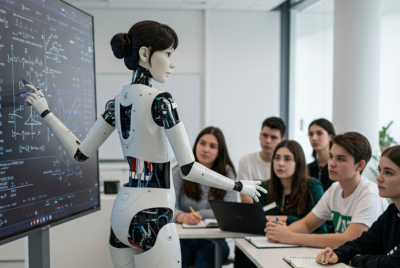
Salamanca High School in western New York is preparing to introduce 'Sally', a humanoid robot developed by Toronto-based Realbotix, as part of a pilot scheme that also includes an AI-powered teaching assistant.
According to the company, the programme will allow students to interact with the robot during lessons while also accessing virtual learning support around the clock through a closed system.
Realbotix describes the initiative as the first deployment of a humanoid robot and AI teaching assistant in a US school district. The company says its M-Series robot is designed to communicate through natural conversation, facial expressions and real-time interaction to support STEM education rather than replace classroom staff.
Lacey Pihlblad, president of the Salamanca Teachers' Association and a teacher at the school, said staff members have deep reservations about both the technology and the company behind it.
'The Salamanca teachers' union as a whole is concerned about the background of the company of Realbotix. We're very concerned about the security of the software that they're implementing, and whether or not the data will be stored, how it will be gathered, are the recording capabilities,' she said.
Pihlblad urged the district to suspend the rollout until more stakeholders have an opportunity to examine the technology and its safeguards. She also argued that New York education is moving away from excessive classroom technology rather than embracing it.
'There's a growing consensus that indicates our students should be exposed to less technology. Placing a humanoid robot into the classroom to interact with our children, I believe, is a massive step in the wrong direction,' she said.
Her union is also negotiating new contract provisions that would introduce protections surrounding artificial intelligence, reflecting a wider concern among educators that AI adoption is moving faster than policy.
Company's Past Overshadows Classroom Rollout
The Toronto company, formerly known as Tokens.com, acquired Simulacra in April 2024 for $16.7 million. Simulacra owned technology associated with realistic companion dolls produced by Abyss Creations, a business widely recognised for manufacturing sex dolls. While Realbotix has since repositioned itself around AI-powered humanoid robots, critics argue that history cannot simply be ignored.
The robot itself cost the Cattaraugus County school district $57,590.
Realbotix has rejected suggestions that its educational robot has any connection to its former business interests. A company spokesperson said the Salamanca pilot is intended to complement teachers, not replace them, by exposing students to emerging AI and robotics technologies within the district's existing STEM curriculum.
The spokesperson also said educators would be able to evaluate the technology under controlled classroom conditions and district oversight.
The Salamanca City Central School District and superintendent Mark Beehler did not respond to repeated requests for comment.
Native American Community Questions Why Salamanca Was Chosen
Nearly 40% of Salamanca High School's students are Native American, and the school sits on the Allegany Territory of the Seneca Nation. For many local residents, that history gives the pilot programme a significance that cannot be separated from generations of educational trauma.
The Seneca Nation declined to comment publicly, but community members voiced strong objections.
'Out of all the schools in New York state, let alone in the US, they chose to experiment on Native American children yet again,' said substitute teacher and Salamanca resident Sierra May Abrams.
She pointed to the lasting legacy of Native American boarding schools, where Indigenous children were forcibly removed from their families in efforts to erase their language and culture.
Alyson Brown, a Seneca Nation member and community health specialist who graduated from Salamanca High School, said many current students have direct family connections to relatives who attended the former Thomas Indian School on Cattaraugus Territory.
'Many native families are viewing this pilot programme as history repeating itself,' Brown said. 'I see nothing positive to come from this being introduced in the classroom setting. I worry for the cognitive development of young minds in this exposure.'
State Officials Raise Privacy Concerns
Opposition has also reached the state level.
Melinda Person, president of New York State United Teachers, described the initiative as 'really inappropriate' and said educators across New York viewed the robot as 'kind of creepy'.
She argued that schools need stronger human relationships rather than increased reliance on screens, algorithms and machines.
The New York State Education Department has also expressed concern. JP O'Hare, assistant commissioner for public affairs, said officials had contacted the district regarding the purchase and raised questions about student privacy, appropriate safeguards and the possibility that robots could perform responsibilities that should remain with qualified education professionals.
'Technology can and should support educators and students, but it should not replace the human judgment or accountability essential to a safe and effective learning environment,' O'Hare said.
The debate unfolding in Salamanca now stretches well beyond one school district. It reflects growing national tensions over how quickly artificial intelligence should enter classrooms, who decides where those technologies are tested and whether educational innovation is keeping pace with the ethical questions it inevitably creates.
As community leaders and advocacy groups rally against the rollout, the dispute underscores a growing imperative for school boards to weigh cultural sensitivity alongside technological ambition.
© Copyright IBTimes 2025. All rights reserved.
- Recommended For You