

Does Ariana Grande Regret Working With Cynthia Erivo? Pop Star Reveals 'Uphill Battle' To Deconstruct Image After Wicked
Ariana Grande doesn't regret Wicked; she regrets ever being underestimated, and she's turning that sting into the engine for whatever — and whoever — comes next.
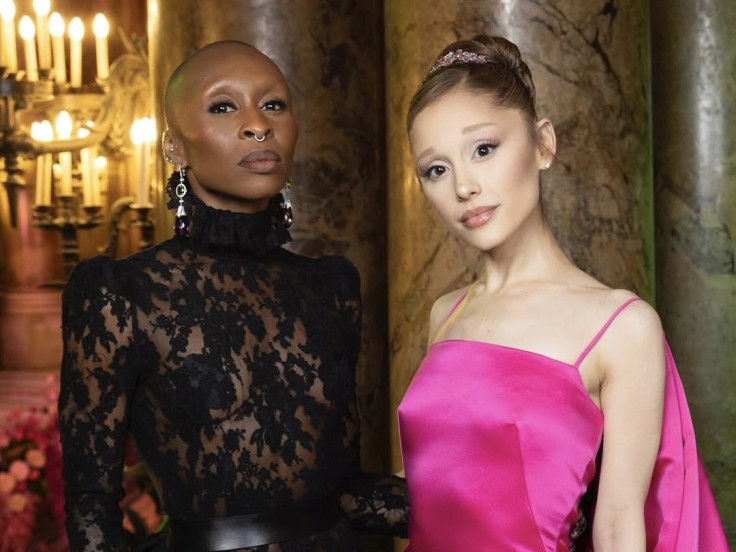
There's a mischievous little question doing the rounds online — did Ariana Grande, on some level, come to regret Wicked? It's the kind of glib framing the internet loves, but it barely scratches what she's actually describing. For Grande, Glinda wasn't just a role; it was a five‑year refit of her entire public self that left her asking, quite seriously, who she is once the pink bubble pops and the cameras move on.
When she talks about letting go, there's no bitterness, just a slightly fragile warmth. 'It feels like a beautiful time to put it in a beautiful book on the shelf next to the other L. Frank Baum books that I collect,' she says — a line so deliberately gentle you can almost hear her placing the spine back in order. That isn't the language of regret; it's someone prising her fingers off a lifelong obsession before it calcifies into a cage.
Ariana Grande's Uphill Battle After Wicked
Grande has been open for years about the fact that Wicked was her north star. As a teenager on Nickelodeon she said she wanted to play Elphaba; in the end, she landed Glinda instead, the 'good witch' whose cheeriness barely conceals a messier interior. The films repaid that childhood fixation in full: the 2024 adaptation brought her a first Oscar nod alongside BAFTA and Golden Globe nominations, and 2025's Wicked: For Good cemented her as a serious screen performer, not just a pop star dabbling in acting for fun.
But the way she tells it, the hardest part wasn't learning the score. It was persuading people to forget the girl they thought they already knew. 'Before "Wicked", I hadn't acted in a decade‑ish,' she says. Her music career, with its 19 Grammy nominations and eye‑watering streaming numbers, had become its own planet — and not always in a good way. 'The whole journey toward "Wicked" and earning the role was a really uphill battle because I had a lot of convincing to do, and a lot of deconstructing the pop star Ariana that everyone knew of. I had to do a lot of deconstructing to convince a lot of people that I could disappear into her'.
That line — 'deconstructing the pop star Ariana' — is quietly devastating. This is a woman whose eyeliner, skin tone and ponytail height have been litigated in public for years, walking into auditions and essentially asking to be seen as a blank page. To do it, she did something pretty radical for someone raised in the era of oversharing: she retreated. Winning Glinda meant, as she puts it, shutting out 'the noise from the world, a lot of whom didn't think I could do it, or was right for it', and locking herself in with the work instead.
Deconstructing Image, Rewriting Craft
Ask her what that work looked like and she doesn't hide behind mystical "I just felt it" talk. 'I'm very much a Stella Adler girlie,' she laughs, aligning herself with an acting philosophy that demands you build a character from the outside in, imagining every corner of their reality until it feels lived‑in. For Grande, that approach wasn't only artistic; it was self‑protection. 'I wanted to do that for Glinda, too, so that when the time came, I wouldn't have to reference my own pain. I could have hers available and know why'.
She attacked Glinda's emotional life like a slightly obsessive archivist, plastering her scripts in coloured sticky tabs — one shade for trust, another for performance, for fear, for genuine softness. Scene by scene she'd interrogate: is Glinda performing here or has her guard slipped? Is this real love or something brittle and defensive? Over time, those colours formed what she describes as a bigger picture, like neat rows of tulips across Oz: a private emotional map that kept her steady through two films and 155 gruelling shoot days.
The point where that groundwork really bites is in Wicked: For Good. In perhaps Glinda's ugliest moment, reeling after Prince Fiyero runs off with Elphaba on their wedding night, she tells the Wizard and Madame Morrible to use Elphaba's sister Nessarose as bait. Grande refused to toss the line away as camp villainy. Instead she wrote out unseen memories — extra little moments of catching Elphaba and Fiyero together — just so that, when she finally spits 'Use her sister', she can mentally walk herself through a lifetime of private humiliations for the first time. 'I really do think [Glinda] is a hero in a lot of ways,' she insists. 'I wanted to know her as well as I know myself'.

It's the sort of nerdy, patient craft that doesn't fit neatly into the meme version of Ariana Grande. Underneath the high‑gloss persona is someone sitting in therapy, tracing 'connective tissue between certain triggers now that also touch on something from way back then', then inventing parallel wounds for a fictional blonde witch so she doesn't have to keep mining her own scars raw. That, more than the vocal acrobatics, is what makes her Wicked work linger.
Life After Oz And Those 'Nervous Monsters'
So where does all that leave her now? Not mired in nostalgia, remarkably. She still has the annotated scripts, the tabs and the 'treasure trove of memories and little secrets' she made for Glinda tucked away somewhere, but she's adamant that it's time to move forward.
On paper, the next steps look almost indecently busy. She's heading into Focker In-Law, John Hamburg's new entry in the Meet the Parents universe, due in cinemas on 25 November 2026, joining Robert De Niro, Ben Stiller, Owen Wilson, Blythe Danner and Teri Polo as a new character, Olivia Jones, marrying into the Focker–Byrnes chaos. Working opposite De Niro was 'amazing', she says; she talks about him with the slightly emotional warmth of someone who still half‑believes she's snuck onto set by mistake.
At the same time she's rebuilding her pop persona on the Eternal Sunshine Tour, a 41‑date run that starts in Oakland on 6 June 2026 and wraps at London's O2 Arena on 1 September, her first tour since 2019. Beyond that, there's a planned West End turn in Sunday in the Park With George alongside Wicked co‑star Jonathan Bailey, and a small role in a future season of American Horror Story, which makes perfect sense given she lights up talking about The Ring, Psycho and the life‑altering jump scares of Signs. She openly says she'd love to lead a horror film one day; given her track record with manifestation, it feels more like a when than an if.
Threaded quietly through all of this is her favourite phrase in the Backstage interview: the 'nervous monsters'. Asked how often self‑doubt still creeps in, she cuts across: 'You mean the monsters? The nervous monsters?' Then, without missing a beat: 'All the time'. She refuses to pathologise them. Instead, she calls that anxiety 'a gorgeous gift' — proof that you care enough to be scared, that your nerves 'carbonate your experience' and make you want to do the thing people assume you can't.
ariana grande tells @backstage what she is taking with her from glinda’s final arc: “‘good’ is doing the work, and the rest is noise. I celebrate the good things and I say thank you when they happen, but I don’t let them disconnect me from the little girl who had the ‘wicked’… pic.twitter.com/xGvej0jZ2Z
— Ariana Grande Today (@ArianaToday) February 9, 2026
There are techniques, she says, to ask those monsters to step aside while you're working and invite them back later, but she's very clear she doesn't want them gone. They're her guardrail against complacency, the thing that keeps her tethered to the kid in Boca Raton with the Wicked poster and GarageBand on a battered computer, not the woman with the Oscar campaign and the tour sponsor.
So no, Ariana Grande doesn't sound like someone who regrets working with Cynthia Erivo on Wicked, or regrets Glinda at all. If anything, she sounds like someone grateful for the battle — furious, still, that she had to fight so hard to be seen as an actor, but stubbornly committed to using that fight as fuel. 'I celebrate the good things and I say thank you when they happen,' she says. 'But I don't let them disconnect me from the little girl' who wanted all of this in the first place. The image will keep evolving. The work, she's decided, is non‑negotiable.
© Copyright IBTimes 2026. All rights reserved.