Is Donald Trump 'Sensitive' About Fame? Here's Why Nicolle Wallace Says He Listens to Icons
For Donald Trump, the loudest political criticism may be the kind that also challenges his place in the celebrity pecking order.
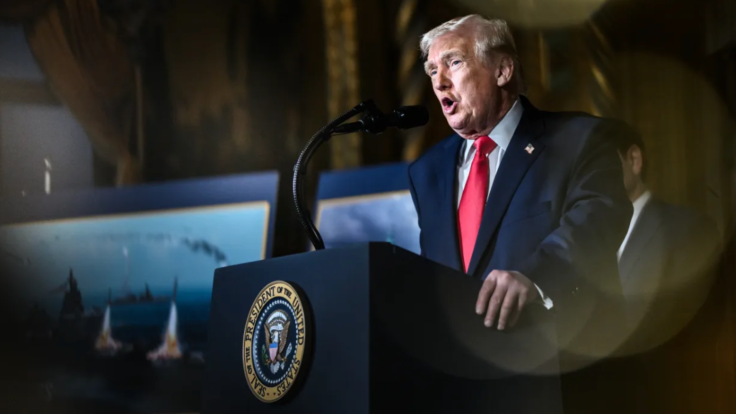
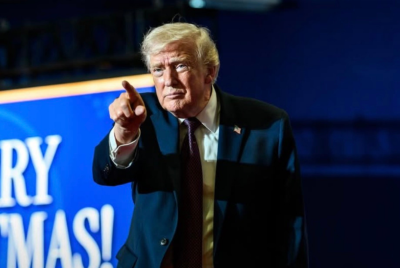
Nicolle Wallace told viewers on Late Night with Seth Meyers in the US this week that Donald Trump remains 'very, very sensitive' to what more famous public figures say about him, recasting the president's media feuds as a contest over status as much as politics.
Wallace made the remark while discussing Trump's long-running hostility towards late-night television, a dispute that has grown louder during his second term as Seth Meyers, Jimmy Kimmel, Stephen Colbert and Jimmy Fallon continue to use their monologues to criticise him. The report does not establish that Wallace's interpretation is provable fact and it is best understood as her reading of Trump's behaviour rather than a claim independently confirmed by evidence.
The Celebrity Test
Wallace delivered her sharpest line when speaking to Seth Meyers, saying she believes the US president listens to Robert De Niro and to Meyers himself, before adding that he remains highly sensitive to what men and women 'who are more famous than him say.' The remark shifts the argument away from party politics towards something more personal and, for a figure as image-conscious as Trump, potentially more uncomfortable.
According to OK! Magazine, political strategist Evan Siegfried argues that celebrity criticism often reaches audiences through fandom before ideology. In his account, that gives star power a peculiar force because audiences may hear a political attack through an emotional connection with the person making it. It can also intensify backlash, as the reaction becomes not only partisan but personal.
Siegfried says Trump has spent years encouraging supporters to treat political attacks as proof that he is winning. He draws a distinction when criticism comes from someone above him on what he calls the fame ladder, arguing that such moments land not only as political blows but as challenges to status. The article suggests this dynamic may reflect how Trump's grievance politics intertwines with the celebrity instincts that made him a national figure long before returning to the White House.

Trump in a Fame Battle
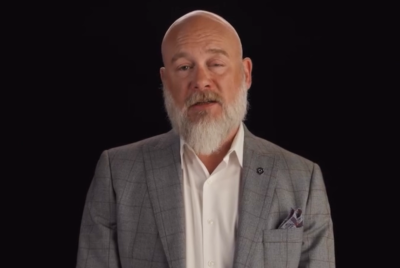
Psychotherapist Jonathan Alpert reaches a similar conclusion from a different route. He says Trump is arguably one of the most famous people in the world and that this level of visibility changes how criticism feels when it comes from other high-profile figures. In his view, such encounters start to resemble clashes over cultural standing and influence rather than ordinary political disagreement.
Alpert adds that celebrity criticism carries a distinct psychological charge because audiences often form emotional bonds with famous people. Fans do not merely consume celebrity opinions but often identify with those expressing them, giving the opinions symbolic weight beyond the immediate dispute. This helps explain why a throwaway joke in a monologue or a sharp line in an interview can travel far beyond its original setting and influence the broader political climate.
There is a stark logic to this analysis. Trump is portrayed not just as a politician but as a celebrity president whose public identity has always relied on visibility, hierarchy and the appearance of dominance. In that context, criticism from elected rivals differs sharply from criticism from figures who command their own cultural empires, which can sting on a different level altogether.

The Price of Backlash
The article is careful not to portray celebrity criticism as a straightforward weapon. Alpert warns that attacks from stars can just as easily reinforce Donald Trump's long-standing claim that he is under siege from media and cultural elites, with some voters interpreting celebrity condemnation not as persuasion but as confirmation of his argument. In other words, the same fame that gives critics reach can also make their interventions easier to dismiss.
Robert De Niro serves as the clearest recent example cited in the piece. After the actor called Donald Trump 'an idiot' in an interview with Wallace, Trump responded on social media by threatening to deport him and describing the remarks as 'seriously CRIMINAL!.' The eruption was entirely in keeping with the pattern Wallace described, being personal, theatrical and aimed as much at the spectacle as the substance.
Siegfried adds one final complication that casts the exchange less as a moral stand and more as a wager. Once a celebrity enters political combat, he says, they have made a business decision that cannot be undone, as some fans will cheer while a significant share may walk away permanently. This leaves Trump at the centre of a modern struggle where politics, commerce and fame continually overlap, and every insult carries a potential cost.
© Copyright IBTimes 2026. All rights reserved.
- MOST POPULAR IN Trending