

Donald Trump Sparks Dementia Fears Anew, Expert Warns Of 'Gross Deterioration' After Recent Blunder
When policy is narrated as a personal grudge, the stakes stop being theoretical very quickly.
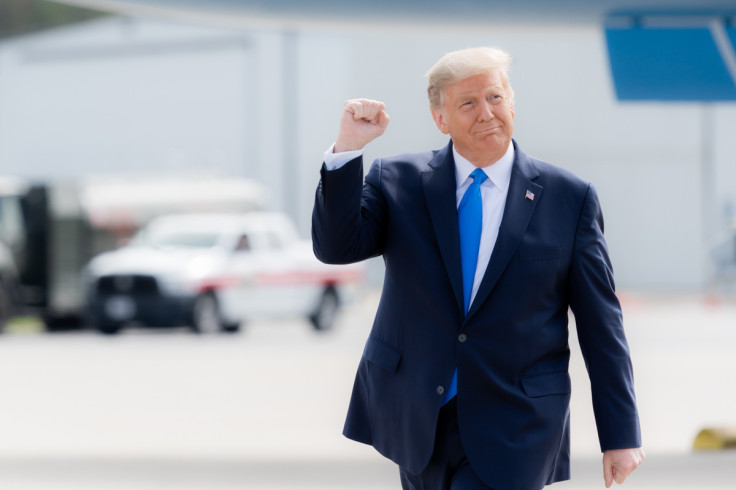
There's a peculiar, faintly modern cruelty to the way policy is sometimes narrated now: not as a set of sober trade-offs, but as a mood. One phone call. One bruised feeling. And if you believe Donald Trump's own account a tariff rate that suddenly leaps because someone 'rubbed [him] the wrong way.'
In an interview aired on 10 February, Trump told Fox Business host Larry Kudlow that he'd taken what he called 'an emergency call' from 'the prime minister of Switzerland' and found the woman on the line 'very aggressive. Nice, but very aggressive.' Switzerland, awkwardly for the anecdote, doesn't have a prime minister.

Donald Trump's Swiss Slip And The Tariff Tell
The Swiss detail matters not because etiquette obsessives enjoy a pedantic win, but because it speaks to something more basic: how seriously the world's most powerful office treats the world beyond its own borders. Trump's story appears to refer to Karin Keller-Sutter, who served as President of the Swiss Confederation in 2025 not as a prime minister, but as the annually rotating chair of Switzerland's seven-member Federal Council.
On 1 January 2026, that presidency passed to Guy Parmelin, who 'assumed the office of President of the Swiss Confederation' and 'will head the Federal Council for the current year,' according to the Swiss government.
🇺🇸🇨🇭 Trump said he raised tariffs on Switzerland because he didn’t like how the Swiss “prime minister” spoke to him.
— DD Geopolitics (@DD_Geopolitics) February 11, 2026
Switzerland doesn’t have a prime minister.
That’s where we are. 🤷♂️ pic.twitter.com/zZM8utyDNa
In Trump's telling, the tariffs were already in play, sitting 'at 30 percent.' Then came the emotional pivot one of those reveals that is either candid or careless, depending on your taste. 'So [the tariffs were] at 30 percent, and I didn't really like the way she talked to us, and so instead of giving her a reduction, I raised it to 39 percent, and then I got inundated by people from Switzerland and I figured, 'Do you know what? We'll do something that's a little bit more palatable.''
It's hard to miss what's being said between the lines: a nation's export costs, and by extension a chunk of economic friction, are framed as a matter of presidential irritation. Trump also described the same call at the World Economic Forum, saying Keller-Sutter 'just rubbed me the wrong way, I'll be honest with you.'
Some supporters will hear that and nod approvingly, mistaking brusqueness for backbone. But there is something faintly alarming about a leader who tells you, almost proudly, that the dial of international commerce can be twisted because he didn't like a woman's tone.

Donald Trump, Dementia Talk And The Online Feeding Frenzy
The Switzerland blunder has been quickly folded into a louder, uglier conversation: whether Donald Trump is experiencing cognitive decline. OK! Magazine reports that concerns about Trump's mental capacity 'have been swirling for some time,' and says he has undergone 'several cognitive tests and MRIs in the past few months.'
The same report notes that Trump has repeatedly insisted he's 'aced' his 'mental capability quizzes,' and cites his physician Sean Barbabella as saying in April 2025 that Trump took a test during his annual physical and 'allegedly received a perfect score.'
This is where the public is forced into a grimly familiar position: half the internet playing doctor, the other half playing defence lawyer, and almost nobody pausing to ask what responsible scrutiny is supposed to look like. Treating every verbal stumble as a gotcha diagnosis might be politically satisfying, but it's also sloppy and, frankly, a little ghoulish.

And yet it's not 'nothing' when the sitting US president misidentifies the leadership structure of a friendly European state while describing tariff decisions in terms of personal offence. It raises a more grounded question than any armchair clinical verdict: what kind of decision-making culture does this reveal, and how insulated is it from ego?
John Gartner, described as a former assistant professor of psychiatry at Johns Hopkins University Medical School, told The Guardian in August 2025: 'What we see are the classic signs of dementia, which is gross deterioration from someone's baseline and function.' Gartner added that Trump 'really has trouble completing a thought, and that is a huge deterioration,' and warned: 'at the rate he is deteriorating... it's going to get worse. That's my prediction.'
Whether you accept that view or recoil from it, the political ecosystem that feeds on this argument is unmistakeable: opponents weaponise every slip; loyalists wave away errors as if basic accuracy were optional for the powerful. Somewhere in the middle sits the public expected to consume tariffs, diplomacy and presidential fitness the way it consumes everything else now: as spectacle, until the bill arrives.
© Copyright IBTimes 2026. All rights reserved.