

Donald Trump 'Very Interested' in Banning Social Media for Teens, Lara Trump Reveals
A fight over children's screen time is forcing the Trump world to confront a problem that cannot be solved with slogans.

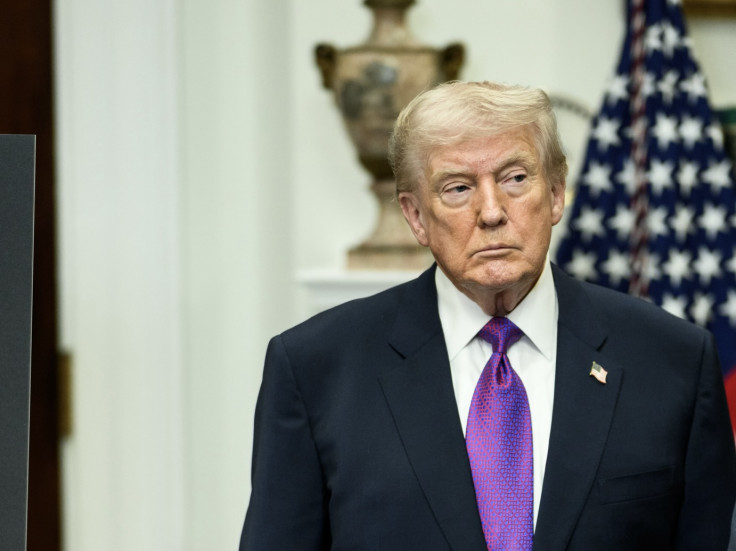
A helicopter rotor thumps over the White House lawn, cameras whirr, and the country's most famous family performs its familiar disappearing act into the residence. Somewhere between the airfield and the West Wing, though, a more domestic argument has apparently caught President Donald Trump's attention: what, exactly, a screen is doing to children and whether the state should step in.
It is an unexpectedly intimate policy lane for a president whose fights with Big Tech have typically been waged in the language of censorship and grievance, not bedtime routines. Still, on Pod Force One, his daughter-in-law Lara Trump said he has been 'taking an interest' in the way other countries have started to push teenagers away from social media, and in the broader impact platforms may be having on young minds.

Donald Trump's Sudden Curiosity About Teen Screen Limits
Lara Trump's argument, at least in outline, is recognisable to any parent who has watched a child go glassy-eyed in front of an endless feed: a technology built to hold attention is very good at holding attention. She has spoken elsewhere about running a strict household on this front, saying her children have 'zero' access to social media and 'absolutely no iPad, no iPhone, nothing at my house,' before adding, with a little theatrical disbelief, 'Imagine like a physical book.'
The suggestion that national rules might follow is where this stops being parenting chat and becomes politics. Australia, for instance, has moved towards a world-first prohibition on under-16s using social media platforms, a headline-grabbing step driven by rising concern about children's safety and wellbeing online. France has also tightened its approach, passing a law in 2023 requiring parental consent for children under 15 to open social media accounts, alongside requirements around age verification.
There is an obvious reason these examples get waved around in American debates: they offer the comfort of a lever. Do this one thing, pull this one policy handle, and a messy cultural problem bullying, self-harm content, sexual predation, the grinding loneliness of doomscrolling begins to look manageable. It is seductive, especially for politicians who prefer a clean bill title to a complicated reality.
What Donald Trump Can Regulate— and What He's Fought Before
The twist is that Donald Trump's signature social media skirmishes have not been about keeping children off platforms; they have been about punishing platforms for moderating speech. In May 2020, during his first term, he signed an executive order aimed at Section 230 of the Communications Decency Act after clashing with Twitter, framing the move as a defence of free speech against powerful 'social media monopolies.' The posture then was unmistakable: regulation as a weapon against perceived bias, not as a seatbelt for teenagers.
So if the Trump orbit is now flirting with age limits, it marks either a genuine evolution or a tactical sidestep perhaps both, because politics often is both. The family's pitch, as Lara Trump has put it in her public remarks, is less 'ban the internet' than 'let kids be kids' reading, talking, bringing a football to dinner, developing the lost art of conversation. That sentiment will land warmly with many parents, and it will irritate others who hear, in the subtext, another attempt to legislate culture by fiat.
On Capitol Hill, the legislative machinery is already turning. The Kids Off Social Media Act has been pushed as a bipartisan effort, with proposals that would stop children under 13 from creating or maintaining social media accounts and would restrict algorithmically targeted content for users under 17.
It also seeks to require schools receiving certain federal support to work in good faith to limit social media access on their networks and devices a detail that sounds sensible until you remember how often schools become the battlefield for every adult anxiety in the country.
None of this resolves the underlying tension. Social media is simultaneously a genuine harm vector and a genuine lifeline; it can isolate a teenager, and it can also be where a lonely teenager finds their people. The harder truth the one politicians tend to skate past is that even the strictest rules will end up being enforced, day to day, not by Congress or Canberra but by exhausted parents, overstretched schools, and companies whose business model is frictionless engagement.
If Donald Trump really is 'very interested,' as Lara Trump suggests, the next question is whether that interest turns into policy muscle — or simply another round of hot rhetoric aimed at an industry he already loves to blame.
© Copyright IBTimes 2026. All rights reserved.