

Elon Musk Claims 'USAID Bought Thousands of Journalists' as NYT Reporter Revisits South Sudan Deaths
A political battle over foreign aid has shifted from budgets and bureaucracy to competing claims about lives, media funding and accountability
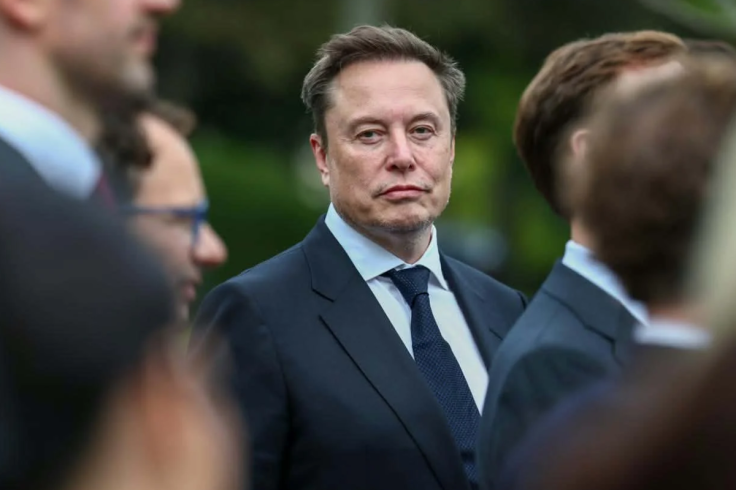
Elon Musk claimed on Saturday that the US Agency for International Development (USAID) 'bought thousands of journalists', reviving debate over the agency as The New York Times columnist Nicholas Kristof renewed criticism of aid cuts he says have had deadly consequences in South Sudan.
The latest exchange followed months of scrutiny over the dismantling of USAID during President Donald Trump's second term. Musk led the Department of Government Efficiency, or DOGE. The restructuring triggered widespread cuts to foreign aid programmes, with supporters arguing they eliminated waste while critics warned they would disrupt essential humanitarian services.
Elon Musk Renews USAID Media Funding Allegation
Musk responded on X to a post claiming that USAID, under former administrator Samantha Power, funded more than 6,200 journalists across 707 media outlets and supported 279 media organisations. Quoting the post, Musk wrote, 'Follow the money: USAID bought thousands of journalists with your taxpayer dollars!'
The allegation echoes claims Musk made earlier this year that USAID funded media organisations to spread government propaganda. President Donald Trump also criticised USAID's spending on media-related programmes at the time, making similar allegations without providing evidence.
Musk's latest assertion remains unsubstantiated. USAID documents previously cited by Reporters Without Borders stated the agency supported training and assistance for more than 6,200 journalists in 2023, alongside hundreds of independent news outlets and civil society groups. The funding was described as support for independent media and the free flow of information rather than payments to purchase favourable coverage.
That distinction remains central to the debate. The figures themselves came from USAID documents cited by Reporters Without Borders, while disagreement has centred on how those figures should be interpreted.
USAID Cuts Return to Spotlight After South Sudan Report
The renewed argument came after Kristof published an opinion piece describing conditions he witnessed while reporting in South Sudan. He challenged Musk's previous assertion that DOGE's USAID cuts caused 'zero' deaths, a claim Musk made during an interview with The Economist earlier this year.
Kristof wrote that several clinics affected by aid reductions lacked basic medicines and supplies. Vulnerable communities were left without services that had previously been funded through American assistance programmes.
Citing research from Boston University, he said cuts during the first year of Trump's second term were associated with an estimated 780,000 deaths, primarily among children. He also referenced a study published in The Lancet, which projected that reductions in foreign aid could contribute to nearly 3.1 million deaths among children under five during Trump's second term if current trends continue.
The studies modelled the potential impact of reduced humanitarian assistance but did not directly establish that every death resulted solely from USAID funding cuts.
Kristof also renewed an invitation for Musk to visit South Sudan, writing on X that he was willing to travel with the billionaire 'to look at aid programs so you can push reform, necessary, without killing hundreds of thousands of children.'
Musk did not publicly respond in the exchanges referenced. The broader debate over USAID remains deeply polarised, with supporters of the agency arguing that it provides lifesaving assistance around the world and advocates of DOGE maintaining that the reforms were necessary to reduce government spending and improve accountability.
© Copyright IBTimes 2026. All rights reserved.