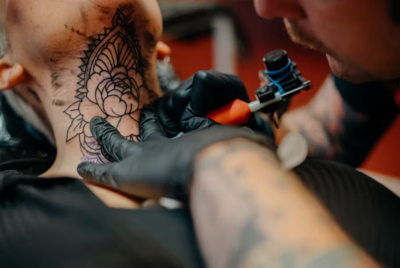
Are London Employers Finally Embracing Visible Ink or Are Workers Still Being Forced to Cover Up?

Visible tattoos are becoming increasingly common in British workplaces, but many professionals still feel pressure to conceal their body art during job interviews or in customer-facing roles. While younger generations are driving greater acceptance, experts say bias against visible tattoos persists in many industries.
With an estimated 40% of UK adults now having at least one tattoo, attitudes are gradually changing. However, recruiters and employers continue to weigh concerns about corporate image, customer perception and workplace policies.
Bias Still Influences Hiring Decisions
Despite tattoos becoming more mainstream, visible ink can still influence recruitment decisions.
Research by Dr Andrew Timming of the University of St Andrews School of Management found that some hiring managers worry customers may perceive visibly tattooed employees as 'unsavoury'. One hiring manager interviewed during his research said tattoos were often 'the first thing' recruiters discussed after a candidate left the interview.
Cindy Gunn, Group Head of People at Gi Group, said self-expression should still be considered in the context of the workplace, particularly where visible tattoos could affect customer relationships or business reputation if they contain offensive or sensitive imagery.
Many Professionals Still Cover Their Tattoos
Tattooed professionals often balance self-expression with professional expectations. Although many are proud of their tattoos, some choose to cover them during interviews or while working in more conservative sectors to avoid potential bias.
This practice has been described as 'aesthetic labour', where employees consciously manage their appearance to counter stereotypes about competence or professionalism.
Amy, a tattooed bartender, said she had never experienced criticism over her tattoos.
'I don't think I've been in an environment where anyone has criticised mine or any other person's tattoos,' she said.
Remote and hybrid working have also made it easier for many employees to display tattoos without feeling their appearance will affect how colleagues perceive their professionalism.
Acceptance Depends on the Industry
Many younger professionals report that tattoos have had little impact on their careers. However, facial and neck tattoos continue to attract greater scrutiny than tattoos that can be easily covered.
Dylan, an accountant with tattoos, said: 'I have one. It isn't a reflection of my ability to perform my job or an indication of my professional character.'
Jack, who works in a white-collar profession, said most colleagues were unaware he had tattoos.
'90% of people I work with don't even know I'm tattooed,' he said.
Bonnie, who works for a conservative employer, said attitudes had changed in recent years.
'We weren't allowed to have any visible tattoos until only a couple of years ago. Now they can be seen as long as they aren't offensive, distracting or gang-related,' she said.
Meanwhile, Dave, who works in construction, argued tattoos should not be judged unless they promote hate.
'Unless it's something hateful, like a neo-Nazi symbol, I have precisely zero [concerns] about how someone chooses to decorate their body,' he said.
What UK Law Says
Workplace policies on tattoos vary significantly between industries.
Creative sectors, technology, entertainment, hospitality and skilled trades tend to be more accepting of visible tattoos. By contrast, industries such as law, finance and some healthcare settings often expect employees to maintain a more traditional appearance, particularly in client-facing roles.
Under the Equality Act 2010, tattoos are not a protected characteristic. Employers can require staff to cover tattoos or enforce dress codes, provided those policies are applied fairly and do not unlawfully discriminate against protected characteristics such as religion or sex.
For jobseekers, researching an employer's dress code and workplace culture before attending an interview can help determine whether covering visible tattoos is appropriate.
Although acceptance has grown considerably over the past decade, experts say visible tattoos can still influence hiring decisions depending on the employer, industry and the nature of the role, meaning some professionals continue to cover up despite changing public attitudes.
© Copyright IBTimes 2025. All rights reserved.
- Recommended For You