

FIFA World Cup 2026 in Crisis: Can Iran Still Play in the US Amid Escalating Middle East War?
Political tensions cast doubt on Iran's participation in the 2026 FIFA Men's World Cup.
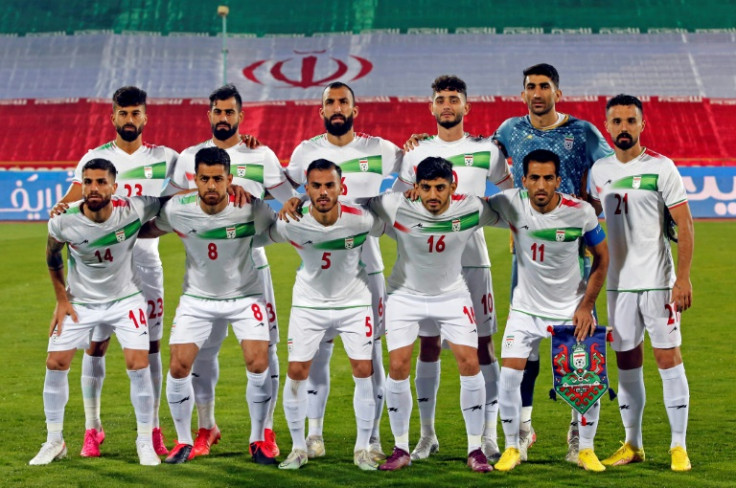
Only 100 days to go and the United States will welcome the world for the 2026 FIFA Men's World Cup from 11 June to 19 July 2026. Yet Iran, one of the teams that qualified, now finds itself under a cloud of doubt.
Iran earned their place on the pitch through hard matches and steady performances. But as tensions rise after US and Israeli strikes on Iranian targets, many are asking whether politics could stand in their way to participate and play in the tournament.
The question now hangs over the football game. If Iran cannot enter the US, what happens next? Would Iraq or the United Arab Emirates step in? Or will the World Cup once again challenge its claim as a stage for unity in divided times?
Iran Qualified but Uncertainty Grows
Iran secured qualification through the Asian Football Confederation campaign. Their players celebrated knowing they would compete on the biggest stage of football.
Iran have not withdrawn from the tournament despite rising tensions with the United States, according to BBC Sport. The report noted that Iran also did not pull out last summer when the US bombed three nuclear facilities in the country.
That decision surprised some observers. It showed that football still held meaning, even as diplomacy wavered.
Yet the team's qualification does not guarantee a smooth entry path. Even the president of Iran's Football Federation, Mehdi Taj, has spoken cautiously about the team's participation, saying they 'cannot be expected to look forward to the World Cup with hope.'
'With what happened... and with that attack by the United States, it is unlikely that we can look forward to the World Cup, but the sports chiefs are the ones who must decide on that,' Taj reportedly told Iranian media.
The 2026 tournament will be co hosted by the United States, Canada and Mexico. Iran's matches are expected to take place on US soil, which raises clear questions about travel and visas.
What If Iran Cannot Play?
The issue on Iran's participation at the 2026 FIFA Men's World Cup is not only political. It is practical.
If diplomatic tensions deepen, entry into the United States could become more difficult for Iranian players and staff, ESPN reported. Visa decisions rest with US authorities, not with FIFA.
If Iran were unable to take part and play, FIFA would face a difficult choice. The governing body could turn to the next eligible team from Asian qualifying.
A report by The Guardian highlighted that Iraq and the United Arab Emirates remain closely tied to the qualification race. Neither has replaced Iran, but the uncertainty has sparked debate about possible contingency plans.
For players in Baghdad or Abu Dhabi, the possibility feels both distant and real. For Iranian fans, it feels deeply personal.
FIFA Caught Between Sport and State
FIFA has long said that football stands above politics. History, however, suggests otherwise as sport often mirrors the tensions of its time.
The governing body has not announced any change to Iran's status. According to FIFA General Secretary Mattias Grafström, there is no sign that Iran have been removed or that fixtures have changed. Federation officials are reportedly saying in private that they expect Iran to take part in the 2026 FIFA Men's World Cup.
'Our focus is to have a safe World Cup with everybody participating,' Grafström stated.
Even so, analysts warn that the tournament could face pressure from governments and public opinion. The host nation holds power and controls entry permits while FIFA controls the competition rules. That split in authority leaves room for tension.
Can the World Cup Still Unite Conflicting Nations?
Beyond the logistic details and concerns lies a bigger question. Can the 2026 FIFA World Cup still serve as a force for global unity?
An analysis published by The Conversation argued that major sporting events like the 2026 FIFA Men's World Cup often promise unity while reflecting global tensions. The piece noted that while the sport can bring people together, it cannot remove political conflict.
In Iran's case, the tournament could either deepen divisions or offer a rare moment of shared humanity. Fans still remember when Iran faced the United States at the 1998 World Cup, a match filled with symbolism.
Now, the stakes feel even higher.
Iran's footballers have trained for years to reach this point of the global football podium. They represent more than a flag. They carry the hopes of children who kick a ball along narrow streets and dusty pitches.
If they step onto US soil in 2026, that image could carry a powerful message. If they do not, the absence will speak just as loudly.
For now, FIFA sticks to its timetable. The draw approaches, stadiums getting ready and supporters are booking flights. Yet beneath the excitement sits a quiet question that refuses to go away.
In a world marked by rising tension, can football still cross borders that politics cannot?
© Copyright IBTimes 2026. All rights reserved.