Iran 'Flow Control': How Tehran Took the Global Economy Hostage to End the War
Iran's grip on a narrow waterway has turned interdependence from a promise into a pressure point felt in wallets around the world.

Iran forced the United States and Israel to accept a ceasefire on Friday after using its grip over the Strait of Hormuz to throttle global trade, exposing how vulnerable the world's economy has become to a handful of strategic chokepoints.
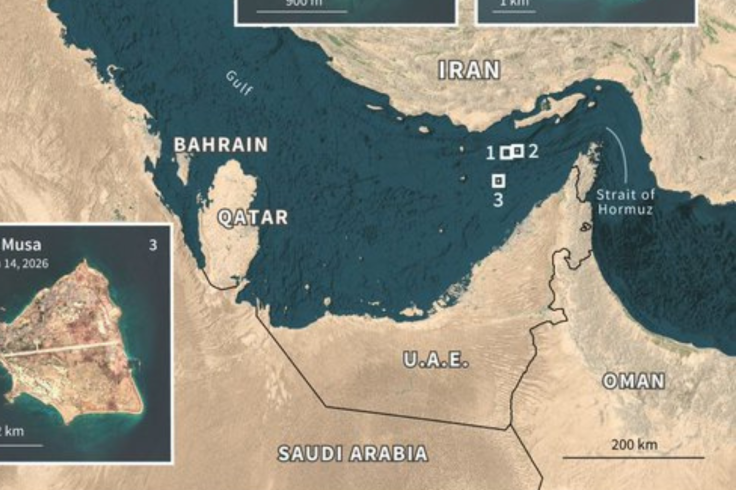
Amid the six‑week war, Iran, under heavy U.S. sanctions, chose to fight not only with missiles and proxies but with geography. By effectively closing the narrow waterway at the mouth of the Persian Gulf, Tehran briefly took command of global energy markets and, in the process, tested Washington's long‑assumed supremacy in economic warfare. For anyone who still believed post‑Cold War globalisation made such tactics obsolete, the lesson has been brutal.
It was the U.S. that specialised in turning economic interdependence into a weapon, locking foes out of the dollar system or cutting them off from advanced American technology. As long as global trade seemed to run on benign assumptions, those tools looked both formidable and relatively safe to use. That world has been crumbling for years, hastened by the pandemic, Russia's invasion of Ukraine and worsening U.S.‑China tensions. Iran has just shown what it looks like when other powers, even heavily sanctioned ones, start playing the same game.
Iran and the Strait of Hormuz: Flow Control as Leverage
Iran's move was not a full blockade. It was something subtler and, in some ways, more disturbing. Once major shipping lines decided they could not risk Iranian threats to vessels entering or leaving the Strait of Hormuz, about 3,200 ships, including 800 tankers and cargo carriers, were left stranded to the west of the narrow channel, according to London‑based maritime intelligence firm Windward. Oil prices jumped by roughly one‑third in six to seven weeks, pushing U.S. petrol above $4 a gallon and hammering energy‑hungry economies in Asia.
Even after the ceasefire, Iran has allowed only a trickle of traffic through. Ships are waved on if they come from countries not deemed hostile and, according to Western accounts, if they pay what is, in effect, a toll. Others wait. Nicholas Mulder, a sanctions specialist at Cornell University, described it as 'flow control,' arguing that the real power lay not in shutting the strait altogether but in deciding 'who passes and who doesn't.'
President Donald Trump has publicly dismissed Iran's leverage, writing on Truth Social that Tehran has 'no cards, other than a short term extortion of the World by using International Waterways.' His irritation is understandable. Washington not only misjudged Iran's willingness to escalate but, according to Senator Ron Wyden, failed even to conduct serious prewar analysis of the likely impact on energy markets. Wyden says Sriprakash Kothari, the nominee for assistant treasury secretary for economic policy, told Senate staff he had done no work on energy scenarios before the conflict and knew of no one at Treasury who had. The department did not comment.
That sort of complacency sits uneasily with the warnings coming from some of Trump's own senior officials. Secretary of State Marco Rubio has repeatedly argued that foreign control over critical supplies could 'constrain our ability to make foreign policy.' He has also admitted that the United States has vulnerabilities across 'virtually none of the leading‑edge industries of the 21st century' that are free from strategic risk.

Iran's Economic Weapon and the Shock at the Checkout
If this still sounds abstract, Mohammed Abbas can supply the missing detail. Abbas, president and chief operating officer of Fresh Del Monte in Florida, is watching Iran's chokehold on the strait work its way through every stage of his business. The surge in oil prices has lifted fuel costs for ships, trucks and processing plants by more than 30% in weeks. He describes that jump as feeding directly into the price of 'everything it touches.'
The paper mills that churn out cardboard boxes for the company's bananas burn huge quantities of fuel. The vacuum plastic bags used to protect fruit rely on resin from Saudi chemical giant SABIC. A few days ago, Iranian missiles and drones smashed facilities in Jubail Industrial City where that resin is produced. Abbas says it could take a year for normal operations to resume, and he expects the price of those bags to soar.
Diesel is close to record highs in the United States, and it is even worse in Central America, where Del Monte's plantations are based. Moving fruit from farms in Costa Rica, Guatemala and Ecuador to ports already costs roughly twice what it did before the war, Abbas says. Fertiliser shipments, meanwhile, are stuck behind the Strait of Hormuz. The company has stockpiled enough to last until June. After that, it will be in a bidding war with everyone else. Abbas is braced for his fertiliser bill to double.

His outlook is bleak. He has talked of a coming period of higher inflation and slowing growth, with food shortages in poorer countries and aftershocks that last long after the guns fall silent. In his view, the disruption unleashed by the Iran conflict could be 'many times worse than the pandemic or the aftermath of Russia's invasion of Ukraine' and, in its severity, unmatched 'since the Great Depression.' These are his projections, not settled fact, and none of it is guaranteed. For now, they should be treated with a degree of caution rather than certainty.
What is less speculative is the political response. Countries dependent on the Strait of Hormuz are already scrambling to insure themselves against a repeat. South Korea President Lee Jae Myung is pushing harder on renewable energy. Saudi Arabia and the United Arab Emirates are weighing multibillion‑dollar pipelines that would bypass the strait altogether, according to the Financial Times.

Iran, China and the End of American Monopoly
Iran's gambit lands in a world that had already been shifting. Last year, when China answered Trump's tariffs with limits on exports of rare earth materials, U.S. carmakers such as Ford had to halt production as vital components ran out. Beijing later tightened controls further, extending licensing rules to goods that merely contained small amounts of Chinese rare earths, echoing Washington's own foreign direct product rule.
That overreach has had consequences. Jon Lang, a former White House official now at APCO, said China's behaviour pushed other countries to develop their own rare earth supply chains. The Trump administration has since poured federal money into firms such as MP Materials and USA Rare Earth. Lang calls the current moment 'peak rare earth for China,' arguing that the more such tools are used, the less potent they become.
It is that logic the United States must now confront in the Gulf. Henry Farrell, co‑author of Underground Empire, a study of economic coercion, has put it bluntly: 'It turns out that the United States does not have all the choke points. We are in a world where the U.S. simply cannot get away with the stuff that it thought it could get away with.'
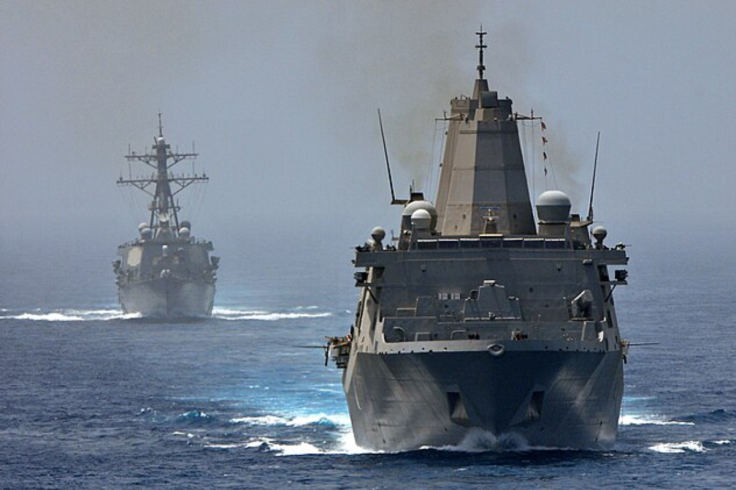
Whether Iran can sustain its 'flow control' over the Strait of Hormuz is uncertain. What is clear is that it has forced governments, markets, and ordinary shoppers to grasp how swiftly a regional conflict can be turned into a global economic hostage situation.
© Copyright IBTimes 2026. All rights reserved.
- Recommended For You