Iran Claims It Gave the US Navy 30 Minutes to Leave Hormuz as a Pentagon Official Rushed to Call It 'Freedom of Navigation'
Two accounts, one strait, and a ceasefire hanging in the balance
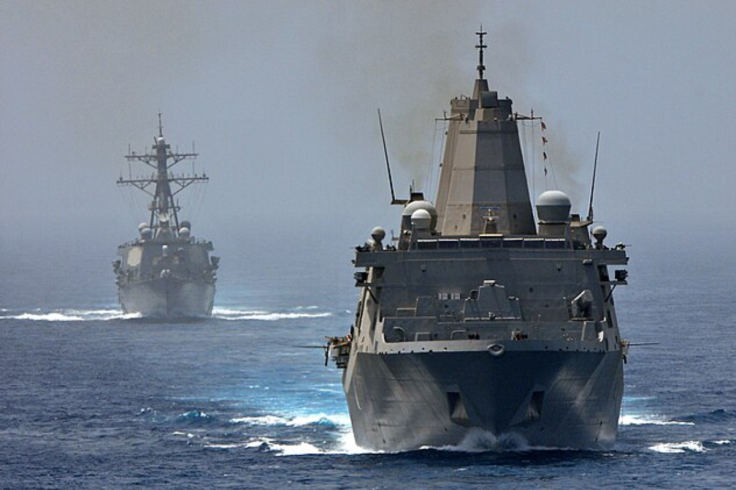
Iran's state media claimed on Saturday that its armed forces issued a stark warning to a US Navy destroyer approaching the Strait of Hormuz — turn back within 30 minutes or be targeted — and that the ship complied. Washington told a different story entirely. A US official said that several Navy ships had in fact crossed the strait, describing the operation as one that 'focused on freedom of navigation through international waters,' and adding that the US had received no such threat from Iran.
The contradictory accounts emerged as US Vice President JD Vance, special envoy Steve Witkoff, and Jared Kushner sat across the table from Iranian officials in Islamabad, the highest-level direct talks between the two sides in decades. The timing was not incidental. The reopening of the Strait of Hormuz was a central condition of the fragile two-week ceasefire agreement, and Iran's closure of the strait has proved its biggest strategic advantage in the war.
Two Ships, Two Stories
Three US officials confirmed that two US Navy guided-missile destroyers passed through the strait without issue in what was described as a 'freedom-of-navigation mission.' US Central Command subsequently confirmed that the USS Frank E. Peterson and USS Michael Murphy 'conducted operations' as part of 'a broader mission to ensure the strait is fully clear of sea mines previously laid by Iran's Islamic Revolutionary Guards Corps.'
— U.S. Central Command (@CENTCOM) April 11, 2026
Iran's account, carried by state broadcaster IRIB and relayed through semi-official agencies Fars and Tasnim, told a starkly different version. Tehran claims it made clear to the Americans, through Pakistani mediators, that if the vessel continued on its course it would be attacked within 30 minutes, a threat that, according to Iran, led the ship to withdraw. Iran's Foreign Ministry spokesman Esmaeil Baqaei added weight to the claim, saying there had been 'certain cases and suspicions of ceasefire violations today that were flagged, and the enemy corrected its action.'
The warning, as reported by Iranian media, was explicit. Iran informed the Pakistani intermediary: 'If the ship's movement continues, it will be targeted within 30 minutes, and the Iran-US negotiations will also be dealt a blow.' The report further claimed the manoeuvre was 'highly praised by the Pakistani mediator' as evidence of coordination between Iran's armed forces and its negotiating team.
Trump Weighs In
As the accounts clashed, President Donald Trump posted on Truth Social declaring the operation a success on Washington's terms. Trump wrote that 'all 28' of Iran's 'mine dropper boats are also lying at the bottom of the sea,' adding: 'We're now starting the process of clearing out the Strait of Hormuz as a favour to countries all over the world, including China, Japan, South Korea, France, Germany, and many others.'
CENTCOM Commander Admiral Brad Cooper confirmed the broader objective in an official statement. 'Today, we began the process of establishing a new passage and we will share this safe pathway with the maritime industry soon to encourage the free flow of commerce,' Cooper said. CENTCOM added that additional US forces, including underwater drones, will join the clearance effort in the coming days.
America sent a destroyer warship to the strait of Hormuz to intimidate Iran before the negotiations.
— Iran in Ghana (@IRAN_GHANA) April 11, 2026
Iran picked up the phone: "You have 30 minutes."
The ship turned around. It made a U-turn immediately!
Then a Pentagon official had to go on AXIOS and explain that actually it…
There were tentative signs of movement on the commercial side as well. At least three oil-carrying supertankers crossed the strait on Saturday, a modest but notable development, given that a US official had admitted earlier in the week that ships were not moving through because they were intimidated by the Iranians.
Shipping traffic through the Strait of Hormuz has been largely blocked by Iran since 28 February 2026, when the United States and Israel launched an air war against Iran. Until then, roughly 20 million barrels of oil and related products — around a fifth of global consumption — passed through it daily, alongside significant volumes of liquefied natural gas. The economic consequences have been severe, with Brent crude prices surging and major shipping firms suspending operations in the region entirely.
Both governments have declined to characterise Saturday's crossing as a ceasefire violation. The Islamabad talks between US and Iranian officials are expected to continue into the coming week. The two-week ceasefire between Washington and Tehran is due to expire on 21 April.
© Copyright IBTimes 2026. All rights reserved.
- Recommended For You