White House Confirms Trump Rejected Iran's Offer, Says Proposal Was 'Thrown In The Garbage'
Trump Administration Discards Iran's Initial Proposal, Sets Stage for Islamabad Talks

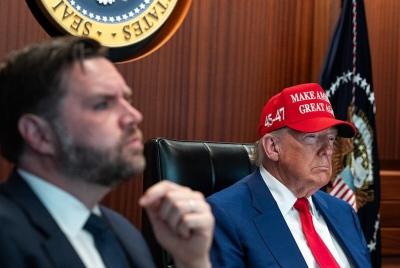
The White House has confirmed that President Donald Trump's negotiating team rejected Iran's first ceasefire proposal outright, with Press Secretary Karoline Leavitt declaring it was 'literally thrown in the garbage.'
Washington's confirmation came on 8 April 2026 during a White House press briefing, one day after Trump announced a two-week ceasefire with Tehran, brokered by Pakistan, just 90 minutes before his self-imposed deadline for Iran to reopen the Strait of Hormuz. The administration moved quickly to frame the sequence on its own terms, insisting that Tehran had submitted two separate 10-point proposals and that only the second was deemed workable.
Iran has publicly disputed that account, claiming the US accepted the terms of its original plan, setting up a significant clash of narratives ahead of formal talks scheduled in Islamabad on 10 April 2026.
Leavitt's Briefing and the Two-Plan Dispute
Standing at the White House podium, Leavitt told reporters that Iran's initial submission was 'fundamentally unserious, unacceptable and completely discarded.' Her full statement, reproduced across ABC News and Al Jazeera, read: 'The Iranians originally put forward a 10-point plan that was fundamentally unserious, unacceptable and completely discarded. It was literally thrown in the garbage by President Trump and his negotiating team.'
Leavitt said Iran's revised, condensed submission was the one that the US ultimately considered. She said the modified version was 'a workable basis on which to negotiate' and was more in line with Washington's own 15-point proposal, which had been delivered to Tehran via Pakistan on 25 March 2026. The president's red lines, she said, had not changed: Iran must end uranium enrichment on its soil.
Leavitt also pushed back on Iranian state media coverage that portrayed the ceasefire as a US acceptance of Tehran's original plan. 'That is false,' she said directly. She added that what Iran says publicly about the terms it has agreed to 'is very different from what they say privately' and claimed US negotiators had received indications that Iran would turn over its stockpile of highly enriched uranium.
Enrichment, Nuclear Dust and Washington's Non-Negotiable Terms
Trump was unambiguous in a Truth Social post on 8 April about what the US requires. 'There will be no enrichment of Uranium,' he wrote, adding that the US would 'working with Iran, dig up and remove all of the deeply buried (B-2 Bombers) Nuclear Dust.' He said the buried nuclear material had been under Space Force satellite surveillance since the strikes on Iran's nuclear sites and that 'nothing has been touched from the date of attack.'
That position sits in direct tension with what Iran's side has stated publicly. Iranian Parliament Speaker Mohammad Bagher Ghalibaf, who is expected to lead Tehran's delegation in Islamabad, claimed on the same day that three clauses of the agreed framework had already been violated before talks had even begun, including a failure to halt strikes on Lebanon and what he described as US denial of Iran's right to enrich uranium. Ghalibaf said on that basis, 'a bilateral ceasefire or negotiations is unreasonable.'
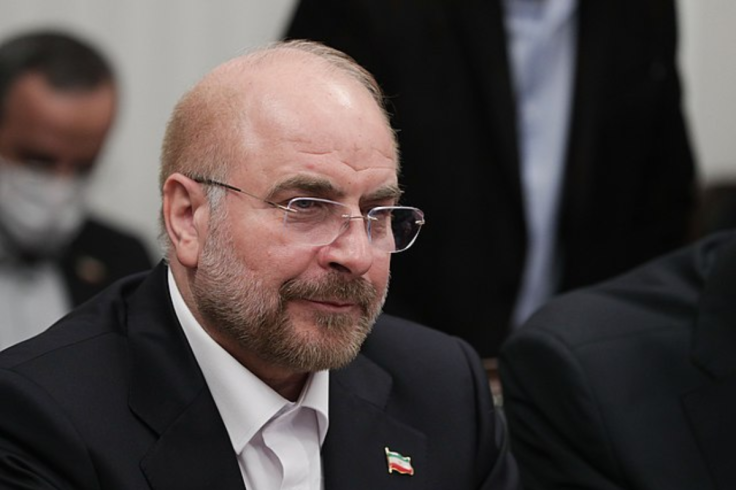
Vice President JD Vance, speaking to reporters outside Air Force Two as he departed Budapest, Hungary, dismissed Ghalibaf's reading. 'I actually wonder how good he is at understanding English,' Vance told reporters, adding that the specific complaints 'didn't make sense in the context of the negotiations that we've had.'
Vance described the ceasefire as 'fragile' but said several points of agreement had been reached, noting that 15-point and 10-point plans were both 'floating around.'
Islamabad Talks, Vance's Mission and the Road Ahead
Leavitt confirmed on 8 April that Vance would lead the US delegation to Islamabad, accompanied by Trump's son-in-law Jared Kushner and special envoy Steve Witkoff. Bloomberg and Axios both reported that the first round of formal talks was scheduled for Saturday morning local time in the Pakistani capital.
Analysts have noted the historic weight of the meeting. These would be the highest-level direct discussions between the US and Iran since the 1979 Islamic Revolution. Iran expert Trita Parsi, quoted by Al Jazeera, said the terrain had shifted regardless of outcome: 'Trump's failed use of force has blunted the credibility of American military threats, introducing a new dynamic into US-Iran diplomacy.'
The Strait of Hormuz remained largely closed as of 9 April, falling short of a key US condition for the ceasefire's continuation. Israel has stated that the truce does not apply to its ongoing fighting with Hezbollah in Lebanon, a position that directly contradicts Pakistani PM Sharif's announcement. Iran's ambassador to Pakistan, Reza Amiri Moghadam, had signalled progress in a post on X before the ceasefire, saying Islamabad's mediation was approaching a 'critical, sensitive stage.'
Vance, speaking in Budapest, put the stakes in plain terms: 'The president is very, very clear. If we don't see that happening, the president is not going to abide by our terms if the Iranians are not abiding by theirs.'
With a war that has killed more than 2,000 people in Iran, displaced 1.2 million in Lebanon and driven a global oil crisis, the talks in Islamabad represent the last off-ramp before a conflict the US has framed as a victory arrives at another catastrophic turning point.
© Copyright IBTimes 2025. All rights reserved.
- Recommended For You