Trump Envoy Paolo Zampolli Urges FIFA To Replace Iran With Italy at 2026 World Cup To Repair Ties
A political gamble unfolds as football becomes a stage for fragile alliances.

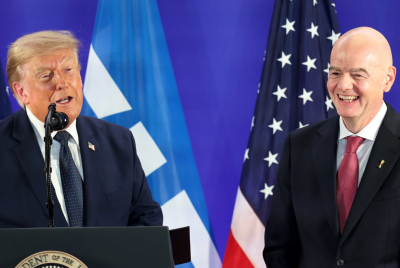
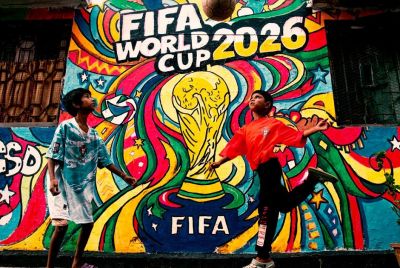
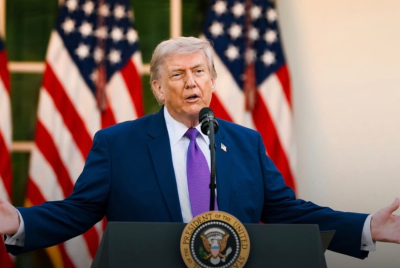
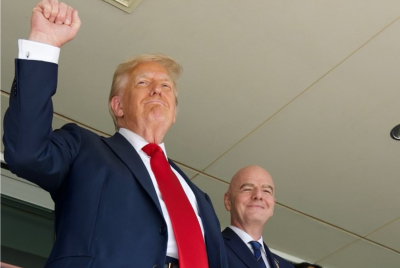
Senior envoy Paolo Zampolli, a figure closely linked to US President Donald Trump, has reportedly urged FIFA to replace Iran with Italy at the 2026 World Cup. The suggestion appears to be aimed at easing tensions between Washington and Rome after a political rift involving Italian Prime Minister Giorgia Meloni.
Zampolli put the idea forward on Wednesday, presenting football's global stage as a way to repair strained ties. The fallout stems from Trump's remarks connected to Pope Leo XIV and the Iran conflict, which drew criticisms in Italy. The proposal has since sparked debate over whether political considerations are beginning to shape decisions ahead of a tournament set to be hosted across the United States, Canada and Mexico.
At first glance, the idea feels unlikely, even unsettling. But it has quickly gained attention in both football and political circles. At the centre of it is Zampolli, whose pitch seems driven less by sporting merit and more by an attempt to stabilise fragile alliances.
A Proposal Rooted in Diplomacy, Not Sport
Zampolli's approach to Trump and FIFA is framed as an opportunity to reset relations between Washington and Rome. It follows rising tensions between Trump and Meloni, linked to remarks on the Iran conflict and criticism involving Pope Leo XIV.
According to The New York Times's The Athletic, Zampolli has presented Italy as a symbolic replacement, one that could ease diplomatic strain while reinforcing Western unity ahead of a major global event. The report suggests the proposal was positioned as both a political and cultural reset.
Italy, a four-time World Cup winner, did not qualify through the usual process. Bringing them in at this stage would mark a sharp break from long-standing qualification rules. Zampolli argued that the Italian team's pedigree offers enough justification for replacing Iran at the 2026 World Cup finals.
Although the move is partly framed as an effort to mend relations between Trump and Meloni, Zampolli also acknowledged a personal motive. As an Italian native, he said it would be 'a dream to see the Azzurri' compete in a tournament hosted by the United States.
Fallout From a Fractured Alliance
The tension behind the proposal can be traced to a public fallout that unsettled ties between the United States and Italy. Trump's comments during the Iran crisis, particularly those seen as dismissive of the Pope, drew criticism in Italy and placed pressure on Meloni at home.
As reported by The Guardian, Zampolli's intervention is being viewed as an attempt to cool those tensions using a highly visible international platform. Football, with its global audience, offers a stage where political signals travel fast.
Even so, the idea carries clear risks. Critics warn it could damage FIFA's credibility and anger teams that secured their place through competition.
In March, Italy shocked many by missing out on the World Cup for the third consecutive time, following a 4-1 penalty shootout defeat to Bosnia and Herzegovina in their European playoff final.
FIFA Caught Between Pressure and Principle
FIFA has given no indication it would consider such a move. The organisation has long maintained that qualification must be based on sporting merit.
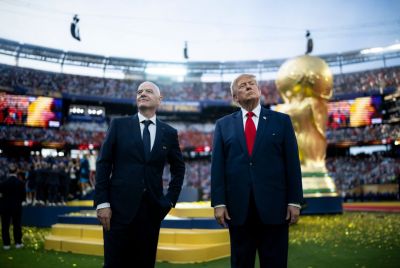
The proposal, however, highlights the pressure international bodies face as they navigate geopolitical realities. The 2026 World Cup, spread across the United States, Canada and Mexico, already carries significant political weight given its scale and visibility.
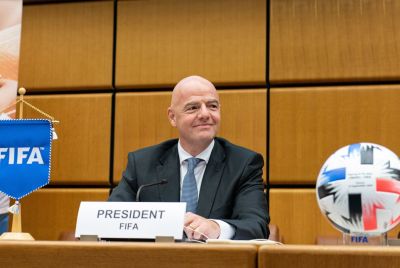
Amid the discussion, FIFA President Gianni Infantino has made clear that Iran will take part as planned. Speaking at a conference in Washington last week, Infantino told CNBC that Iran is 'coming,' adding he hopes the 'situation will be a peaceful one.'
He said the Iranian team have qualified and stressed that they really 'want to play, and they should play.' Infantino added that Iran's national team 'has to come if they are to represent their people.'
Iran, on the other hand, said earlier this month that it would only confirm participation in the 2026 Wold Cup finals once it receives a response from FIFA about moving its matches from the United States to Mexico.
The Financial Times noted that the situation reflects a broader pattern, where sport becomes intertwined with diplomacy, particularly during periods of global tension. It also shows how influential figures may try to use major events to shape broader narratives.
A Risky Play with Global Consequences
For Zampolli and those backing the idea, it offers a bold, if controversial, way to repair strained ties. It rests on the belief that symbolic gestures in sport can influence political outcomes.
The risks, however, are hard to ignore. Replacing Iran would likely spark political backlash and could alienate fans and players who view the 2026 World Cup finals as a fair contest earned on the pitch.
The conversation has now moved beyond whether the proposal is realistic. It raises a deeper question about the place of sport in moments of conflict.
Football is often described as a universal language. But in this moment, it is also part of a much larger discussion about power, diplomacy and influence.
© Copyright IBTimes 2026. All rights reserved.
- Recommended For You