'I Would Go To Pakistan': Donald Trump Willing to Seal Iran Deal in Islamabad
US President Trump expresses willingness to travel to Pakistan to finalize a ceasefire agreement with Iran, highlighting Pakistan's role as a mediator.

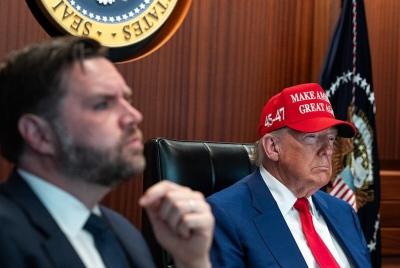
United States President Donald Trump has signalled that he is prepared to travel directly to the Pakistani capital to help finalise a ceasefire and security agreement with Iran, inserting himself personally into fragile talks that many fear could collapse at any moment. The statement comes as international intermediaries work frantically to prevent a temporary cessation of hostilities from unravelling.
The proposed visit follows weeks of escalating threats and military strikes between the opposing nations. Moving the talks to a neutral third-party venue such as Pakistan, which serves as a mediator between the two nations, could represent a critical breakthrough for regional stability. Trump has admitted that he is willing to fly in to seal the deal with Iran.
Trump Open To Finalising Iran Deal In Islamabad
In an interview on Thursday, one asked Trump whether he would travel to Pakistan to finalise the agreement with Iran, and the POTUS responded affirmatively.
'I would, I would go to Pakistan. Yeah,' Trump replied. 'Pakistan has been great. They've been so good.'
Trump clarified that if the deal were signed in Islamabad, he could fly there. He also praised the Pakistani leaders, saying the Prime Minister and Field Marshal had been 'great.'
The US President's willingness to travel marks a significant shift in his administration's direct engagement with the region. It also signals the possibility of a more promising outcome.
If Iran deal is signed in Islamabad, 'I might go', says Trump. Adds, 'field Marshal Munir has been great, PM Shehbaz Sharif has been really great' pic.twitter.com/yHPSzd0EUu
— War Flash (@WarFlash_2630) April 16, 2026
Pakistan Serves as a Crucial Mediator Between Opposing Nations
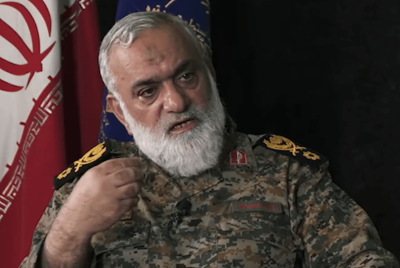
Despite the failure of weekend negotiations, Tehran has confirmed that it is still actively exchanging messages with Washington through Pakistani officials. Iranian Foreign Ministry spokesperson Esmail Baghaei noted that uncertainty remains regarding the situation once the current two-week ceasefire expires. He did not confirm whether the pause in military actions would be extended, but it was clear that the negotiations were still ongoing.
'For now, as I mentioned, talks are continuing through a Pakistani intermediary, and it remains to be seen how serious the other side truly is about its claims regarding diplomacy,' Baghaei said. He stated that no fresh proposals have been submitted, maintaining Iran's original ten-point plan. Baghaei characterised certain American demands as both unreasonable and unrealistic while defending Iran's right to enrich uranium for peaceful purposes.
'It is the United States that must prove its seriousness, because it has repeatedly not only failed to honour its commitments, but has essentially undermined the negotiating table itself,' he added.
According to reports, Iran has submitted a '10-point proposal' as a peace plan to the US to end hostilities. It serves as a direct alternative to the unpublished American framework.
Turkey, Egypt and Pakistan have been actively mediating between the US and Iran amid the ongoing conflict. However, Pakistan's involvement in the peace talks was reportedly surprising.
Council Senior Nonresident Fellow Paul Stanil spoke with Council's Christina Colón about the matter, and Colón said Pakistan is eager to win the USA's favour because it is 'relatively weaker in South Asia.' And Pakistan's deepening ties with America reportedly come at a time of tension between the US and India.
'Pakistan is looking to create a diversified portfolio of relationships that will let it punch above its weight—and also allow it to hedge against or balance against Indian influence and power within South Asia,' Colón added.
Unhinged Threats Spark Widespread Calls For Trump's Impeachment
The current crisis stems from a volatile cycle of violence that originated with a fatal attack in Tehran on 28 February that led to the death of its former Supreme Leader, Ali Khamenei. In response to that initial aggression, Iranian forces launched retaliatory strikes, severely escalating tensions across the Middle East. The conflict quickly drew in traditional allies, pitting the United States and Israel against Tehran's regional network.
In the wake of the retaliatory strikes, Trump issued an unhinged threat suggesting he would completely eradicate the entire nation of Iran. This extreme rhetoric prompted intense backlash from both domestic lawmakers and international observers. Some political figures have gone so far as to demand that Congress impeach Trump for making the statement.
The potential agreement brokered by Pakistan offers a promising framework for a historic resolution between the United States and Iran. Hopefully, both nations can capitalise on this diplomatic momentum to permanently end the unrest once the current two-week ceasefire expires.
© Copyright IBTimes 2026. All rights reserved.
- Recommended For You