

Flávio Bolsonaro's Escape Involved Former Mossad Agent in Van and Trump Aide Arranging Private Jet: Report
Investigators traced a former Israeli operative's arrival, a two-van border crossing and a private flight linked to a Trump adviser

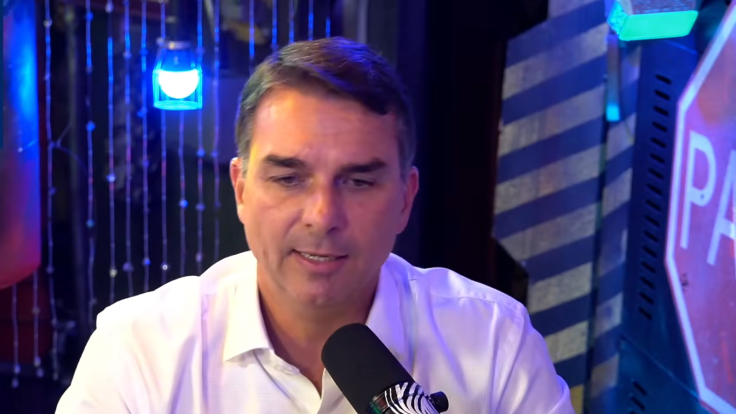
A former intelligence operative who had worked for Mossad, Israel's foreign intelligence agency, accompanied Brazilian senator Flávio Bolsonaro across the border into Argentina, CNN Brasil reported. Separately, The New York Times and The Wall Street Journal linked Trump adviser Jason Miller to arrangements for the private jet that later carried Bolsonaro and his family to Miami.
The journey took place on 27 and 28 October, after Brazil's Supreme Federal Court restricted Bolsonaro's travel and ordered him to surrender his passports. Brazilian police are investigating whether he breached the order.
Former Intelligence Operative Joined the Border Journey
The former operative, a naturalised US citizen, arrived in Brazil on 19 October. He travelled with Bolsonaro from Brasília towards Argentina and was in the van carrying the senator during the crossing on 27 October.
Two vans crossed the Tancredo Neves International Bridge at about 22:50, records showed. Their registration plates were TBB 4A65 and FDF 8E91. A former Foz do Iguaçu councillor drove the van carrying Flávio, while his son drove the second vehicle, carrying the senator's wife and daughters.
The operative's identity has not been made public. His reported presence does not establish that Mossad directed or participated in the journey.
Trump Adviser Linked to Private Jet Arrangements
The family boarded a Gulfstream G400, registration LV-JQW, operated by Argentine charter company Baires Fly S.A. Argentina's National Directorate of Migration recorded the boarding at about 23:30 on 27 October. Flight records show the aircraft stopped in Guayaquil, Ecuador, to refuel before continuing to Opa-locka Executive Airport near Miami. It arrived at about 10:30 on 28 October.
The New York Times reported that Miller helped arrange the aircraft, citing a person familiar with the logistics. The Wall Street Journal separately described him as part of a small group in contact with Eduardo Bolsonaro, Flávio's brother, that secured the jet. The newspaper reported that arrangements began on 26 October. Miller, a longtime Trump political strategist, returned to the White House in August as a special government employee. He declined to comment to The New York Times.
US Secretary of State Marco Rubio said the US government had not arranged Flávio's departure. He said the senator already held a valid US visa and that President Donald Trump had authorised him to receive humanitarian parole if he arrived at a US port of entry. Parole permits temporary entry without formal admission.
Argentine Records Confirm the Border Crossing
Argentina's migration authority confirmed that Flávio and his family entered through the Tancredo Neves International Bridge at 22:50 on 27 October. It said all four presented valid travel documents and faced no legal impediment to entering Argentina. Flávio used an Italian passport. His wife and one daughter presented Brazilian passports, while the other daughter used a Brazilian identity card.
Brazil's Federal Police said it had no official record of Flávio leaving through its migration checkpoints. Brazilians travelling out of the country by land are not required to pass through a Federal Police exit checkpoint, Folha de S.Paulo reported.
Investigators' Account Leaves Questions Unresolved
CNN Brasil reported that investigators identified logistical support involving at least two countries and internally referred to the operation as 'Operation Alba'. Sources from three Brazilian government agencies told the outlet that misleading information about Flávio's whereabouts had been circulated to divert attention from his actual departure route.
The reporting points to separate roles: the former operative accompanied Flávio across the border, while Miller was linked to securing the aircraft through contacts involving Eduardo Bolsonaro. It has not established whether the two men communicated or who directed the separate stages.
Court Restrictions and Separate Investigations
Supreme Federal Court Justice Alexandre de Moraes issued the travel restrictions on 25 October, the night of the presidential runoff. Flávio was notified the following morning. The Federal Police cancelled his ordinary and diplomatic Brazilian passports in its system and said he failed to surrender his foreign passports within 24 hours. The agency said the restrictions alone did not make him a fugitive or authorise his arrest.
Flávio entered Argentina using his Italian passport and later entered the United States on 28 October using his Brazilian diplomatic passport, CNN Brasil reported, citing US border records. The passport had already been cancelled in the Brazilian Federal Police system. Brazil's cancellation and the US entry decision were separate matters. Brazilian police are investigating whether Flávio breached the court order. He also faces a money-laundering and currency-evasion investigation, allegations he denies.
In Argentina, federal prosecutors dismissed a complaint concerning the family's migration movements after reviewing information from Interpol and the National Directorate of Migration. A separate preliminary inquiry in Buenos Aires into possible misuse of state vehicles, personnel and other public resources remains open. Clarín reported that no officials had been formally charged in connection with the inquiry.
© Copyright IBTimes 2026. All rights reserved.