New York Times Faces Florida Lawsuit Over Israel Coverage and Internal Editorial Rules
The shareholder petition says the newspaper's board failed to monitor editorial standards, while the company calls the case meritless and agenda-driven
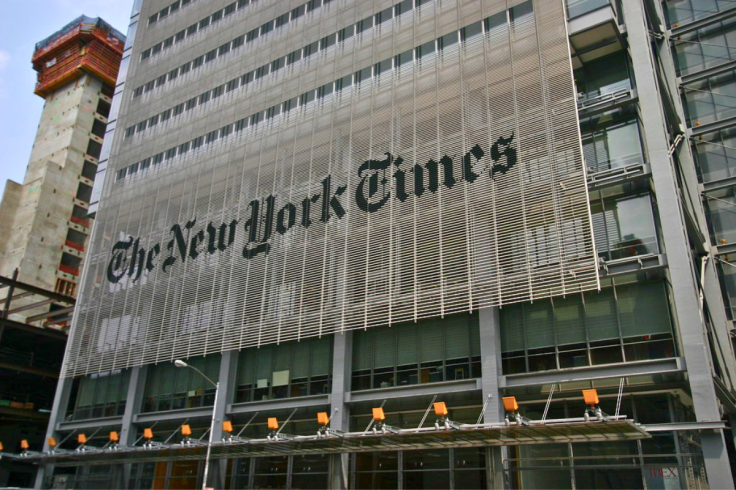
Florida's state pension fund has taken The New York Times Company to court, accusing its board of failing to oversee editorial standards amid allegations of bias in its coverage of Israel and demanding access to internal records.
The petition, filed on Wednesday in a New York state court in Manhattan, was brought by Florida's State Board of Administration and the National Center for Public Policy Research, both shareholders in the company. It follows a demand letter sent on 10 August by Florida Attorney General James Uthmeier.
The State Board, which oversees one of the largest public pension systems in the United States, manages around 160,000 New York Times shares on behalf of the Florida Retirement System Trust Fund. The Florida Retirement System serves more than 1.2 million members and beneficiaries.
Uthmeier insisted the action targeted corporate governance, not the paper's editorial content.
'When you are a publicly traded company, you have legal responsibilities and duties to your shareholders,' he told an audience at Miami-Dade College in Doral. 'We asked if the board oversees its standards, and they refused to produce a single page.'
A New York Times spokesman, Charlie Stadtlander, rejected the lawsuit as 'without merit', saying it amounted to 'a transparent attempt to exert agenda-driven pressure against an independent media organisation, level false allegations of bias and chill journalism protected by the First Amendment'. The company said it would contest the case.
Editorial Disputes Put Under the Microscope
The petition points to a string of editorial episodes to argue that the board has neglected oversight.
It cites an October 2023 editor's note acknowledging that early reporting on the Al-Ahli hospital blast in Gaza relied too heavily on claims from Hamas, and references a peer-reviewed study that counted 72 errors acknowledged by the newspaper during an eight-month period of its Israel-Hamas war coverage.
It also revisits the Caliphate podcast, which the newspaper disowned in 2020 after discovering its central source had fabricated claims, and a May 2026 opinion column by Nicholas Kristof detailing allegations of sexual abuse of Palestinian prisoners by Israeli guards.
Petitioners say the column drew threats of defamation action from Israeli officials and was followed by internal acknowledgements that the newsroom would not have published it in hindsight.
Kristof is separately accused of quoting former campaign donors without disclosing their financial ties to him, which petitioners say was inconsistent with the paper's ethics guidelines. Steve Milloy of the National Center for Public Policy Research's Free Enterprise Project said the goal was accountability rather than censorship.
'We're not trying to censor anyone,' he said. 'But if they want to go down as the paper of record, then there must be records backing up what they're claiming.'
Former Staffer Claims Concerns Were Ignored
The filing also cites an unnamed former employee who says she worked at the paper for a decade and began raising concerns about alleged anti-Israel bias within the newsroom as early as 2019.
According to the petition, her complaints were dismissed, with a supervisor reportedly telling her 'it's not your job to be the ombudsman' and a human resources representative allegedly suggesting she 'go find a place whose values align with yours'. These claims have not been independently verified.
The petition further alleges that publisher and board chairman A.G. Sulzberger's 2019 pledge to update unconscious bias training to address antisemitism directly was never fulfilled. Florida has framed the case as a matter of fiduciary duty.
The Florida Retirement System Trust Fund had about $235.7 billion in assets under management as of 31 August. Governor Ron DeSantis and Uthmeier, both Republicans, sit as trustees.
Miami-Dade Sheriff's Office Division Chief Rita Rodriguez said at the announcement that pension oversight mattered to public sector workers, describing a pension as 'far more than a financial benefit' and 'a promise'.
The case is now before a New York court, which will consider whether the shareholders are entitled to inspect the corporate records they have requested under New York law.
© Copyright IBTimes 2026. All rights reserved.
- Recommended For You