

US and Iran Resume Indirect New York Talks as Pezeshkian Tells UN: 'We Did Not Bend the Knee'
The contacts in New York followed months of conflict, while President Masoud Pezeshkian rejected capitulation and called for diplomacy without threats or coercion
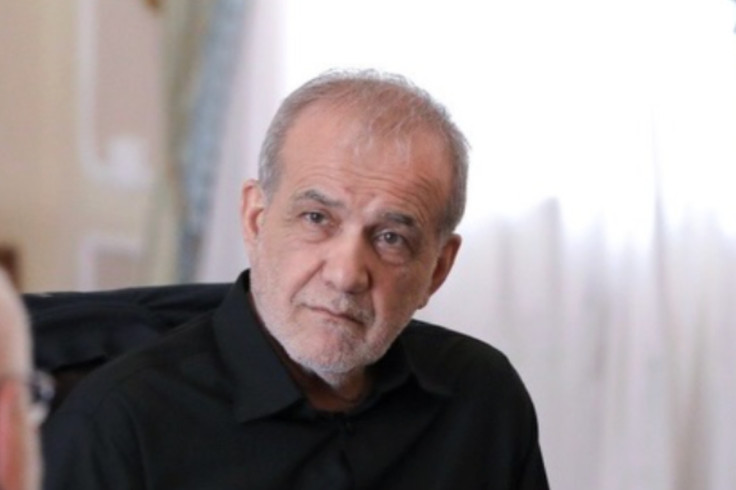
Iran and the United States have held mediated talks in New York after nearly seven months of war, as Iranian President Masoud Pezeshkian told the United Nations General Assembly that Tehran had 'not bent the knee' to Washington.
The contacts on the sidelines of the UN summit come after a conflict that has continued to affect Iran and the wider region since a June ceasefire collapsed. Pezeshkian, who has advocated diplomacy with the West, is seeking to reopen dialogue with Washington while publicly rejecting any suggestion that Iran is surrendering.
Pezeshkian's UN Show of Defiance
Speaking beneath portraits of Iran's late supreme leader Ali Khamenei and images of more than 150 schoolchildren he said were killed in the conflict's opening days, Pezeshkian portrayed Iran as the victim of US attacks rather than the aggressor.
'We have only defended ourselves. We are not terrorists,' he told delegates, accusing the United States and Israel of 'cowardly attacks and aggressions' against Iranian civilians.
His most pointed remark was blunt: 'Yes, they did hit us, but we did not bend the knee.' He added that Iran remained 'ready for dialogue and diplomacy and negotiations without accepting the language of force'.
However, Pezeshkian's claim that Iran had only defended itself comes amid Iranian attacks on commercial shipping in the region. The latest incident involved a cargo ship struck by an unidentified projectile in the Strait of Hormuz, resulting in two casualties, while the crew abandoned the vessel.
The speech came less than 24 hours after President Trump warned from the same podium that he might 'annihilate' the Islamic Republic absent a deal, framing his choice as one between allowing Iran to rebuild or destroying it 'quickly'.
Trump later moderated his tone, telling reporters there had been 'a very good meeting' between envoys Steve Witkoff and Jared Kushner and Iranian officials, though he noted the Iranians present were 'not the highest level'.
Tehran played down the contact. Foreign ministry spokesperson Esmail Baghaei said the exchange was 'not anything new', reiterating Iran's longstanding demands that Washington lift its naval blockade and unfreeze Iranian assets.
Secretary of State Marco Rubio said Trump remained open to a deal that let Iran become 'a great and prosperous country', but blamed Iran's nuclear programme and alleged support for terrorism for the impasse, warning that 'a number of options', including further military action, remained on the table.
Hormuz Blast Clouds Tehran's Message
Pezeshkian's attempt to present Iran as a responsible actor was complicated by events at sea. The UK Maritime Trade Operations body reported that a cargo ship transiting the Strait of Hormuz was struck on Wednesday by an unidentified projectile, resulting in two casualties, while the crew abandoned the vessel.
Commercial traffic through the strait, which carried roughly a fifth of the world's traded oil before the war, remains well below prewar levels, with some vessels reportedly disabling their identification systems to evade rival blockades.
Conflict Spreads From Gaza to Diplomacy
The wider region offered little respite. Gaza's Health Ministry said an Israeli strike in Khan Younis killed two people on Wednesday, including a man Israeli Defence Minister Israel Katz identified as a senior Hamas finance official. The ministry says more than 1,400 Palestinians have died since a ceasefire began nearly a year ago.
Separately, Israel accused French President Emmanuel Macron of 'grotesque absurdity' after he told the UN that Hamas had never been active in the West Bank.
A French diplomatic official later clarified that Macron meant Hamas does not govern the territory, while Hamas has maintained a presence in the West Bank and has been linked to attacks there.
© Copyright IBTimes 2026. All rights reserved.
- Recommended For You


