

Renée Good Shooting Report Sparked Clash as Scott Pelley Accuses Bari Weiss of Editorial Interference
Veteran journalist Scott Pelley claims CBS News attempted to alter coverage of the Renée Good shooting, sparking debate over editorial independence.
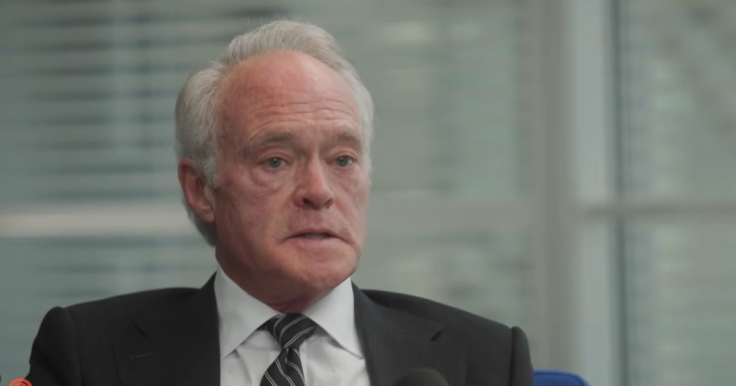
A public dispute between veteran broadcaster Scott Pelley and CBS News leadership has renewed debate over editorial independence inside major news organisations. The controversy centres on CBS coverage of the fatal shooting of Renée Good by an ICE officer in January, with Pelley alleging that network executive Bari Weiss attempted to influence how the story was presented before it aired.
The allegations emerged months after Pelley departed '60 Minutes', ending a nearly four-decade association with one of American television's most prominent news programmes. While CBS has strongly disputed his account, the clash has drawn fresh attention to the newsroom's internal decision-making process and the contested circumstances surrounding Good's death.
Scott Pelley Says Bari Weiss Sought Changes To Renée Good Report
Pelley claimed in an interview with The New York Times that Weiss sought changes to a '60 Minutes' segment covering Good's fatal shooting after the report had already been approved for broadcast. According to Pelley's account, Weiss sent notes on the segment after it had already been approved for broadcast. He said one request was to portray protesters as more violent and another involved the description of the circumstances around Good's death.
'Two of the things in the email include, can we make the protesters look more violent? Now, I'm paraphrasing. I don't have the quote, but that's what was communicated to me,' Pelley said. 'And the other thing, Renée Good's car. You need to describe her as driving toward the officer.'
Pelley said he and his producer had already 'gone out of our way' to include footage showing protesters behaving violently, including confrontations with law enforcement. He said they also reviewed video of the shooting involving Good and concluded it did not support the characterization Weiss wanted to include in the piece.
According to Pelley, no changes were made based on Weiss' notes.
CBS News rejected Pelley's account in a statement but acknowledged that Weiss made 'four points in the course of editorial back-and-forth'.
'They had no political motivation and were proposed solely to make the piece as strong, fair, and accurate as possible. As is frequently the case in any newsroom that operates with collaboration, not everything she raised made it into the final piece,' CBS News said in a statement.
CBS Firing Ended Scott Pelley's Four-Decade '60 Minutes' Tenure
The allegations surfaced shortly after Pelley left '60 Minutes', where he had spent decades as one of the programme's most recognisable correspondents. He was fired on 2 June following a confrontation with newly appointed '60 Minutes' executive producer Nick Bilton during a staff meeting held to introduce the new leadership team.
In his termination letter, Bilton accused Pelley of 'ambush' and 'misconduct', while Pelley later alleged that CBS executives were prioritising political considerations and seeking favour with President Donald Trump's administration.
The veteran journalist publicly raised concerns about the network's direction and the pressures on its newsroom amid corporate and political scrutiny. In a statement to People following his termination, Pelley claimed the network wanted to win President Donald Trump's favour.
'When stewardship of the program passed to my colleagues and me, our responsibility was to expand energetically into a new age of media technology while preserving the values our audience expects,' Pelley wrote. 'Now, the new owner of our network is casting this legend aside, apparently to curry a moment of favor with the Trump administration. The waste is heartbreaking.'
His exit attracted attention because of his longstanding role at '60 Minutes', a programme widely regarded as one of the most influential investigative news shows in American television history. For some observers, his departure signalled disagreements about editorial independence and newsroom leadership.
Why The Renée Good Shooting Remains A Divisive Case
The dispute has renewed focus on the shooting itself, which sparked protests and political debate.
Supporters of Good argued that the ICE officer who shot her used unjustified force and pointed to video evidence they believe undermines claims that she posed an immediate threat. Demonstrators also criticised immigration enforcement operations connected to the incident and called for greater accountability.
Others defended the officer's actions and argued that Good's conduct contributed to the fatal encounter. Trump was among those who criticised Good, blaming her for the confrontation and alleging she had behaved recklessly while interacting with law enforcement officials.
'She behaved horribly. And then she ran him over,' Trump said despite video footage from multiple angles contradicting his version of events.
He later doubled down on his statement, asserting: 'She didn't try to run him over. She ran him over.'
The competing narratives surrounding the shooting have helped make the case one of the more politically charged law enforcement incidents of the year. As questions continue about what happened in the moments before the shooting, the disagreement between Pelley and CBS leadership has added another layer of controversy to an already polarising story.
© Copyright IBTimes 2026. All rights reserved.