Official Review Finds Elon Musk's DOGE Savings of $110B Riddled With 'Errors and Unreliable Data'
GAO report reveals inaccuracies in reported taxpayer savings
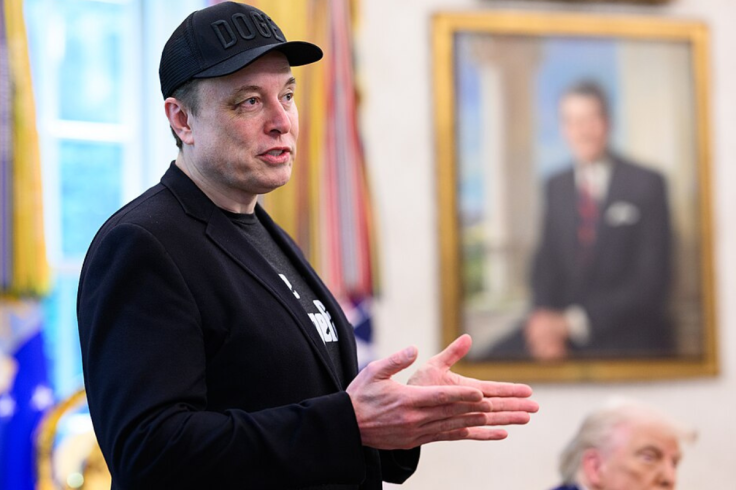
The government's own auditors have taken apart the headline achievement of Elon Musk's cost-cutting drive, finding that most of the savings it trumpeted cannot be verified.
A review by the Government Accountability Office, (GAO), the federal watchdog, has concluded that the Department of Government Efficiency (DOGE) vastly overstated the £82 billion ($110 billion) in taxpayer savings it published on its 'Wall of Receipts' website.
Auditors found the figures were undermined by incorrect estimates, unverifiable calculations and a near-total lack of transparency about how they were reached, with DOGE unable to substantiate 96% of the savings it claimed from cancelled grants.
What the Government Accountability Office Found
The watchdog examined the savings DOGE reported between 20 January 2025, when Trump took office, and 7 July 2026, comparing the claims against official federal databases. The GAO found that DOGE could not provide enough information to verify 96% of its reported savings from cancelled grants and did not use its own stated methodology to calculate about half of the savings it claimed.
The specific gaps were substantial. The report found that £20.4 billion ($27.4 billion) in claimed savings was never actually executed and that DOGE provided no identifying information for a further £5.4 billion ($7.2 billion) it said it had saved. In one instance cited by auditors, DOGE claimed £1.3 billion ($1.7 billion) in savings from a Department of Defence contract that was never terminated.
The watchdog also found that DOGE had taken credit for cuts it did not make. Of the 264 leases the group identified for termination, 108 were already in the process of ending before DOGE was created, meaning the savings would have accrued regardless. More than half of the contracts listed on the site were either not terminated or lacked enough information to determine their status.
A Transparency Pledge That Auditors Say Went Unmet
DOGE had presented the Wall of Receipts as a demonstration of open government: an itemised public ledger of the waste it was eliminating. The GAO concluded that the site fell well short of that promise, listing multiple 'issues limiting the transparency and reliability of these reported savings.'
The auditors were direct about the group's refusal to engage. 'Because U.S. DOGE Service officials did not respond to requests for information, GAO could not determine the reasons why DOGE did not disclose data quality issues and limitations when the website first went live or at any time since then,' the report said.
The site has not been updated since 1 January 2026, though it remains online. The GAO issued a single recommendation, calling on the Executive Office of the President, acting through the DOGE Service, to make the site's known data-quality problems and methodological limitations clearly visible to anyone consulting it. The DOGE Service did not comment on the report, and neither Musk nor the White House immediately responded to requests for comment from news organisations.
A Reckoning With Musk's $2 Trillion Promise
The findings land far from where the project began. When Musk launched DOGE, he promised to slash $2 trillion from federal spending and remake the government workforce as leaner and more efficient, a target he later revised downward as the scale of the ambition collided with the realities of federal budgeting.
Even the more modest figures the group ultimately claimed have not withstood scrutiny. The $110 billion examined by the GAO was itself only part of a larger $215 billion (£160 billion) in total savings DOGE claimed across all categories, a headline figure that independent analysts and news organisations had already found to contain errors and double counting.
The report was requested last year by Democratic Senators Gary Peters of Michigan and Richard Blumenthal of Connecticut. 'Everyone supports rooting out waste, fraud, and abuse in the federal government, but DOGE was a slapdash and deceptive effort that misled the American people while doing real damage to the government's ability to serve them,' Peters said.
DOGE formally wound down on 4 July, but its disputed ledger, and the questions surrounding what it actually saved, have outlasted the agency itself.
© Copyright IBTimes 2026. All rights reserved.
- Recommended For You