'What I Want People to Be Scared Of': Cyber Expert Warns Elon Musk's DOGE Merged Secret Data Into DHS
Congressional watchdog confirms billions in claimed government savings lacked verification, relying on unverified calculations and pre-existing cancellations
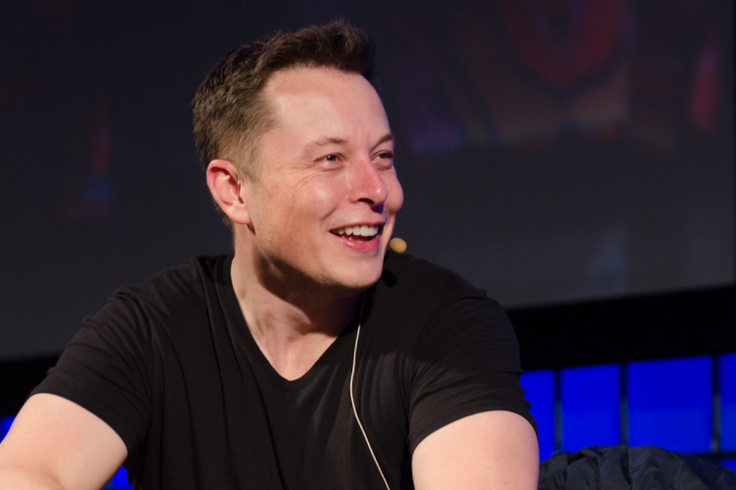
Elon Musk's role at the heart of the US government's internal cost‑cutting drive came under fresh scrutiny in Washington last week, after a Government Accountability Office (GAO) report found that Musk's Department of Government Efficiency (DOGE) had exaggerated its savings and operated with strikingly little transparency during Donald Trump's return to the White House.
The GAO released a comprehensive review scrutinising the unit's public 'Wall of Receipts', revealing that billions of dollars in touted savings from cancelled contracts, grants, and property leases lacked supporting evidence or were fundamentally miscalculated.
Auditors determined that DOGE failed to supply adequate methodological data for 96 per cent of its claimed grant savings, while taking credit for contract terminations that were either never executed or already underway before the agency's inception.
The news came after nearly a year of mounting concern over DOGE, the powerful cost‑cutting unit Trump created upon retaking office and handed to Musk with a broad brief to 'break things.'
Critics inside and outside government have argued that, far from streamlining a bloated state, DOGE has hollowed out core public services, undermined tax enforcement and, more darkly, fused highly sensitive personal data into a vast Department of Homeland Security system with few clear safeguards.
GAO Slams Elon Musk's DOGE 'Savings' Claims
In its report, the GAO detailed what it called a 'remarkable lack of transparency' around how DOGE calculated and reported its purported savings. The office concluded that the headline figures Musk and Trump touted to justify sweeping layoffs and programme closures fell far short of reality.
On one level, none of this is a revelation. From the outset, budget experts questioned how quickly DOGE claimed to be cutting 'waste, fraud and abuse.' John Koskinen, a turnaround specialist who later led the Internal Revenue Service under Barack Obama, told Mother Jones he was astonished that Musk's team targeted the very agency responsible for collecting the country's revenue.
'The last thing I ever thought,' he said, reflecting on DOGE's work at the IRS, 'was, 'Well, let's starve the revenue arm.''
Yet that is precisely what happened. In Trump's first year back in office, DOGE‑driven firings and forced resignations stripped 28 per cent of the IRS workforce, starting with newer staff brought in under Joe Biden. According to Koskinen, many of those pushed out had deep expertise in technology and tax law rather than being junior trainees.
Republican leaders, long hostile to robust tax enforcement, cheered the cuts. The effect was predictable. With fewer investigators capable of handling complex audits, the IRS has struggled to pursue wealthy individuals and multinationals quietly routing profits through offshore havens.
An April analysis by the Yale Budget Lab estimated that the layoffs alone will cost the US $600 billion in lost revenue over a decade, while broader IRS budget cuts in Trump's flagship 'One Big Beautiful Bill' add another $263 billion to the deficit.
Talking about Musk's 'savings' begins to look like talking about saving money by not paying your mortgage. The bill for hollowed‑out enforcement will land eventually, only bigger.
Cyber Expert Warns Elon Musk's DOGE Over Data Grab
Some analysts are more worried about what DOGE has done with data. In April 2025, Wired reported that Musk's department had, without explicit authorisation, begun rapidly merging highly sensitive information from the IRS, the Social Security Administration and state voter rolls into a single vast database under the Department of Homeland Security.
The scale of that fusion, including biometric data, was described by experts as unprecedented in the US context. A senior DHS official said the project 'has nothing to do with finding fraud or wasteful spending,' raising the question of what, exactly, it is for.
A separate Wired report in January pointed to a Department of Justice court filing that suggested DOGE might have shared Social Security data with an outside group seeking to 'overturn election results in certain states.'
Nothing is confirmed yet, so everything should be taken with a grain of salt, but the possibility of politically aligned actors gaining access to such data alarms those who have worked on government cybersecurity.
'What I want people to be scared of,' former federal cyber expert Jonathan Kamens told NPR, is not some abstract notion of surveillance but the practical risk that 'this data that the government has on them, which in some cases can be used to damage them, will be used to damage them.'
The consolidation goes far beyond immigration enforcement. It folds tax histories, benefit claims and biometric identifiers into a single ecosystem whose governance is opaque even to insiders.
Human Cost of Elon Musk's Government Overhaul
The GAO's audit focused on numbers, but the ledger of DOGE's impact runs through people's lives. Samantha Power, the former head of the US Agency for International Development, described to PBS how Musk's abrupt dismantling of USAID programmes created a 'cliff,' not a managed transition.
Within a year, at least 800,000 deaths were linked to the loss of health and humanitarian support, and The Lancet projected as many as 14 million deaths by 2030 if those programmes are not restored.
Domestically, researchers report slashed grants and bottlenecked funding at the National Institutes of Health and the National Science Foundation.
A Berkeley lab head told Mother Jones he had lost a third of his budget and would have to lay off staff, despite working on basic RNA‑protein science with no obvious political salience. For young scientists, one paleoecologist said that there is now 'no pathway into the field.'
Consumer protection has gone the same way. By June 2025, the public‑interest group Citizens for Responsibility and Ethics in Washington estimated that almost 1,500 staff had been forced out of the Consumer Financial Protection Bureau, effectively sidelining an agency that had previously secured tens of billions of dollars in relief and penalties for ordinary borrowers at a fraction of that cost.
Even food safety has not escaped. Michael Osterholm, who heads the Centre for Infectious Disease Research and Policy at the University of Minnesota, told local radio that cuts under Trump and DOGE had 'really crippled' the US response to outbreaks of the parasite cyclospora by wiping out senior laboratory leadership at the Centres for Disease Control and thinning public‑health ranks nationwide.
Taken together, these strands form a picture that sits uneasily with Musk's recurring promise to make government leaner and smarter. The GAO has now confirmed that the numbers behind that promise do not add up. The harder question, for Americans and their allies, is how much lasting damage has been baked into the system in the name of savings that never really existed.
© Copyright IBTimes 2026. All rights reserved.
- Recommended For You