'Stupid, Costly, and Deadly': Trump Admin Blasted for Spending $11 Billion to Pay Federal Workers Not to Work
The watchdog group Public Citizen argues the real price is higher once lost tax revenue, rehiring and agency disruption are included.

The Trump administration's attempt to streamline the federal government has backfired, leaving taxpayers with a bill of at least $11 billion for employees who were paid to do nothing.
A new report by the watchdog group Public Citizen confirms that nearly 140,000 civil servants accepted government offers to stop working while remaining on the public payroll.
The programme, known as the Deferred Resignation Program (DRP), was introduced in early 2025 as a pillar of the administration's workforce reshaping initiative. According to the analysis, the cost of paying these participants to stay home or take a vacation ranges between $11.1 billion and $15.1 billion through March 2026. Researchers stress that this figure is a conservative estimate, noting that it excludes the broader economic fallout of the initiative.
DRP Left Taxpayers With A Multi‑Billion Dollar Bill
Public Citizen's report, which draws entirely on Office of Personnel Management, or OPM, data, estimates that paying Deferred Resignation Program participants not to work costs between $11.1 billion and $15.1 billion through March 2026, the latest month for which figures are publicly posted.
The group stresses that the $11 billion figure is a conservative lower bound, not a ceiling.
The mechanics were blunt. Under the first DRP offer, some 139,628 federal workers agreed to resign in early 2025 but continued to receive their salaries through October.
DRP 2.0, launched in April 2025, allowed participants to be paid through 30 September and, in some cases, until 31 December if they planned to retire at the end of the year.
The scale of departures was stark. Public Citizen calculates that more than 106,000 employees left federal service under the DRP in September 2025 alone, with a further 24,000 departing by the end of December.
The watchdog argues that this is not just a story about human resources policy but about choices over how public money is used.
Citing its own cost estimates, the report notes that the money spent paying DRP participants not to work could have covered 3.6 billion school lunches, paid for a full year of childcare for more than 837,000 children, or funded the combined annual salaries of 149,000 public school teachers.
DRP Hollowed Out Key Agencies, Then Forced Rehiring
The news came after years of warnings from unions and public administration experts that rapid cuts to the federal workforce would gut core services rather than streamline them. Public Citizen's analysis suggests those fears were well‑founded.
The Department of Defence lost more than 48,000 civilian employees in the wake of the Deferred Resignation Program, according to the report.
The Department of the Treasury shed 23,000 staff, while the Department of Agriculture saw more than 14,500 employees depart.
Other agencies, including Commerce, Energy, Interior and Labour, also reported major losses.
One of the most acute pinch points emerged at the Internal Revenue Service, where staffing fell by 25% over a four‑month period last year, Public Citizen says.
The report cites work by the Budget Lab at Yale University, which estimated that a 22% reduction in IRS staffing could result in a $197.7 billion loss in tax revenue over 10 years, largely because top earners would face fewer audits and enforcement actions.
Despite the administration's repeated insistence that the DRP and other cuts would increase efficiency, at least 10 federal agencies ended up rehiring employees who had taken the Deferred Resignation Program offers, after realising they were essential to meeting legal obligations set by Congress.
Public Citizen Calls DRP 'Stupid, Costly And Deadly'
The report's author, Public Citizen researcher Douglas Pasternak, does not mince words. He describes the Trump administration's efforts to shrink the federal government as 'stupid, costly and deadly', arguing that the Deferred Resignation Program exemplifies all three.
'The administration has spent more than $11 billion on the Deferred Resignation Program alone, paying 140,000 federal workers to stay home or take vacation while they were still being paid by the American taxpayer,' Pasternak said in a statement.
He added that multiple agencies had to rehire DRP participants 'because Trump officials realised how vital they were to managing critical national programs.'
Public Citizen argues that the financial waste is only part of the story. The report warns of 'massive costs on society' that are not reflected in the $11 billion headline figure, including delayed safety inspections, weakened regulatory oversight, and slower responses to crises.
It claims that work left undone by the coerced departure of experienced staff has already cost billions of dollars and may have 'putting untold numbers of lives at risk as the federal government fails to perform crucial functions.'
Some of the administration's layoff efforts have also run into legal trouble. The report notes that several federal court cases found parts of the Trump team's approach to be unlawful, ordering terminated employees at agencies such as Agriculture, Commerce, Energy, Interior and Labour to be reinstated.
It also notes numerous ongoing legal challenges and that some early rulings have been overturned on appeal.
Musk‑Inspired DOGE Cuts Deepened The Fallout
For starters, the Deferred Resignation Program did not occur in isolation. Public Citizen links it to a broader restructuring drive branded as the Department of Government Efficiency, or DOGE, which drew on Elon Musk's approach to slashing headcounts.
The watchdog says Musk's influence was explicit in the OPM's 'Fork in the Road' message and claims DOGE's cuts had particularly severe consequences.
The group notes previous research suggesting that while DOGE claimed to have saved $160 billion by tackling 'waste and fraud', it actually generated about $135 billion in additional costs for taxpayers once knock‑on effects were accounted for.
Those estimates, it adds, did not include the cost of defending multiple lawsuits over DOGE's actions or the tax revenue lost due to weakened IRS enforcement.
Critics have long argued that such programmes tend to push out the most employable staff first, since they are the ones who can most easily walk into better‑paid private sector jobs and effectively double their income.
Public Citizen echoes that concern, pointing to examples of highly trained personnel, from workers guarding the US nuclear arsenal to air traffic controllers, leaving under the Deferred Resignation Program only to be urgently recruited again.
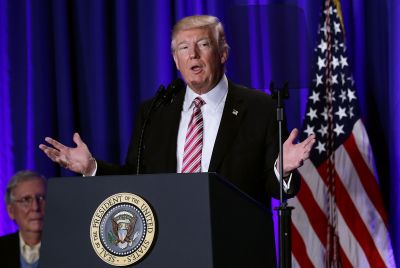
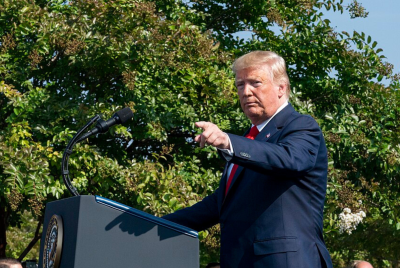
Trump has frequently framed his federal workforce agenda as an assault on 'waste', promising to make government leaner and more efficient.
Public Citizen's conclusion is bluntly different. 'His massive federal layoffs and resignation programs have been the epitome of inefficiency and have resulted in billions of dollars in wasted federal funds,' the report says.
The DRP was created during Donald Trump's push to shrink the federal government and was modelled on Elon Musk's aggressive staff cuts at his companies, according to Public Citizen.
In early January 2025, the Office of Personnel Management, or OPM, sent what has become known as the 'Fork in the Road' email, offering tens of thousands of federal employees a stark choice, including a path to resign but keep collecting pay for months. A follow‑up round, DRP 2.0, expanded the offer from April 2025 and stretched some payments into the end of that year.
© Copyright IBTimes 2026. All rights reserved.
- Recommended For You