'Is Our President Mad?' Ex-Federal Prosecutor Sounds Alarm Over Trump's Obsession With 'Bloodthirsty Dictators'
From comparing himself to Genghis Khan to claiming absolute control, the president's latest fixation on 'limitless power' is sparking a constitutional crisis in Washington.
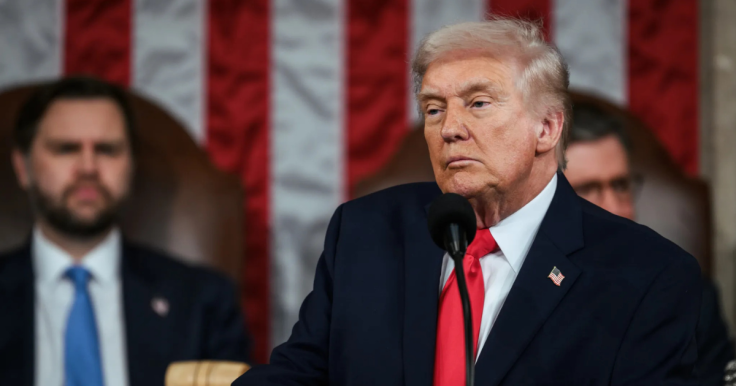
Donald Trump has once again become the focal point of a heated debate regarding the limits of US presidential power following revelations of a private 'Great Men' document.
As concerns over a 'Great Men' document controversy ripple through Washington, former federal prosecutor Jim Zirin is leading a growing chorus of critics who argue the White House is witnessing a fundamental transformation in executive authority.
Zirin, known for his decades of legal experience, suggests Americans should be asking themselves a blunt question in Washington in 2026: 'Is our president mad?' In a searing critique of Donald Trump's second-term behaviour, Zirin argues that the president's habit of comparing himself to history's most 'bloodthirsty dictators' reveals a craving for 'limitless power'.
He points in particular to a bizarre Trump-backed document that ranks the US leader above figures such as Attila the Hun, Genghis Khan, Joseph Stalin, Mao Zedong and Adolf Hitler. For Zirin, Trump's delight in that comparison is not just tasteless, it is a warning sign.
Trump's 'Great Men' Fantasy And The Bloodthirsty Dictators
The 'Great Men' document is central to Zirin's view that something is badly off. According to Regime Change, written by reporters Maggie Haberman and Jonathan Swan, Trump told the authors he had found proof of his historic stature and then unveiled the paper arguing he was more powerful than Attila the Hun, Genghis Khan, Napoleon Bonaparte, Stalin, Mao and Hitler.
Haberman and Swan say he began reading from it, reciting some of the most notorious names in history and calmly explaining how they failed to match his reach from the Oval Office.
A new book by NYT reporters reveals Trump: "I am more powerful than Stalin, Mao, and Hitler." The book details his White House tenure and strict focus on media optics. pic.twitter.com/LAQ2Fj4HsI
— World Vibe (@world_vibe_en) June 19, 2026
Zirin, writing about that scene, pauses to ask readers if they are 'still standing.' He follows with the question that frames his entire argument: 'Is our president mad? You may draw your own conclusion.'
The unease is not just about the list, but the tone. Haberman and Swan note 'the evident pleasure he took in the company of Mao, Hitler and Stalin' and 'the untroubled ease with which he accepted a place among men who had reshaped the world through conquest and fear.'
Trump later posted the 'Great Men' document on Truth Social, telling followers it came from a 'presidential historian.'
Regime Change reports that the author was, in fact, the long-time caddy and confidant of golfer Gary Player, not exactly Doris Kearns Goodwin. The substance is no less jarring. The caddy's conclusion, quoted by Zirin, claims that Trump's willingness to use power on a global scale 'makes him by far the most powerful person that has EVER walked this planet.'
Zirin points out the gap between that claim and the human cost associated with the dictators named. He lists estimated death tolls in the tens of thousands, millions and tens of millions. Against that backdrop, he asks the obvious question: why would any democratic leader want to be ranked among them at all?
'Is Our President Mad?' Zirin Sees A Quest For Limitless Power
According to Zirin, Trump's self-comparisons are not random. He argues the president has moved beyond testing the legal boundaries of executive power and is now describing his role 'in world-historical terms', placing himself alongside 'conquerors, dictators and war criminals who worked nations to their wicked will.'
In a separate interview cited by Zirin, Trump boasted on The Axios Show that he had discovered 'no limits' to his power after the disastrous war with Iran, which failed to achieve its declared objectives at huge cost.
In another conversation, Trump measured influence by who bows to whom, telling interviewer Marc Caputo that G7 leaders believed him when he joked 'I'm the boss', and that Israel would 'do as I say.'
He praised French president Emmanuel Macron for hosting him at Versailles, calling that imperial setting his 'weakness', and treated allies as bit players whose main function was to acknowledge his authority.
The pattern, in Zirin's telling, is a president who sees politics almost entirely through the lens of dominance and submission.
There is an unmistakable personal streak as well. Trump told Caputo that without him 'Israel would not exist today', described Republican hawks who questioned his Iran deal as 'hardliners' he no longer respected, and insisted the agreement amounted to Iran's 'unconditional surrender' and 'regime change.'
Power, The Economy And The One Comparison Trump Fears
Zirin does concede there is one force Trump admits still hems him in. 'For all of Trump's bombast about limitless power,' he writes, the president has acknowledged that the economy can stop him in his tracks.
Trump argued that continuing the Iran war to satisfy hawks risked a 'worldwide depression' and held up falling oil prices and a rising stock market as evidence that backing a deal was the right move.
That calculation has shaped the historical figure he is most keen to avoid. 'I have one primary wish as president, in terms of people: I never want to be the late, great Herbert Hoover,' Trump said, referring to the 31st president, long linked in the public imagination with the Great Depression.
Zirin notes that some historians see that blame as misplaced, but says Trump's fear of being cast as a Hoover-style failure sits awkwardly beside his eagerness to stand shoulder to shoulder with Stalin or Hitler in a power league table.
Behind the scenes, Trump's fixation with legacy appears to have shifted. Earlier in his political career, former aide Anthony Scaramucci claimed Trump did not care about how history would judge him, saying he was focused instead on money and short-term gain.
Now, according to accounts cited by Zirin, confidants say he talks about being 'the most powerful person to ever live', wants his name on more buildings and is pursuing grand projects, from rebuilding the White House East Wing as an outsized ballroom to minting his face on a massive gold coin.
Senior officials quoted in those accounts describe him as 'conscious, proud and hopeful' that his actions are 'resetting long-standing orders of things', not in a philosophical or Socratic way, but in the blunt sense that 'the stuff I'm doing is very different' and will reshape not just the United States but the wider world.
Checks, Balances And The Question Hanging Over Trump
Zirin also charts the moments when institutions have pushed back. He notes that the Senate initially voted 50–48, on a bipartisan basis, to block Trump from resuming the war in Iran.
Trump then accused Republican supporters of the measure of giving the enemy 'aid and comfort', language that echoes the constitutional definition of treason.
After a day of intense pressure, some Republicans reversed themselves, and the chamber voted 50–47 to give him freedom of action, even as Democrats insisted the conflict was now illegal.
Those reversals, in Zirin's eyes, show why the constitutional system still matters. He points to King Charles III's recent address to Congress, where the monarch reminded lawmakers that Magna Carta in 1215 gave both Britain and America 'the foundation of the principle that executive power is subject to checks and balances.' The line drew a standing ovation from both parties, a rare moment of unity that Zirin clearly thinks they would do well to remember.
IBTimes UK cannot independently verify every anecdote described in Regime Change or in the insider accounts surrounding Trump's second term.
Jim Zirin's alarm is rooted in a detailed account of the Trump White House set out in the book Regime Change, written by reporters Maggie Haberman and Jonathan Swan.
In their interviews with Trump, they recount how he produced what has become known as the 'Great Men' document, a sheet laying out the case that he wields more power than a roll call of conquerors and mass murderers.
Trump did not simply endorse it, they write, he read it aloud, name by name, explaining how each tyrant 'fell short' of the power he believes he holds as US president.
As Washington continues to navigate this period of heightened executive power, the question posed by Zirin—'Is our president mad?'—remains a proxy for a deeper, more fundamental anxiety about the permanence of democratic institutions. With the nation watching, the debate over whether the executive branch can be contained remains the central issue of the 2026 political landscape.
© Copyright IBTimes 2026. All rights reserved.
- Recommended For You