

Is Donald Trump Mentally Fit? CNN's Kaitlan Collins Confirms POTUS To Undergo Medical Tests After Napping Incident
President Trump will undergo annual medical and dental evaluations on 26 May

Donald Trump will undergo a fresh medical check-up at the White House later this month, CNN anchor Kaitlan Collins reported after the 79-year-old president was seen briefly nodding off during an official event in Washington.
The routine 'dental and medical evaluations' are scheduled for 26 May, shortly after Trump returns from a two-day visit to China on 14 and 15 May.
Low-level speculation about the president's stamina and mental sharpness, fuelled in part by that dozing incident and Trump's own, unusually eager, attempts to prove his cognitive fitness.
Collins, 34, chose to share the timing of the upcoming tests on X, giving the public a rare, reasonably specific health update.
Citing the White House, she wrote that 'President Trump will undergo his 'annual dental and medical evaluations' on May 26.' She reminded followers that officials had already flagged a dental appointment in Florida earlier this month, telling the travelling press pool on 2 May that Trump was visiting 'his local dentist in Florida' for a scheduled check-up.
That earlier visit attracted little notice. What did not slip by, however, was footage of the president appearing to close his eyes for several moments during a White House event, prompting pundits and critics alike to question whether he had simply been bored or was struggling with fatigue. The administration has not formally addressed the clip, and officials have given no indication that the new tests are anything other than routine. Still, when a sitting president is seen napping on camera, the optics take on a life of their own.
The White House says President Trump will undergo his "annual dental and medical evaluations" on May 26.
— Kaitlan Collins (@kaitlancollins) May 12, 2026
Kaitlan Collins, Donald Trump And A Quietly Political Dinner
Collins has recently emerged as one of the sharper chroniclers of Trump's day-to-day movements, blending straight reporting with occasional glimpses into the president's private politicking. Before the health update, she noted that Trump had hosted a dinner in the White House Rose Garden where, between courses, he casually canvassed guests on who should carry the Republican banner in 2028.
According to Collins, Trump asked: 'Is it gonna be JD [Vance]? Is it gonna be someone else? I don't know,' before testing the room on whether they preferred Secretary of State Marco Rubio or Vice President Vance. He reportedly concluded, 'Sounds like a good ticket.' It was the kind of off-the-cuff musing Trump has always enjoyed, but also a reminder that a president now defending his own mental acuity is already gaming out what comes after his time in office.
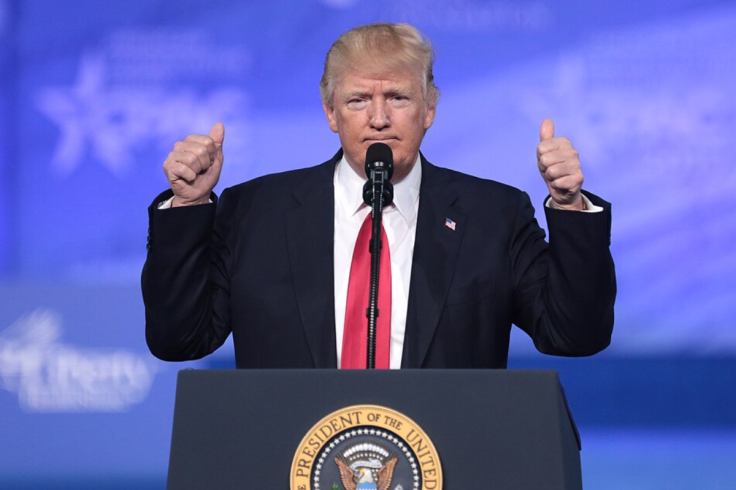
Two days later, on 4 May, Trump used the White House Small Business Summit to mount an unusually detailed defence of his cognitive strength. Standing at a lectern, he told attendees he had taken the Montreal Cognitive Assessment three times and 'aced each one,' insisting that a doctor had said it was the first perfect score they had seen. That anecdote, however flattering, remains a one-sided account. No further corroboration has been made public, and the doctor's name has not been disclosed.
Trump went further, offering what sounded like a performance of the exam itself. 'The first question is very easy,' he said, describing a task involving pictures of a lion, a bear, an alligator and 'a squirrel.' The challenge, in his telling, was simply to pick out which image was the squirrel. He said the test became harder 'by the time you get to the middle,' presenting this as proof of his formidable mind.
Cognitive Tests And The Politics Of Donald Trump's Health
Specialists are not quite as impressed. Ziad Nasreddine, the Canadian neurologist who designed the Montreal Cognitive Assessment, reminded Nine.com.au that it 'wasn't designed to be a test of IQ.' In his words, it exists 'to assess normal cognitive performance,' screening for early signs of conditions such as dementia and Alzheimer's disease. In other words, scoring well does not make someone a genius; it means their basic cognitive functions appear intact.
The test itself is deliberately mundane. Patients may be asked to draw a clock showing a specific time, recall a short list of words after a delay, or state the current date and location. It is now used in about 200 countries, a workhorse tool of neurology rather than a presidential trophy.

Still, in the pressure-cooker of American politics, Trump's willingness to talk about his score has given the exam a strange public life. His allies cite it as evidence that he is mentally 'tough.' His opponents question why a man in full possession of his faculties feels the need to brag about identifying a squirrel.
The truth, as ever with presidential health, probably lies somewhere between medical fact and political theatre.
For now, the only concrete development is that the White House has placed a date on his next round of checks.
© Copyright IBTimes 2026. All rights reserved.
- Recommended For You


