

Investigation Finds Taylor Swift Targeted by Coordinated Bot Campaign With Nazi Claims
Investigation finds Swift's Nazi-themed backlash was fueled by bots, not real fans
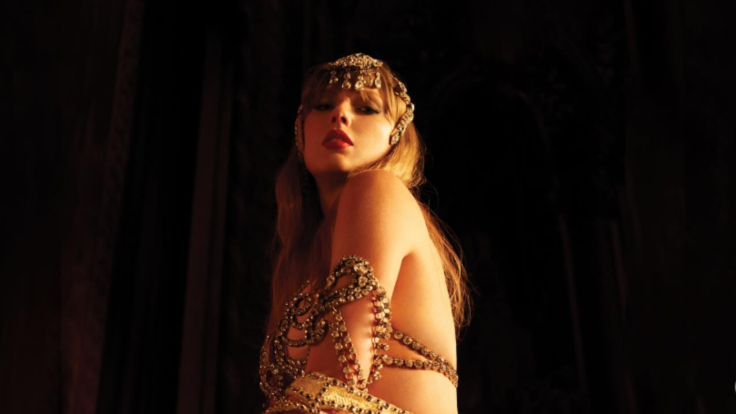
Taylor Swift's record-breaking The Life of a Showgirl album made headlines for the wrong reasons, with speculations that she's subtly promoting Nazism with her necklace merch. The discourse went on for weeks, until an investigation found that it was a coordinated attack.
For fans of Swift, the conversation took a turn for the worse and became extreme, which was confusing to most.
There were tweets that accused Swift of indirectly supporting the MAGA movement, trad-wife gender norms, and even white supremacy by means of dogwhistle references. Despite supporting democratic and liberal causes publicly for a long time, the far-right have been eager to claim Swift as an 'Aryan' icon. Meanwhile, the far-left were unrelenting with their attacks on using the term 'savage' on the 'Eldest Daughter' song and having lightning bolt charms that looked like SS pattern in her necklace merch.
How Fans Unintentionally Helped Amplify the Attack on Swift
However, what the Swifties didn't realise is that they were countering attacks that came from a false narrative created by a network of bots. Responding to these claims only helped spread the bad-faith allegations.
In a report shared by The Rolling Stone, a new research from GUDEA, a behavioral intelligence startup, analysed the origin and the path of such reputation-damaging claims on the internet.
Based on an extensive analysis of more than 24,000 posts and 18,000 accounts across 14 digital platforms from Oct. 4 (the day after The Life of a Showgirl came out) till Oct. 18, the company came to the conclusion that only 3.77% of accounts were responsible for 28 percent of the conversation surrounding Swift and the album during that period.
This small group of relatively coordinated accounts was responsible for the majority of the most extreme content pieces that involve Swift. It included conspiracies like her Nazi allusions, calling her hypothetical MAGA connections, and framing her relationship with the fiancé Travis Kelce as inherently conservative or 'trad', while at the same time presenting all of this as a leftist critique.

People who disagreed with these claims on mainstream platforms kept these discussions going without realising that they were doing exactly what the' provocateurs' wanted. This is because algorithmic systems recognised their activity and gave the people behind the attack greater visibility.
'This demonstrates how a strategically seeded falsehood can convert into widespread authentic discourse, reshaping public perception even when most users do not believe the originating claim', the researchers remarked.
An Analysis on Swift's Recent Hate Train
GUDEA's customer success lead, Georgia Paul, said she had a 'gut feeling' that ideologically divisive and politically charged attacks on Swift and her album were coming from manipulative actors. This prompted the company to monitor the conversation surrounding Swift.
Paul and her colleagues confirmed it by spotting two different moments of misleading Swift-related activity. The bot-like accounts that did most of the posts in the GUDEA data for the night of Oct. 6 and 7 were responsible for nearly 50% more than the next day. Most of the posts on Oct. 13 and 14, after Swift's merch drop that featured the lightning bolt necklace, came from fake accounts, with conspiracist content making up 73.9% of the total volume of the conversation.
Keith Presley, the founder, and CEO of GUDEA, says that the 'internet is fake'. He half-argues that bots have doubled and now consist of 50% of the web. 'This is something that we've seen escalate on our corporate side — this type of espionage, or working to damage someone's reputation', he said.
Though Presley and his assistants cannot track the identity of the person or group behind this attack, they found 'a substantial overlap of users between the Swift 'Nazi' narrative pushing accounts and those accounts involved in a different astroturf campaign towards Blake Lively'. Fans called it first that those involved in Lively's smear campaign are now targeting Swift to defame both women.
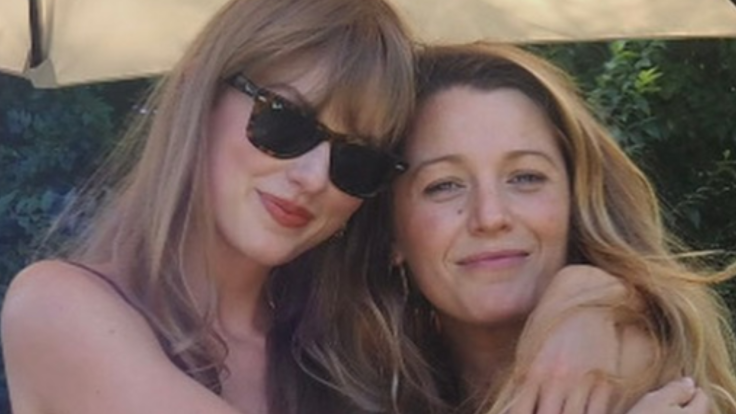
Lively earlier argued that she and her legal team found 'substantial' evidence that the smear campaign points to It Ends With Us actor and director, Justin Baldoni. Lively has filed a sexual assault lawsuit against Baldoni and will be facing each other in court next year.
And we know who was behind it https://t.co/jaQKx6Xlxe pic.twitter.com/DsY3QtE6Y2
— alex (@dontblamealex) December 9, 2025
Why the World's Biggest Pop Star Is Being Targeted
The researchers also found that the information reveals that the coordinated attack is intentionally structured to bring up controversies of several celebrities and disseminate false information.
On the one hand, experts observe that the attack Swift, done through the use of certain tactics, is parallel to the methods that have been used in other manipulation campaigns online. This suggests that the presence behind the attack is more 'sophisticated' and not run by a single disagreeing fan online.
However, one disturbing reason why the world's biggest pop star is the target is that they are experimenting to determine how they can influence massive fan groups to achieve their goals. After all, once fans interact with one single tweet, algorithms and influencer engagement can bring it up more to the public.
GUDEA warns that when you come across a comment whose sole purpose is to provoke you, think about this: their goal is to ragebait you, not deliver the statement itself. Ragebating is equal to more angry people acting like a mob, and therefore, the more likely it becomes trending.
Swift's representative has yet to comment on these findings.
© Copyright IBTimes 2026. All rights reserved.