'Arash the Archer': The New Iranian Air Defence System That Analysts Say Should Worry Washington
Iran's Arash-e Kamangir system reportedly intercepts US drone, signalling Tehran's military resilience
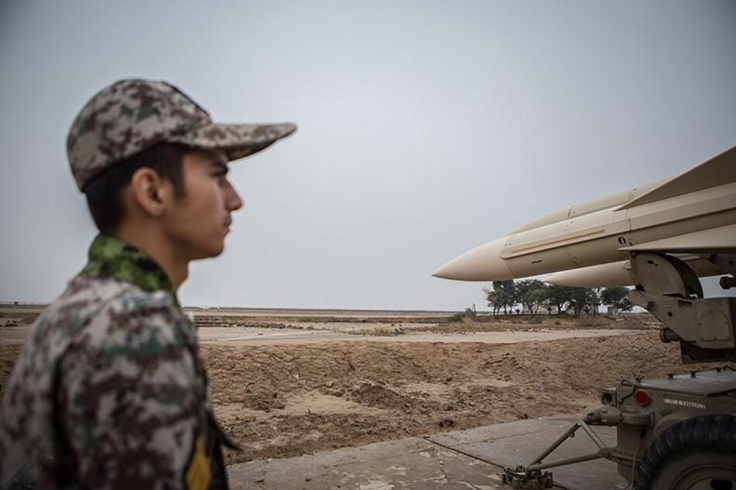
Iran's announcement that it used a newly developed air defence system to bring down a United States MQ-9 Reaper drone near the Strait of Hormuz has drawn significant attention from military analysts — not just for what it says about the incident itself, but for what it suggests about Tehran's broader military resilience.
Iranian media said the drone was brought down near Qeshm Island in the Strait of Hormuz, and that the interception marked the first combat use of a locally developed system called Arash-e Kamangir. The claim has not been independently verified, but analysts say the broader picture it paints is credible enough to warrant serious scrutiny from Washington.
A Name Steeped in Symbolism
The system's name was not chosen at random. Arash-e Kamangir translates from Farsi as 'Arash the Archer' — a reference to the mythological Persian hero who, in ancient folklore, fired an arrow so far that it drew the border between Iran and Central Asia.
Iran's semi-official Fars News Agency said the system was used to intercept the drone over the Strait of Hormuz, describing it as having stealth-detection capabilities, though giving few technical details. Fars quoted unnamed officials saying the operation was 'a clear and decisive message from Iran.'
🇮🇷 ARASH-2 / KIAN-2 | Long-Range Strike UAV آرش ۲ / کیان ۲
— DD Geopolitics (@DD_Geopolitics) March 11, 2026
Arash is a figure from ancient Persian mythology, a legendary archer who, according to the epic, drew his bow with his entire life force and fired an arrow that flew for an entire day, landing at the furthest boundary of… pic.twitter.com/AjxYJkBoav
Mobile, Concealable, Hard to Destroy: What Experts Say Arash Does
Despite the limited technical disclosure, defence experts have offered insight into what the Arash-e Kamangir system is likely to be. Alex Almeida, a security analyst at Horizon Engage, a New York-based strategic intelligence platform, told Al Jazeera the system may be related to other Iranian short-range or loitering surface-to-air weapons. 'I suspect it's a further development of one of those systems,' he said. 'It doesn't rely on fixed guidance from a traditional air defence radar site. It's probably using some kind of electro-optical or heat-seeking guidance — essentially a pop-up SAM system that is easy to set up and launch.'
That distinction matters significantly. Traditional air defence networks are built around fixed radar installations that are relatively easy for adversaries to locate and destroy. A smaller, mobile system can be repositioned, concealed and deployed rapidly — making it far harder to neutralise in a pre-emptive strike.
'Iran Has Become Quite Self-Sufficient'
Mark Hilborne, a senior lecturer in the school of security studies at King's College London, told Al Jazeera that while there was 'very little independently verified information' about Arash-e Kamangir, the attack would 'fit a wider pattern.' 'Iran has become quite self-sufficient in various forms of missile design and, like Ukraine, has been clever at changing the economics of warfare. Cheap, simple systems can hold much more complex systems at risk.'
Hilborne's framing points to a strategic reality that has grown more pronounced throughout the current conflict. The reported shooting down of the Reaper drone could force the US to rely more on expensive missiles rather than drones when attacking Iran. At the same time, Tehran can continue using comparatively cheap-to-produce Shahed drones, potentially giving Tehran a longer-term economic advantage in any prolonged conflict.
Drones, an F-35 Claim and Tit-for-Tat Strikes at the World's Most Critical Strait
The Islamic Revolutionary Guard Corps claimed it downed the MQ-9 Reaper drone after identifying a hostile aircraft entering Iranian airspace in the Gulf region. In separate claims that have not been independently verified and which the US has not confirmed, the IRGC also said it fired at an F-35 fighter jet and an RQ-4 intelligence collection drone, with the F-35 leaving Iranian airspace. The IRGC added that it reserved the 'legitimate and definite' right to retaliate against any US ceasefire violations.
The IRGC has released footage purporting to show the downing of a U.S. Air Force MQ-9A Block 5 Extended Range (ER) unmanned combat aerial vehicle (UCAV), engaged by the new “Arash the Archer” (Arash-e Kamangir) air defense system.
— OSINTWarfare (@OSINTWarfare) May 26, 2026
A second clip shows a U.S. Air Force F-35A… pic.twitter.com/02ZZ3GSnwi
According to US officials, American forces shot down Iranian drones over the Strait of Hormuz and carried out strikes on a military site in Bandar Abbas, a strategic port city in southern Iran. The tit-for-tat exchange underscores how volatile the situation around one of the world's most critical shipping corridors remains.
Nicole Grajewski, an assistant professor at Sciences Po university in Paris, told Al Jazeera that Iran's approach is less about technological parity and more about endurance. 'Their systems are not especially sophisticated or fully integrated, but as a result, Iran's military strategy focuses heavily on resilience, endurance and mobility,' she said. She added that 'the US and Israel are more constrained than Iran' in terms of available munitions, and that Iran 'was able to ramp up ballistic missile production to levels that are high by international standards' following the 12-day war in June 2025.
Iran's larger air defence network has been significantly degraded by months of Israeli and US strikes, but the Arash-e Kamangir claim signals that Tehran may still retain what Almeida described as a 'persistent, limited, low-level air threat' that cannot be permanently suppressed. For Washington, that means every drone or aircraft operating near Iranian airspace now carries a higher level of risk — and the cost of sustaining pressure on Iran may be rising faster than anticipated.
© Copyright IBTimes 2026. All rights reserved.
- Recommended For You