US Bases Across Eight Countries Hit, Hundreds of Millions in Damage as America Moved to Block Satellite Images
Satellite imagery uncovers the extent of Iran's attacks on US military facilities, raising questions about transparency

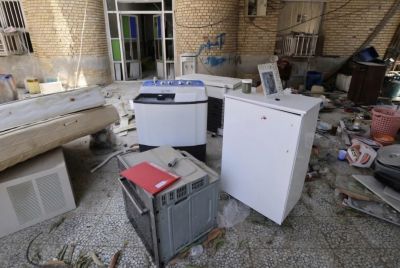
Satellite imagery and video analysis have revealed that Iran struck at least 20 American military facilities across eight countries in the Middle East since the start of the war in February — a scale of damage significantly wider than the United States has publicly acknowledged. The findings, published by BBC Verify, draw on imagery from multiple international satellite providers and show destruction running into hundreds of millions of dollars across bases in Saudi Arabia, the United Arab Emirates, Qatar, Kuwait, Iraq, Jordan, Bahrain and Oman.
Some analysts put the actual number of bases struck as high as 28. The disparity between what satellite imagery shows and what Washington has officially confirmed has raised serious questions about the transparency of US military communications during the conflict.
Satellite imagery reviewed by BBC Verify indicates Iranian strikes have damaged 20 U.S. military sites across the Middle East since the war began, including several THAAD missile defense batteries, suggesting broader impacts than previously disclosed. pic.twitter.com/PVz7ec4Sgk
— Mintel World (@mintelworld) June 1, 2026
What the Images Show
Among the most consequential losses identified were three Terminal High Altitude Area Defence batteries — known as THAAD systems — struck at the Al Ruwais and Al Sader airbases in the UAE and at Muwaffaq Salti Airbase in Jordan. CNN'searlier satellite imagery analysis identified debris surrounding a blackened THAAD radar at Muwaffaq Salti as early as 2 March. The US is known to operate only eight such batteries globally, each costing approximately $1 billion (£766 million) to manufacture.
Vice-Admiral Mark Mellett, the former head of the Irish Defence Forces, told BBC Verify that these batteries form the core of a 'highly complex' regional defence network that cannot be 'quickly or easily replaced.' Each battery requires a crew of roughly 100 troops to operate, and the interceptor missiles it fires cost around $13 million (£10.3 million) per round.
At Prince Sultan Airbase in Saudi Arabia, expert analysis of satellite images showed damaged refuelling and surveillance aircraft alongside smoking craters. One aircraft was identified by analysts at MAIAR as an E-3 Sentry surveillance plane, which US media reported could cost up to $700 million (£553 million) to replace. In total, at least 42 aircraft — including F-15s, F-35s, 24 MQ-9 Reaper drones and an A-10 attack plane — were destroyed or damaged since February.
Iran's Tactics Sharpened Over Time
Analysts told BBC Verify that Iran's approach evolved considerably as the conflict progressed. Early strikes relied on mass missile barrages designed to overwhelm defence systems. Over time, Tehran shifted to smaller, precisely targeted attacks against high-value assets — a change that experts say caught American forces off guard.
Analysts said US forces 'appear to have been guilty of a degree of early-war complacency' in failing to relocate aircraft as Iranian targeting became more precise — a significant operational failure given the volume and sophistication of the hardware ultimately lost.
Iran attacks damage 20 US military sites since start of war, satellite images show https://t.co/Sogbnoo0Ma
— BBC News (UK) (@BBCNews) June 1, 2026
The Blackout on What the Public Could See
As damage mounted, the US government moved to restrict what the world could see from orbit. Planet Labs confirmed on 5 April 2026 that it would indefinitely withhold visuals of Iran and the surrounding conflict region, following a direct request from the US government. The restriction applied retroactively to imagery from 9 March and was expected to remain in place until the conflict ended.
The company told customers in an email that the government had asked all satellite imagery providers to implement an indefinite withholding of imagery. The move expanded on a 14-day delay Planet Labs had already imposed the previous month, which itself had extended an initial 96-hour restriction. The Pentagon declined to confirm or deny the BBC's findings, with a defence official citing 'operational security.'
Vulnerability if Fighting Resumes
The ceasefire that took effect on 8 April through Pakistani mediation remains fragile. Defence analyst Dr Kelly Grieco warned that depleted air defence stocks mean US and partner forces across the Gulf could be significantly exposed should fighting resume. 'There is no rapid path to replenishment,' she said, 'meaning any renewed Iranian assault would be met [with] a fraction of the interceptors available when the conflict started.'
The gap between what governments disclose during active conflicts and what independent satellite analysis later reveals has long been a subject of scrutiny for journalists and arms researchers. This case is particularly significant given that the loss of three THAAD batteries represents a substantial reduction in America's most advanced regional missile defence capability, at a moment when the ceasefire remains unresolved, and tensions have not fully subsided.
© Copyright IBTimes 2026. All rights reserved.
- Recommended For You