

US vs Iran: Analyst Explores How Asymmetric Warfare Could Challenge American Superiority
Jiang Xueqin argues that Iran has spent decades preparing for asymmetric warfare against a technologically superior adversary.

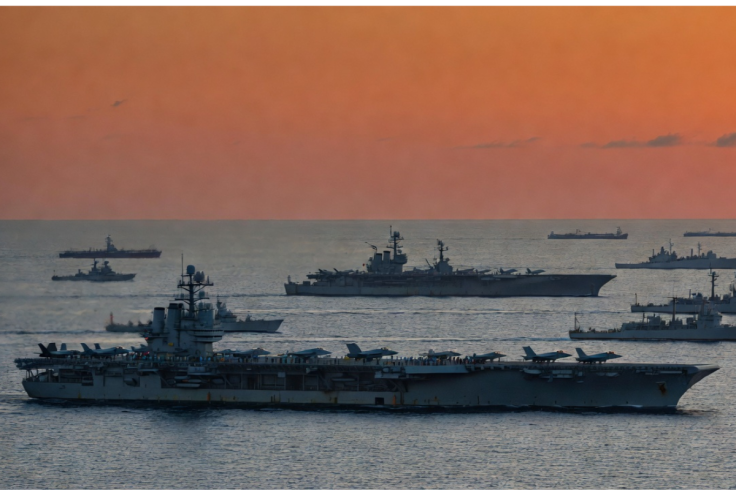
War between the United States and Iran has long been discussed in strategic circles as a dangerous but avoidable scenario. Now, amid heightened tensions and ongoing military exchanges in the region, some analysts are asking a question that once seemed unthinkable. Could the United States actually lose?
One of them is Professor Jiang Xueqin, who recently outlined his argument on the political programme 'Breaking Points'. Jiang contends that if the conflict turns into a prolonged war of attrition, Iran could exploit structural vulnerabilities in the American military and the Gulf region.
His view remains controversial. Many defence experts argue that the United States retains overwhelming military superiority. Still, Jiang's case rests on several concrete strategic concerns rather than headline-grabbing rhetoric.
A War of Attrition
Jiang argues that Iran has spent decades preparing for asymmetric warfare against a technologically superior adversary. Iran's strategy, he says, is not built around matching the United States weapon-for-weapon. Instead, it relies on endurance, decentralised operations and cost asymmetry.
Iran has long supported regional proxy groups, including Hezbollah in Lebanon and the Houthis in Yemen. These groups have developed experience using drones, rockets and missile systems to pressure stronger opponents. Western intelligence agencies have documented Iranian material support for such organisations, although the degree of direct operational control remains debated.
Military analysts widely acknowledge that low-cost drones can create serious challenges for advanced air defence systems. Interceptor missiles such as the Patriot system can cost several million dollars per unit, while some Iranian-designed drones are estimated to cost tens of thousands. Over a prolonged conflict, this imbalance could strain stockpiles and defence budgets.
That said, the United States maintains vastly superior logistics, global alliances and industrial capacity. Whether cost asymmetry alone could determine the outcome of a war remains uncertain.
The Strait of Hormuz and Energy Risk
A central pillar of Jiang's argument concerns the Gulf region's vulnerability. The Strait of Hormuz is one of the most critical energy chokepoints in the world. Historically, roughly one-fifth to one-quarter of the global oil trade has passed through it. Any sustained disruption would likely send shockwaves through global markets.
Iran has previously threatened to close the Strait during periods of confrontation, though it has never successfully maintained a full blockade. Such an action would almost certainly trigger a multinational naval response.
Jiang also highlights infrastructure risks in Gulf states that are members of the Gulf Cooperation Council. Countries such as Saudi Arabia and the United Arab Emirates rely heavily on desalination for potable water. In some cases, desalination accounts for more than half of the domestic water supply. Experts agree that these facilities are strategically sensitive, though they are also heavily protected.
While attacks on critical infrastructure could cause severe disruption, predictions that major cities would run out of water within weeks are speculative and would depend on the scale and duration of damage.
Economic Spillover
Jiang links regional instability to broader financial consequences, arguing that prolonged conflict could affect global energy revenues and investment flows. Gulf sovereign wealth funds do hold significant stakes in American technology and infrastructure projects. However, economists caution against overstating this link. The United States economy is diversified and supported by domestic capital markets that far exceed Gulf investment levels.
Similarly, claims that instability in the Gulf would automatically collapse the dollar's status as the world's reserve currency are not supported by mainstream economic analysis. The dollar's dominance reflects deep financial markets, regulatory structures and global trust built over decades.
The Ground Forces Question
Jiang's final point concerns escalation. History suggests that regime change through air power alone is rare. Major US interventions in Iraq and Afghanistan ultimately required ground forces. Whether any current conflict would reach that stage remains hypothetical.
Public tolerance for prolonged wars has declined in the United States since the early 2000s. Casualties and mounting costs could influence political calculations in Washington.
A Debate, Not a Verdict
Jiang's argument does not rest on the idea that Iran would defeat the United States in a conventional confrontation. Instead, he suggests that attrition, economic pressure and regional instability could produce outcomes that fall short of a clear American victory.
Many defence analysts disagree, pointing to US naval dominance, intelligence capabilities and alliance networks. Yet Jiang's warning reflects a broader strategic debate. Modern conflicts often hinge less on raw firepower and more on endurance, cost sustainability and political will.
Whether the United States could lose such a war remains uncertain. What is clear is that any sustained conflict in the Gulf would carry risks far beyond the battlefield.
© Copyright IBTimes 2026. All rights reserved.