

US Sinks Iranian Warship In Indian Ocean Strike — A Chilling Signal To China And Russia
The US Navy's torpedo strike on an Iranian frigate signals a new era in naval warfare, with implications for global powers.
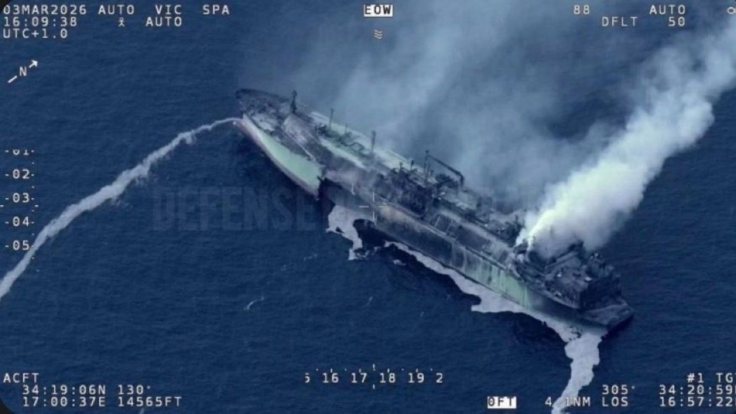
The United States Navy struck and sank an Iranian warship in the Indian Ocean in a military action that officials say signals a sharp escalation in global naval warfare and delivers a stark warning to China and Russia about American maritime dominance. What might once have been a shadowy undersea encounter has instead become a defining, publicly acknowledged moment in a rapidly widening conflict.
Three days of intense military operations saw the Iranian frigate IRIS Dena destroyed by a torpedo fired from a United States submarine in international waters off the coast of Sri Lanka, Defence Secretary Pete Hegseth told reporters. The engagement, confirmed on 4 March 2026, marked the first time since the Second World War that a US submarine had sunk an enemy warship with a torpedo, a development that analysts say could reshape strategic calculations for rivals such as China and Russia.
The sinking occurred amid a broader surge in hostilities between Tehran and Western-aligned forces, following a series of strikes attributed to US and Israeli operations against Iranian military infrastructure. As the warship slipped beneath the waves, at least 87 crew members were reported dead, and 32 survivors were rescued by the Sri Lankan navy.
Submarine Strike Signals New Depths In Naval Warfare
The torpedo attack by a US fast-attack submarine came without warning and struck the Iranian vessel in what Defence Secretary Hegseth described as a 'quiet death'. The precision strike relied on a heavyweight Mk-48 torpedo, an advanced weapon capable of breaching a warship's hull at depth. Hegseth emphasised the historic nature of the engagement, noting that it was the first torpedo sinking of an enemy vessel by a US submarine since global hostilities ended in 1945.
During a pool briefing at the Pentagon, Hegseth provided rare public acknowledgement of the operation, stressing that the United States maintained the right to defend its interests and neutralise threats in international waters. He said the action was part of a broader campaign aimed at degrading Iran's naval and missile capabilities.
Strategically, the strike off Sri Lanka's southern coast places the conflict far beyond the traditional theatre of the Gulf region. Analysts say the reach of the US Navy's submarine fleet into the Indian Ocean adds a new dimension to the confrontation between Washington and Tehran. This capability also demonstrates to rival powers the United States' ability to project force across multiple maritime domains simultaneously.
This Iranian warship thought it was safe in international waters. It wasn't.
— The White House (@WhiteHouse) March 4, 2026
The @DeptofWar is fighting to win. 🇺🇸 pic.twitter.com/4bGMubuSQu
Human Toll And Legal Ripples At Sea
The human toll of the sinking was stark. Sri Lankan naval vessels responded to distress calls from the Iranian frigate, later identified as the IRIS Dena, finding debris and liferafts in the open water. Official figures reported that 87 bodies were recovered, and 32 crew members were taken to hospital in Galle with a range of injuries. Medical staff described one survivor in critical condition, with others stabilised for treatment.
The Iranian government has not issued a formal statement on the incident. However, Tehran's leadership is widely expected to interpret the attack as a direct escalation of the ongoing conflict, which began when Israeli forces targeted locations in Iran, prompting a series of Iranian retaliatory actions. The extension of hostilities into the Indian Ocean, thousands of miles from the Strait of Hormuz, signals a widening of the theatre of war.
For the families of those aboard the IRIS Dena, the loss of life will intensify calls for accountability and may strengthen hardline positions within Tehran. The suddenness of the strike and its occurrence in international waters have already triggered debate among legal scholars and military commentators about the boundaries of maritime engagement, even in the context of ongoing hostilities.
.@SECWAR “In the Indian Ocean—an American submarine sunk an Iranian warship, that thought it was safe in international waters.
— DOW Rapid Response (@DOWResponse) March 4, 2026
Instead, it was sunk by a torpedo—Quiet Death.
The first sinking of an enemy ship by a torpedo since World War 2. Like in that war—back when we were… pic.twitter.com/Y97YQBxQza
Strategic Implications for China and Russia
While Iran remains the immediate focus of the conflict, the sinking of its warship carries broader geopolitical implications. China and Russia, both with significant naval interests in the Indian Ocean and beyond, are likely to scrutinise the US action closely.
Beijing, in particular, has expanded its naval footprint in recent years, investing heavily in blue-water capabilities and establishing overseas bases. A successful long-range submarine strike by the United States demonstrates a capacity that could complicate China's own strategic ambitions, especially in contested regions such as the South China Sea and the Indian Ocean.
Moscow likewise maintains a presence in global maritime affairs and has historically positioned itself as a counterbalance to US influence. The demonstration of American undersea warfare prowess may prompt adjustments in Russian naval deployments and force posture, particularly as Russia continues its own military engagements in Europe and the Middle East.
Analysts say that the political message inherent in attacking Iran's warship reaches far beyond Tehran. The message to other global powers is clear: the United States retains the capability and willingness to use lethal force at long range in defence of its strategic objectives.
Military strategist Dr Helena Markovic of the International Institute for Strategic Studies said that the action reflects a new era of naval power projection. 'The use of a submarine to eliminate an adversary's surface combatant in distant waters underscores the United States' ability to control key sea lanes and deter rivals,' she said. 'This will be noted in Beijing and Moscow.'
🚨 JUST IN: A submarine just attacked an Iranian ship off Sri Lanka’s coast.
— Brian Allen (@allenanalysis) March 4, 2026
101 people missing. 78 injured.
Sri Lanka. The Indian Ocean. This war just left the Middle East.
China and Russia are already providing Iran satellite intelligence. US bases destroyed. India now… pic.twitter.com/Fs09um5dKX
A Defining Shockwave In A Widening Conflict
At home, US military officials have presented the action as a necessary step to degrade Iranian military threats, including ballistic missiles and drone capabilities that have been used against US bases and allies in the Middle East. Hegseth and other senior leaders have framed the conflict as one that the United States must win decisively.
As the world absorbs the implications of this extraordinary naval engagement, the sinking of the IRIS Dena will be viewed as a defining moment in modern warfare, with consequences that extend far beyond the tragic loss of life at sea.
The United States' message to China and Russia may be crystal clear, but the full ramifications of this naval strike will unfold over months and years as global powers recalibrate to a new strategic reality.
© Copyright IBTimes 2026. All rights reserved.