Quick Facts About Mojtaba Khamenei: Background, Controversial Rise and Appointment as Iran's New Supreme Leader
Mojtaba Khamenei's rise to power marks a significant moment in Iran's history, with implications for the country's future.
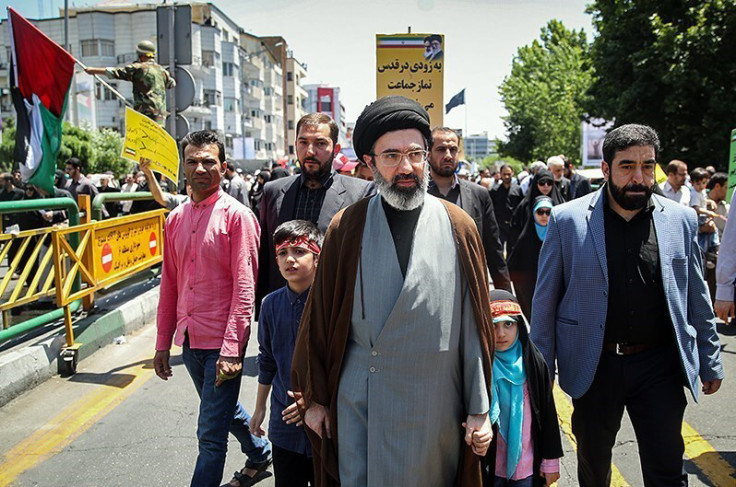
Mojtaba Khamenei is reported to have been chosen in Tehran on Tuesday by Iran's Assembly of Experts as the country's next Supreme Leader after the killing of his father, Ali Khamenei, in US and Israeli air strikes, according to Iran International, which cited anonymous informed sources. If confirmed, the move would place Mojtaba Khamenei at the apex of the Islamic Republic at its most dangerous moment in modern history and, just as strikingly, keep ultimate power within one family for the first time since the 1979 revolution.
For context, nothing has yet been publicly confirmed by the Iranian state and the reported decision is said to remain unannounced until after Ali Khamenei's burial.
A succession in wartime is never tidy, and this one appears to have been pushed through under pressure from the Islamic Revolutionary Guard Corps, raising awkward questions about process as well as power.
Why Mojtaba Khamenei Has Long Loomed Over Tehran
For years, Mojtaba Khamenei has been one of the most important men in Iran without ever really becoming a public political figure. Now 55, he is described in reports as a gatekeeper, fixer and power broker inside the Office of the Supreme Leader, the opaque centre of gravity around which much of the Iranian system has revolved.
That is why his reported elevation looks less like a sudden promotion than the formal unveiling of a figure who has spent decades operating just offstage. His role has often been compared with that of Ahmad Khomeini, the son of Ruhollah Khomeini, who became indispensable to the revolutionary state in its formative years.
The son of the slain Ali Khamenei was injured during one of the attacks. He is being touted as a potential new Supreme Leader
— NEXTA (@nexta_tv) March 7, 2026
Mojtaba Khamenei, the son of the slain Ayatollah Ali Khamenei, was injured during one of the attacks, according to Al Hadath and Times of Israel, citing… https://t.co/tZsJihCGvc pic.twitter.com/8Ak9MvkF6i
The difference is that Mojtaba's rise comes not in a period of ideological consolidation but in the middle of war, strain and a leadership vacuum.
Analysts quoted by Iran International paint him as both central and elusive. Dr. Eric Mandel, director of the Middle East Political and Information Network, said Mojtaba had spent years building ties with the IRGC and consolidating influence inside the regime's power structure, adding that he is 'widely viewed as one of the architects of the regime's repression.'
Arash Azizi, an author and Iran analyst, offered a more direct political reading, saying Mojtaba has been a 'bete noire' of democratic movements since at least 2009, when he was rumoured to have helped orchestrate the repression of protests after the disputed election.
Mojtaba Khamenei and the Security State
A large part of Mojtaba's authority appears to rest not on charisma or theology but on old loyalties. During the Iran-Iraq War, he served in the Habib Battalion, a unit linked to forces operating under the IRGC umbrella.
That service mattered less for battlefield glory than for what came after. Men from that world went on to occupy senior roles in Iran's intelligence and security apparatus, and those relationships are widely believed to have given him lasting access to the regime's coercive core.
That helps explain why the IRGC would favour him in a crisis. The Guards needed continuity, control and a figure acceptable to the regime's inner circles.
Iran has named Mojtaba Khamenei the country's new supreme leader following the killing of his father Ayatollah Ali Khamenei in US-Israeli strikes on February 28, the state-run media has announced. https://t.co/mYjsZuVOcp pic.twitter.com/eYG00HAeLj
— CNN (@CNN) March 8, 2026
Mojtaba, having reportedly acted for years as a channel between his father and the security establishment, fits that requirement with almost uncomfortable precision. He is not an outsider to the system. In many ways, he looks like its distilled product.
Still, the case for him is not clean. Iran's constitution expects the Supreme Leader to possess serious standing in Islamic jurisprudence, and Mojtaba is not widely regarded as one of the country's senior clerical authorities.
He studied in Qom and is a cleric, but the report makes clear he does not hold the rank of ayatollah, a gap that will not bother everyone inside the establishment. It will, however, strengthen the impression that this is a political succession disguised in clerical robes. The hereditary question remains, which the Islamic Republic has spent decades pretending does not exist.
🚨 IRAN NEW SUPREME LEADER🚨
— Money Ape (@TheMoneyApe) March 9, 2026
MOJTABA KHAMENEI, SON OF ALI KHAMENEI, HAS BEEN NAMED IRAN’S NEW SUPREME LEADER BY IRAN’S CLERICAL LEADERSHIP.
PRESIDENT TRUMP REJECTED THE CHOICE, SAYING THE NEW LEADER “WOULD NOT LAST LONG WITHOUT U.S. APPROVAL.”
HE MAY TAKE REVENG…Show more pic.twitter.com/nL1k2Nw6sv
The state was founded in opposition to monarchy, yet the reported handover from father to son would make the system look uncomfortably dynastic. The irony is stark. A revolution that once defined itself against inherited rule may now be relying on bloodline to preserve itself.
That leaves Mojtaba Khamenei, if the reports are confirmed, in a brutal position. He would inherit not a settled office but a bunker mentality, a country under attack and a political order whose choices all look costly. The man long accused of ruling from the shadows would have no shadows left to hide in.
© Copyright IBTimes 2026. All rights reserved.
- MOST POPULAR IN Trending