

US Draft Peace Deal with Iran Includes '$300 Billion' Reconstruction Fund as Trump Withholds Final Signature
Proposed fund aims to reshape postwar reconstruction and diplomatic relations
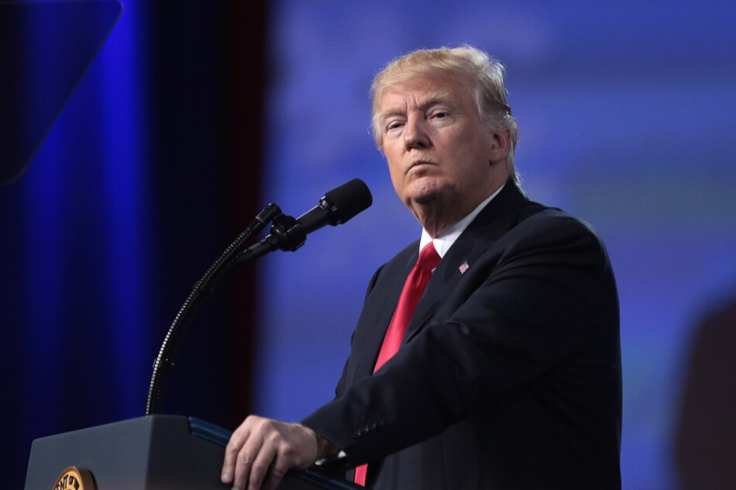
A draft memorandum of understanding between Washington and Tehran has been reported to include a proposed $300 billion (£223.6bn) postwar fund for Iran. The New York Times reported that the proposal has been described differently by each side at the table — with an Iranian official calling it a 'reconstruction programme,' while two diplomats familiar with the latest draft referred to it as an international 'investment fund' that the United States would help facilitate if a final deal is reached.
The fund's inclusion comes after Tehran had earlier in negotiations demanded what it called reparations for wartime bombardment damage. Iranian officials estimate the total damage from the conflict at between $300 billion (£223.6bn) and $1 trillion (£745.2bn). Despite the enormous figure, the draft has yet to receive final approval from US President Donald Trump, and active negotiations remain ongoing.
BREAKING: The proposed US-Iran peace deal includes a $300 billion reconstruction fund for Iran, per NYT.
— The Kobeissi Letter (@KobeissiLetter) May 29, 2026
The program is being called an international "investment fund," which the US would facilitate in the final deal.
This comes as Iran demands "reparations" to end the war.
From Reparations to 'Investment'
The rebranding of Tehran's reparations demand into an 'investment fund' appears to be a deliberate diplomatic manoeuvre. The American side redefined the amount as an international investment fund, intentionally avoiding the words 'compensation' or 'reparations,' according to diplomats familiar with the draft. This idea has been attributed to Steve Witkoff and Jared Kushner.
The distinction matters considerably in Washington's domestic political context, where any payment framed as war reparations would likely face significant congressional opposition. Proposals tied to the fund include the stimulation of real estate projects in Tehran and the creation of a broader investment mechanism as an incentive for the agreement. As part of the broader plan, Iranian negotiators have proposed allowing large American oil and energy companies to enter the Iranian market through joint ventures once sanctions are lifted.
Frozen Assets and a 60-Day Truce
The reconstruction fund is not the only financial matter under discussion. In parallel, the issue of Iran's access to $24 billion (£17.9bn) in frozen foreign bank assets is being negotiated. Iran has insisted on receiving at least $20 billion (£14.9bn) of that amount during the negotiation stage to stabilise its economy, while the United States is exploring mechanisms to channel these funds through third countries such as Qatar, according to diplomats familiar with the talks.
Beyond the financial provisions, the draft agreement is reported to cover several other critical issues. US and Iranian negotiators have reached an agreement on a memorandum of understanding to extend the ceasefire by 60 days and launch subsequent talks on Iran's nuclear programme, though Trump has yet to give his final approval. The draft also includes provisions to end the blockade of the Strait of Hormuz, a vital global waterway for energy trade whose closure has amplified pressure on both sides to reach a resolution.
Unlike Obama unfreezing $1.7 billion in Iranian funds held since the 1979 revolution, Trump is offering Iran a $300 billion outright bribe to let him get out of the mess of the war he started so he can claim a victory and move on. https://t.co/VoOJ6yy0zA
— Damon Linker (@DamonLinker) May 28, 2026
Reactions and Remaining Gaps
The revelation of the $300 billion figure drew immediate and sharp reactions online. Political science lecturer Damon Linker of the University of Pennsylvania posted on X that Trump was 'offering Iran a $300 billion outright bribe to let him get out of the mess of the war he started so he can claim a victory and move on.' Former Republican lawmaker Adam Kinzinger posted: 'Uh, what?'
Both sides have narrowed their differences compared to earlier talks, but disagreements remain over several provisions. Brief clashes between US and Iranian forces in recent days have intensified pressure on negotiators to reach a deal. Iran is reported to be prepared to sign with approval from its top leadership, but the American side has yet to receive that final authorisation from the President.
The emergence of a $300 billion reconstruction fund in a US-Iran draft deal marks a pivotal, if unresolved, moment in one of the most consequential conflicts of the decade. Should Trump ultimately sign off, the agreement would not only reshape relations between Washington and Tehran but could also redefine how postwar economic reconstruction is packaged in modern diplomacy — with enormous implications for global energy markets, regional stability, and the precedent it sets for future conflict resolution.
© Copyright IBTimes 2026. All rights reserved.