

Who Is Asif Merchant? Pakistani Man Who Admitted Iran Sent Him to Arrange Trump Assassination at Campaign Rally
Asif Raza Merchant, linked to Iran's Revolutionary Guard, was convicted in a US federal court for plotting to arrange the assassination of a US president and other politicians.
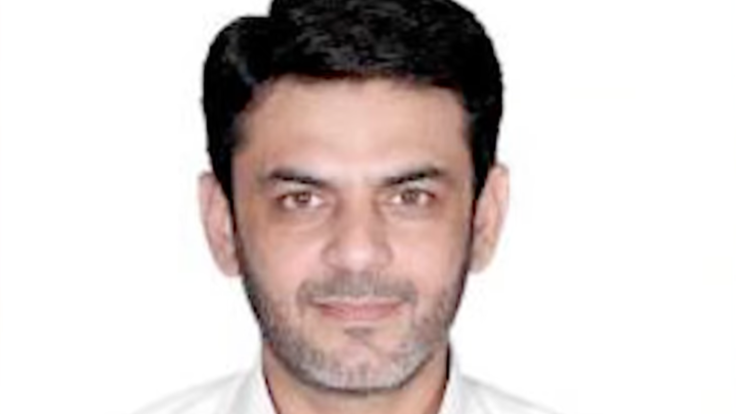
A federal jury in Brooklyn needed less than two hours to find Asif Raza Merchant guilty, the same man who had already told the court under oath that he came to the United States on behalf of Iran's paramilitary Revolutionary Guard to arrange the killing of a sitting American president.
The verdict, delivered on March 6, 2026, came as US airstrikes on Tehran were still active. The US Department of Justice press release confirmed Merchant was convicted on two counts, murder for hire and attempting to commit an act of terrorism transcending national boundaries. He faces a maximum sentence of life in prison.
Attorney General Pamela Bondi said in her official statement that Merchant 'landed on American soil hoping to kill President Trump; instead, he was met with the might of American law enforcement.'
The Man Behind the Plot
Asif Raza Merchant is a 47-year-old Pakistani national whose professional life, by his own courtroom account, spanned banking, failed banana exports, car sales and his uncle's garment trade. He has two wives, one Pakistani and one Iranian, whom he met on a religious pilgrimage to Karbala in Iraq, and five children. He periodically visited the United States on business, access that, according to DOJ trial exhibits, made him valuable to Iranian intelligence.
Merchant testified that his cousin Husnain introduced him to an officer of Iran's Islamic Revolutionary Guard Corps, the powerful paramilitary branch of Iran's military, designated as a foreign terrorist organisation by the United States, in late 2022 or early 2023. That officer, whom Merchant named as Mehrdad Yousef, gave him training in countersurveillance and espionage tradecraft over a series of meetings in Tehran. 'He asked me if I was interested in doing some work with the Iranian government, and I said yes,' Merchant testified, according to multiple court reports. He acknowledged on the stand that he knew the IRGC was a designated terrorist organisation at the time he agreed to work for it.
The motive driving the IRGC's interest in American targets traces directly to Jan. 3, 2020, when a US drone strike ordered by Trump killed General Qassem Soleimani, head of the IRGC's overseas Quds Force, at Baghdad International Airport. Iranian officials vowed publicly and repeatedly to avenge Soleimani's death.
The Office of the Director of National Intelligence published a report in November 2024 noting that Iranian security services directed plots through surrogate networks, 'often including third-country individuals with access to the United States, to try to maintain some level of deniability.' Merchant was, by his own admission, exactly that type of surrogate.
A Three-Part Mission
In 2023, Merchant's IRGC handler sent him to the United States on an initial assignment to scout for potential IRGC recruits willing to remain in the country long term. By 2024, his instructions had escalated significantly. According to the DOJ's account of the trial evidence, Merchant arrived in April 2024 with a three‑part operational mission: to steal documents or USB drives from a target's home, stage disruptive protests at political rallies and arrange the killing of a senior American political figure or government official.
To find someone capable of carrying out those tasks, Merchant contacted a New York acquaintance named Nadeem Ali. Ali, rather than helping him, immediately reported the approach to law enforcement and became a confidential informant. When Merchant met Ali in early June 2024 to explain the scheme, he made a 'finger gun' gesture with his hand to indicate the job involved a killing.
Ali arranged for Merchant to meet two men he described as organised crime contacts. Those men were, in fact, undercover FBI agents. Prosecutors showed jurors video of Merchant sketching out an assassination scenario on a napkin during one of those meetings.
On June 21, 2024, Merchant paid the undercover agents £3,880 ($5,000) in cash, an advance on the contract, at a meeting in New York. One undercover officer said, 'Now we're bonded.' Merchant replied, 'Yes.' The officer continued, 'Now we know we're going forward. We're doing this.' Merchant replied, 'Yes, absolutely.'
These exchanges, captured on recording and presented to the jury, formed the centrepiece of the prosecution's case. Throughout this period, the DOJ confirmed, Merchant also conducted internet searches for the locations of political rallies and filed reports back to his IRGC handler on security protocols at those events. He was instructed to attend a Republican rally in person to observe arrangements. Worried about being identified, he watched it online and reported back instead.
Merchant's handler named three potential targets during their discussions in Tehran — then‑candidate Donald Trump, then‑President Joe Biden and Nikki Haley, who was still competing in the Republican primary at that point — though the handler never specified which of the three should be killed first.
The Defence That Did Not Persuade
Merchant chose to testify, a decision that allowed prosecutors to cross‑examine him extensively on his own statements. His defence, led by attorney Avraham Moskowitz, rested on two claims. The first was duress, with Merchant saying the IRGC had threatened his family in Iran and that he had no choice but to comply with the scheme. The second was deliberate incompetence, as he maintained he had intentionally bungled the operation, assuming he would be arrested and could then explain the situation to US authorities before anyone was harmed. "I was going along with it," he said through a court interpreter, speaking in Urdu.
Prosecutors dismantled the duress argument at several points. When Merchant met with FBI agents after his arrest to explore a cooperation agreement, he made no mention of family threats at all. He never went to law enforcement proactively. He paid over cash. He sketched out an assassination scenario on a napkin. On the stand, when pressed further, he complained that agents seemed to 'think that I am some type of super-spy,' which he was 'absolutely not.' The jury deliberated for under two hours before returning guilty verdicts on all counts.
One detail that emerged during FBI testimony added an unsettling dimension to the timeline. Merchant was arrested on July 12, 2024. The following day, Thomas Matthew Crooks opened fire at Trump's campaign rally in Butler, Pennsylvania, grazing the president's ear and killing one attendee. US officials stated publicly that Crooks appeared to have acted alone, but acknowledged they had been tracking a separate Iranian threat against Trump's life. The Iranian government called that characterisation 'unsubstantiated and malicious.' The FBI agent who wrote the criminal complaint against Merchant testified that Merchant told agents he personally believed Iran was behind the Butler attack; a claim the bureau found no evidence to support.
© Copyright IBTimes 2026. All rights reserved.
- MOST POPULAR IN World


