Iran's Incoming Supreme Leader 'May Be Gay', Intelligence Claims — In a Country Where Homosexuality Is Illegal
US intelligence briefings reportedly raised questions about Mojtaba Khamenei's sexuality, highlighting a stark contradiction with Iran's harsh criminal penalties for same-sex relations.
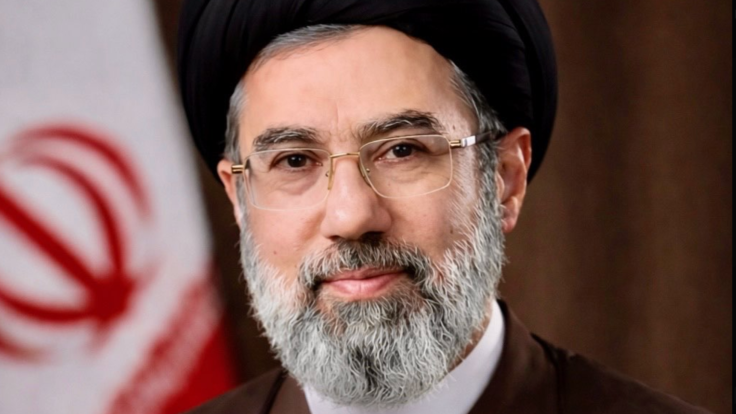
A classified intelligence briefing reportedly suggested that Iran's newly installed Supreme Leader, Mojtaba Khamenei, may be homosexual, an explosive allegation in a country where same-sex relations are criminalised and can, in some cases, be punished by death.
The allegation surfaced shortly after Khamenei assumed power in March 2026 following the death of his father, Ayatollah Ali Khamenei, during a regional conflict involving Iran, Israel and the United States.
While the claim remains unverified and politically sensitive, it has drawn attention to the deep contradictions between Iran's strict legal codes on sexuality and the opaque personal lives of its ruling elite.
Intelligence Briefings Raise Sensitive Allegations
According to reports citing US intelligence officials, American agencies briefed former US president Donald Trump that Mojtaba Khamenei was 'probably gay', citing information derived from what sources described as highly protected intelligence channels.
Officials reportedly told the White House that the information had been assessed as credible by US spy agencies, though they acknowledged that definitive evidence such as photographs or public confirmation does not exist.
The intelligence reportedly referenced claims that Khamenei may have maintained a long-term relationship with a male acquaintance earlier in life. Sources also alleged that unusual behaviour during medical treatment after a recent military strike raised additional suspicions among intelligence analysts.
Neither Iranian authorities nor US intelligence agencies have publicly confirmed the claim, and the White House declined to comment when asked about the alleged briefing.
The Iranian government has historically dismissed Western reporting about internal political figures as politically motivated or part of information warfare.
New York Post report claims US intelligence believes Iran’s new Supreme Leader Mojtaba Khamenei may be gay, a claim that reportedly surprised Donald Trump, who “laughed aloud” during the briefing.
— Clash Report (@clashreport) March 16, 2026
Sources say Trump “couldn’t contain his surprise and laughed aloud.”
One official… pic.twitter.com/pTr140ASHx
Mojtaba Khamenei's Controversial Rise To Power
The controversy emerges at a critical moment for Iran's political leadership.
Mojtaba Khamenei, a cleric born in Mashhad on 8 September 1969, was formally selected as Iran's third Supreme Leader by the Assembly of Experts between 3 and 8 March 2026. The body is constitutionally responsible for appointing the country's highest political and religious authority following the death or removal of a sitting leader.
His appointment followed the death of his father, who had ruled Iran since 1989 and was killed during escalating regional hostilities earlier in 2026.
Although Mojtaba had never held a formal government post, analysts have long described him as one of the most influential figures behind the scenes within the Iranian system.
Researchers and Iran specialists have characterised him as a powerful gatekeeper within the office of the Supreme Leader, often described as coordinating political, military and intelligence decisions from within his father's inner circle.
His close ties to the Islamic Revolutionary Guard Corps (IRGC), one of the most powerful institutions in the country, reportedly helped cement his position during the succession process.
However, his rise has also fuelled criticism from clerical figures and analysts who argue that the transition from father to son resembles dynastic succession in a political system that was founded on anti-monarchical principles.
Iran's Harsh Legal Framework On Homosexuality
The intelligence claim has drawn particular attention because Iran enforces some of the world's strictest legal penalties against homosexuality.
Under Iran's Islamic penal code, same-sex sexual activity between men is illegal and can be punishable by imprisonment, flogging or execution, depending on the circumstances and the interpretation of religious law.
Human rights organisations have long criticised these provisions, arguing that they expose LGBTQ individuals to severe legal and social persecution.
Iranian authorities, however, maintain that the legal framework reflects Islamic jurisprudence and cultural values.
The late Supreme Leader Ali Khamenei publicly condemned homosexuality on multiple occasions, once describing it as part of what he called 'moral deprivation' within Western civilisation during a televised speech.
Such rhetoric has formed part of the ideological foundation of the Islamic Republic since the 1979 revolution, where clerical authorities have framed opposition to Western social norms as a pillar of national identity.
The West has broken all moral & human boundaries & seeks to normalize & legalize all sins that are forbidden in all religions. Prohibitions on #homosexuality, etc. are not limited to Islam. These are strictly forbidden in all religions. They legalize these & are not even ashamed.
— Khamenei.ir (@khamenei_ir) January 4, 2023
Political Implications And Strategic Context
If the allegation were ever substantiated, analysts say it could have profound implications for Iran's political dynamics.
Within the Islamic Republic's conservative clerical establishment, accusations relating to personal morality can be politically explosive. Leaders are expected to embody strict religious standards, particularly on issues governed by Islamic law.
Some intelligence analysts reportedly suggested that such information could potentially weaken Khamenei's standing among conservative factions within Iran's ruling elite.
However, the opaque nature of Iranian politics makes it difficult to assess how such claims might affect his authority.
In practice, the Supreme Leader's power depends heavily on support from key institutions such as the IRGC, the judiciary and the clerical networks that dominate the Assembly of Experts.
So far, there is no evidence that the allegations have triggered dissent within those structures.
A Leader Under Global And Domestic Scrutiny
Mojtaba Khamenei begins his tenure at one of the most volatile moments in Iran's modern history.
Regional tensions remain high following the conflict that killed his father and destabilised the country's leadership structure. At the same time, Iran faces economic pressure, international sanctions and growing domestic unrest.
The claims emerging from intelligence briefings add yet another layer of controversy to a leadership transition already marked by geopolitical conflict and internal uncertainty.
Whether the allegations will remain intelligence speculation or evolve into a broader political narrative may ultimately depend on the unfolding power struggles inside Iran's opaque ruling system.
© Copyright IBTimes 2026. All rights reserved.
- MOST POPULAR IN Politics