Did Mojtaba Khamenei Lose a Leg? Iran's New Supreme Leader Faces 'Disfiguring' Injuries but Remains 'Mentally Sharp'
Iran's unseen supreme leader forces the nation to confront the gap between authority on paper and authority in flesh

Iran's new supreme leader, Mojtaba Khamenei, was severely wounded in the late February airstrike that killed his father in Tehran and has lost a leg and suffered 'severe and disfiguring' injuries, according to people close to his inner circle cited in a new report.
According to three people described as close to Mojtaba Khamenei's inner circle, who spoke to Reuters on condition of anonymity, the 56-year-old survived the strike but was left badly disfigured. He has extensive facial injuries and is missing a leg. A separate source familiar with US intelligence assessments backed up the claim that he had lost a limb while recovering from the attack that decimated much of Iran's top brass.
Mojtaba Khamenei's Hidden Recovery
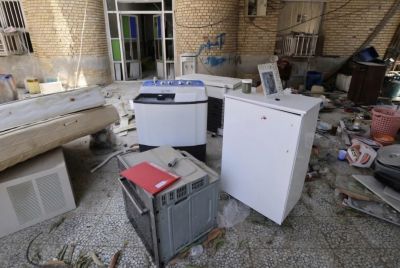
The new details came after six weeks of near-total silence about Mojtaba Khamenei's whereabouts and health following the 28 February strike on Ayatollah Ali Khamenei's compound in central Tehran, carried out on the first day of the war. The blast killed the long-serving supreme leader, members of his family, and dozens of senior military figures.
In the vacuum that followed, Khamenei formally assumed the role of supreme leader yet remained conspicuously absent from public view, issuing just two written statements amid widespread speculation about whether he was alive or incapacitated.
A Regime's Silence — And One Telling Word
Officials in Tehran have not confirmed any of this. There has been no medical bulletin, no official photograph, no video address. The closest the regime has come to acknowledging the scale of his injuries came via a carefully chosen word on state television, where a newsreader recently referred to Mojtaba Khamenei as a 'janbaz,' a term Iranians normally reserve for wounded war veterans. It was an oblique signal, but one that aligns with what foreign and exile sources have been saying for weeks.
Separately, long-standing claims that he is gay and impotent, which cannot be independently verified and are not backed by any official record, continue to circulate in opposition channels. None of the sources cited in the latest reporting offer hard evidence on his private life, and these allegations remain firmly in the realm of hearsay.
Governing By Voice Alone
Those same sources insist that while Mojtaba Khamenei's body has been badly damaged, his mind is not. One described him as 'mentally sharp,' directly involved in key national security decisions despite being confined out of sight. He is said to be holding meetings via audio conference, avoiding cameras altogether.
Since taking power, Mojtaba Khamenei has played a role in talks over reopening the Strait of Hormuz and ending the war, two of the people cited by Reuters claimed. If accurate, it suggests that Iran's political machinery has adapted to having a supreme leader who governs by voice alone, from an undisclosed recovery location, while the system shields his physical condition from the public.
What is better documented is the personal toll of the strike. The wife of Mojtaba Khamenei was among the family members killed in the Israeli attack, according to the same account. In one night, he lost both his father and predecessor and his spouse, and emerged not as an aide or behind-the-scenes power broker, but as the damaged figure at the top of the state.
A Wounded Mojtaba Khamenei Faces a Different Kind of Power
Outside Iran, officials have been unusually open about their suspicions. On 13 March, US Defence Secretary Pete Hegseth told reporters that 'the new so-called not-so-supreme leader is wounded and likely disfigured,' pointedly asking why, in a country saturated with cameras and recording equipment, Mojtaba Khamenei had only released written pronouncements. Washington's line has been that the absence of images is itself revealing.
People close to Mojtaba Khamenei's circle say that images or footage may surface within 'a month or two,' if his health and security situation permit.
Analysts doubt that, even if he does re-emerge, Mojtaba Khamenei will be able to dominate the Islamic Republic in the way his father did. Alex Vatanka, a senior fellow at the Middle East Institute, argued that the new supreme leader does not have Ali Khamenei's decades of revolutionary capital or personal authority.
'Mojtaba will be one voice but it will not be the decisive one,' he said. In his view, the real contest now sits within the regime's broader power structure, where senior clerics, security chiefs, and political factions will decide how far to defer to a man whose rule began in blood and secrecy.
Reuters reported that people close to Khamenei's circle believe a public appearance could come within 'a month or two,' subject to his recovery and security conditions. The Islamabad ceasefire talks, in which Khamenei is said to have played a role, are expected to continue into the coming week. The two-week ceasefire between Washington and Tehran is due to expire on 21 April.
© Copyright IBTimes 2026. All rights reserved.
- Recommended For You