

Experts Warn Ordinary CCTV Cameras Are Helping Track And Kill Targets Worldwide — Are You Safe?
A network of hacked security and traffic cameras reportedly helped pinpoint Iran's supreme leader's movements before his assassination.
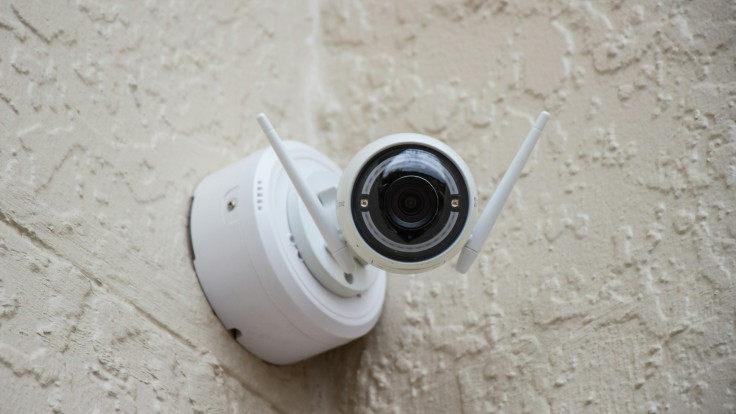
Since a joint US-Israeli airstrike killed Iran's Supreme Leader Ayatollah Ali Khamenei on 28 February, intelligence officials say hacked surveillance cameras helped plan the attack. Two sources told the Associated Press that Iranian security feeds were used to track convoys and locations, showing how ordinary cameras can become dangerous tools in modern conflicts.
The news came after several senior Iranian officials were killed in the weeks following Khamenei's death. These cameras weren't special military gadgets—they were everyday CCTV and traffic cameras.
Experts warn that similar devices all over the world have weaknesses that could be exploited in the same way.
How Camera Hacking Works
'Many cameras are basically open to anyone with an Internet connection,' said Matt Brown, founder of security firm Brown Fine Security, in a report by Scientific American.
Some feeds are public, while others just use default passwords that nobody ever changes. Websites like Shodan and Censys act like Google for cameras, showing hackers which devices are online.
Even when a camera seems secure, it can still be vulnerable. Many use peer-to-peer connections, meaning the device talks directly to a server to make setup easy. Paul Marrapese, a researcher in California, discovered flaws in millions of cameras made by a few Chinese manufacturers. These flaws let attackers take complete control without even needing the password.
'You could take over the camera entirely just by connecting to it,' Marrapese said. Some cameras even act as relays for others, sending video and passwords across networks without the user realising it.
Why Officials Are at Risk
Government networks are more locked down, but once someone gets in, the cameras reveal everything. This means convoys, entrances, and even private spaces. Brown says intelligence agencies sometimes test these devices in labs to find weaknesses before using them in operations.
'Cameras are perfect targets,' said Marrapese. 'You get video, audio, and sometimes even previous recordings. Once you're in, you can see a lot.' Modern cameras also process video themselves—called edge computing—so even low-quality images can be analysed to recognise faces and track movement.
When remote hacking fails, the supply chain itself can be manipulated. Brown points to a 2024 Israeli operation where devices sold to Hezbollah were tampered with before they even reached users. 'Cameras can be rigged with back doors before they're even in place,' he said.
Human Error Makes It Worse
Even the best technology can fail if people aren't careful.
Cameras are often poorly set up, software updates are ignored, and millions of devices worldwide are rarely checked. Marrapese said: 'Think about your own home devices. When was the last time you updated your smart camera or doorbell? Probably never.'
This combination of cheap, easy-to-access hardware and human error makes cameras a tempting target for attackers. Add AI and edge computing, and compromised devices can automatically identify people, track them, and pass on information to anyone who knows how to exploit them.
For countries and individuals trying to stay safe, the risk is growing. Cameras meant to keep people secure are now being turned into tools for surveillance, tracking, and even targeted killings. Experts warn that better security, frequent software updates, and global awareness are the only ways to protect against these risks.
As technology moves forward, the line between safety and vulnerability is blurring. What was once meant to watch over homes and streets can now be weaponised, showing how even simple devices can become part of a deadly global network.
© Copyright IBTimes 2026. All rights reserved.
- MOST POPULAR IN Technology


